BotaN logo

California fan palm Care (Washingtonia filifera)

Also known as: Desert Palm, Desert Fan Palm, California washingtonia, petticoat palm
California fan palm

About California fan palm

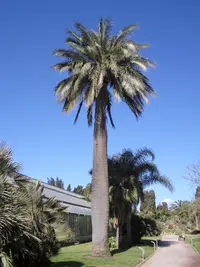
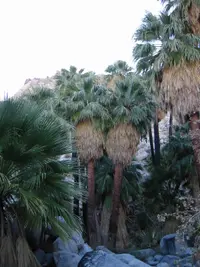
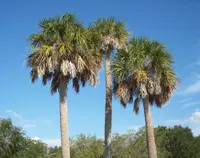
The California fan palm, Washingtonia filifera, is a hardy, trunk-forming palm native to desert oases of the southwestern United States and northern Mexico. It develops a tall, columnar trunk topped with a dense crown of large, fan-shaped leaves that often hang to form a natural skirt if not pruned.

This species is more cold-tolerant than many tropical palms and adapts well to warm, dry regions, which makes it relatively straightforward to grow outdoors in suitable climates. For those learning how to care for California fan palm, it generally prefers full sun, well-drained soil, and moderate watering without constant wet roots.

Main Plant Requirements

Care Difficulty

Moderate Care

Light Preference

Full Sun

Water Requirements

Low Water

Temperature Preference

Warm Climate

Hardiness Zone

8–11

Soil Texture

Sandy, Loamy, Rocky

Soil pH

Slightly acidic (6.5–7.0), Slightly alkaline (7.0–7.5)

Soil Drainage

Well-drained

Fertilization

Minimal (feed rarely)

Get Personalized Care Plan

Scan your plant to receive care tips personalized for your specific plant

Available on iOS and Android

How to Care for the California fan palm

This desert palm thrives in strong sun but benefits from gradual exposure in cooler or coastal climates.

  • Provide 6–10 hours of direct sun daily; full sun all day is ideal once established in the ground.
  • Young or newly planted California fan palm can take light or dappled shade for 1–2 years, especially from harsh late-afternoon summer sun.
  • Watch for etiolation (stretched, weak fronds) as a sign of too little light, and crisp, bleached tips as a sign of sudden intense exposure.

This palm prefers deep but infrequent watering that allows the soil to dry slightly between soakings.

  • In the ground, water when the top 5–8 cm of soil are dry; during hot, dry weather this may mean a deep soak every 7–14 days once established.
  • Ensure fast-draining, gritty soil; puddling for more than 1–2 hours after irrigation indicates poor drainage and higher root-rot risk for Washingtonia filifera.
  • Yellowing, limp fronds and a sour soil smell suggest overwatering, while crisp browning from the tips inward usually indicates prolonged drought stress.

This hardy desert palm tolerates a wide temperature range but grows best in warm to hot conditions.

  • Optimal growth occurs around 75–95°F (24–35°C), with good performance in long, hot summers typical of arid or semi-arid climates.
  • Mature trees can survive brief drops to about 15–20°F (-9 to -6°C), but young plants are safer above 25°F (-4°C), especially in damp winter conditions.
  • Extended frost, freezing winds, or sudden cold after warm weather can burn fronds; extreme heat above 105°F (41°C) is tolerated if soil moisture is not completely depleted.

This species tolerates low humidity but grows best at 30–50% in typical indoor air.

  • Handles dry rooms well, so frequent misting is not necessary for a California fan palm.
  • Low humidity stress shows as browning, crispy leaflet tips combined with underwatering, not from air moisture alone.
  • To slightly raise humidity in very arid homes, group plants together or place the pot on a pebble tray with water below the pot base.

This palm prefers fast-draining, mineral-rich soil that stays airy around the roots.

  • Use a coarse mix such as 50% cactus or palm mix with 25% perlite or pumice and 25% coarse sand for strong drainage.
  • Aim for slightly alkaline to neutral pH around 7.0–7.8, avoiding very acidic mixes or pure peat substrates.
  • Incorporate only modest organic matter, as overly rich, water-retentive soil increases root rot risk.
  • Avoid compacted or clay-heavy ground; loosen planting areas deeply and amend with grit to improve aeration and percolation.

This palm can be grown in containers for many years if the pot is stable and drains rapidly.

  • Choose a wide, heavy container to counteract the tall, top-heavy crown and reduce tipping in wind-prone spots.
  • Select thick-walled terracotta or concrete to allow faster evaporation and steadier root temperatures in full sun.
  • Elevate the pot slightly on feet so drainage holes stay clear and runoff cannot pool under the container.

This desert palm tolerates lean soils but benefits from light, targeted feeding in cultivation.

  • Use a balanced slow-release fertilizer (around 10-10-10) or palm-specific product at the start of spring for California fan palm.
  • Feed every 8–10 weeks during the growing season, following label rates and avoiding heavy applications in sandy soils.
  • In containers, apply a half-strength liquid balanced NPK every 4–6 weeks while actively growing.
  • Stop feeding in late fall and winter to avoid weak, frost-sensitive growth.

Pruning Washingtonia filifera is mainly done for safety, tidiness, and to reduce pest and fire risks.

  • Carry out pruning in late winter or early spring before strong new growth begins.
  • Remove only dead, diseased, broken, or severely crossing fronds; leave healthy green fronds for photosynthesis.
  • Cut fronds cleanly close to the trunk with sharp loppers or a pruning saw, avoiding trunk wounds.
  • Avoid over-thinning the crown, which can weaken the palm and increase sun and wind stress.

Transplanting this deep-rooted palm must be planned carefully to reduce stress and losses.

  • Look for circling roots in containers, very slow growth, or the palm becoming unstable as signs it needs more space.
  • Schedule transplanting for late spring or early summer, when soil is warm and recovery is fastest.
  • Expect container-grown Washingtonia filifera to need a larger pot every 2–3 years while young, then less often.
  • Dig a wide root ball, keep roots shaded and moist, replant at the same depth, and water deeply to settle soil and limit shock.

This species is almost always propagated from seed rather than by vegetative methods.

  • Collect ripe brown fruits, clean away pulp, and sow fresh seeds for best germination.
  • Sow in late spring or early summer in a warm medium at 77–86°F with bottom heat if possible.
  • Use a free-draining mix of coarse sand and composted material, kept evenly moist but not waterlogged.
  • Expect slow, uneven germination; keep seedlings in bright light and avoid disturbing young roots.

Mature plants are relatively cold tolerant but young Washingtonia filifera benefit from basic winter protection in colder areas.

  • Tolerates brief dips to about 15–20°F once established, but young palms are more vulnerable.
  • Apply a 5–10 cm layer of dry mulch around the root zone, keeping it away from the trunk base.
  • In freezing, windy spells, loosely wrap the crown and trunk with breathable frost cloth or burlap.
  • Move container plants to a bright, cool indoor or sheltered spot when repeated frosts are forecast.

Care Tips

Root room planning

When planting in the ground, position the palm at least 4–5 ft from structures, paving, and other trees so the vigorous root system and trunk base have enough space to expand without causing mechanical damage or crowding.

Wind and staking

In windy sites, install 2–3 sturdy stakes with soft, wide ties placed below the lowest fronds to stabilize young trunks for 1–2 years, checking and loosening ties each season to prevent girdling as the trunk thickens.

Trunk skirt management

Decide early whether to keep or remove the dry frond “skirt”; if removing, cut old fronds cleanly close to the trunk once they are fully brown to reduce fire risk and pest habitat while avoiding cutting into green tissue.

Salt and mineral monitoring

In areas with hard or salty irrigation water, periodically leach the root zone by applying extra water that drains freely through the soil, which helps prevent salt buildup that can cause leaf tip burn and decline.

Cold event preparation

In marginal climates, before a forecast frost, water the soil the day before and wrap the spear and crown with breathable frost cloth or burlap, then remove coverings promptly once temperatures rise to support long-term Washingtonia filifera care instructions in exposed sites.

Common Pests and Diseases

Palm leaf skeletonizer

This pest is the larval stage of a moth that tunnels between leaf surfaces, leaving brown, papery, and see‑through patches on fronds. Symptoms include fronds that look scorched or lace‑like, with winding mines along the leaflets.

Solution

Prune and dispose of heavily mined or dried fronds to remove larvae and pupae, and avoid leaving trimmed material on the ground. For active infestations, use a targeted Bacillus thuringiensis (Bt) spray on young fronds, and monitor new growth regularly as part of Washingtonia filifera care instructions.

Red palm weevil

This pest is a large weevil whose larvae bore into the trunk and crown, causing wilting, collapsed fronds, and sometimes sudden crown death. Symptoms include oozing sap or fermented odor at the trunk, and loose or drooping new fronds.

Solution

Remove and destroy severely infested palms to prevent spread, and monitor neighboring palms for early signs of damage. In early stages, consult a certified arborist about systemic insecticide treatments and install pheromone traps in the area where this pest is known to occur.

Fusarium wilt

This disease is a fungal infection that causes one‑sided yellowing and browning of the fronds, often starting on older leaves, followed by rapid decline of the canopy. Symptoms include a sharp line between healthy green tissue and brown dead tissue on leaflets, and progressive dieback up the crown.

Solution

Immediately prune and discard infected fronds with clean, disinfected tools, and do not cross‑use tools between healthy and diseased palms. There is no reliable cure, so avoid planting new palms in contaminated soil, and choose disease‑free nursery stock from reputable suppliers.

Pink rot

This disease is caused by a fungus that invades wounds in the crown or trunk, leading to soft, decaying tissues, distorted new fronds, and sometimes pinkish spore masses on infected areas. Symptoms include stunted spear leaves, crown thinning, and patches of soft, water‑soaked tissue near the growing point.

Solution

Improve drainage and avoid water collecting in the crown, remove and discard rotted tissue and severely affected fronds, and disinfect cutting tools after each cut. Apply a labeled copper‑based or systemic fungicide to the crown area at the earliest signs, especially after storm or pruning damage.

Bud and crown rot

This disease complex affects the central growing point, causing the spear leaf and surrounding fronds to yellow, wilt, and eventually pull out easily, often with a foul smell. Symptoms include sudden collapse of the crown while the trunk may still appear intact for some time.

Solution

At the earliest sign of spear leaf yellowing or softness, apply a systemic fungicide drench to the crown and improve air movement and drainage to reduce moisture around the bud. Severely affected palms usually cannot recover, so remove dead specimens promptly to reduce pathogen buildup and avoid overhead irrigation that keeps the crown wet for long periods.

Interesting Facts

Desert oasis specialist

This species is native to desert oases of the southwestern US and northern Mexico, where its roots tap into underground water while the trunk tolerates intense heat and drought at the surface.

Skirt of dead leaves

In the wild, old fronds usually stay attached and form a dense skirt of dead leaves that can reach the ground, providing shelter for bats, birds, insects, and small mammals, but also acting as a natural fire ladder.

Hardy for a true palm

Among large fan palms, it is unusually cold tolerant and can survive brief drops below freezing, which is one reason Washingtonia filifera plant care differs from that of many strictly tropical palms.

Botan icon

Did you know?

Fossil and subfossil evidence shows that this palm survived major climate shifts in the American Southwest over thousands of years, with present-day wild groves thought to be relict populations that remain where suitable groundwater and microclimates persisted as the region became more arid.

FAQs about California fan palm

Brown tips or fronds usually come from underwatering, low humidity, salt buildup, or natural aging of older leaves. Check soil moisture, avoid frequent light sips, leach salts occasionally, and prune only fully dead fronds near the trunk.

Grow Healthy Plants with Botan Care

Keep your plants happy and healthy with plant identification, disease detection, and easy care guidance.

Botan plant care app — identify plants on mobile

Explore More Plants