Candystick Care (Allotropa virgata)

Also known as: sugarstick
Candystick

About Candystick

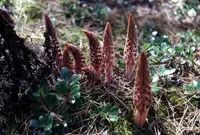
Candystick, Allotropa virgata, is a leafless, mycoheterotrophic woodland species that depends entirely on fungi for nutrition instead of photosynthesis. It produces tall, candy-cane striped flower spikes in white and red, giving it a distinctive appearance on the forest floor.

This plant is native to coniferous forests in western North America, where it grows in cool, shaded, undisturbed habitats with rich fungal networks. Because it cannot survive without its specific fungal partners, it is extremely difficult to cultivate and not suitable for typical garden settings.

Most information on how to care for Candystick focuses on conserving its natural habitat rather than growing it in containers or home gardens.

Main Plant Requirements

Care Difficulty

Hard Care

Light Preference

Shade

Water Requirements

Regular Water

Temperature Preference

Cool Climate

Hardiness Zone

5–8

Soil Texture

Loamy, Sandy, Organic-rich

Soil pH

Strongly acidic (4.5–5.5)

Soil Drainage

Moist but well-drained

Fertilization

Minimal (feed rarely)

Get Personalized Care Plan

Scan your plant to receive care tips personalized for your specific plant

Available on iOS and Android

How to Care for the Candystick

This woodland species prefers soft, filtered light rather than direct sun exposure.

  • Site Candystick under open forest canopy or dappled shade, receiving 1–3 hours of gentle morning sun and no harsh afternoon sun.
  • Avoid full, unfiltered sun; strong midday or afternoon sun can scorch tissues and dry the host root zone too quickly.
  • In summer, maintain consistent shade from deciduous trees; in early spring or fall, brief low-angle sun is acceptable if soil stays cool and moist.

This mycoheterotrophic forest plant depends on consistently moist, cool soil without standing water.

  • Check the top 2–3 cm of forest duff or soil; if it feels barely moist rather than wet, recent rainfall or light supplemental watering is appropriate.
  • Prioritize well-drained, humus-rich soil; puddling or sour, anaerobic smell indicates overwatering and root-zone stress for Allotropa virgata and its fungal partners.
  • In dry, hot spells, increase moisture with gentle soaking that mimics rain, watching for wilting or shriveling stems as a sign the site is too dry.

This species is adapted to cool, stable forest temperatures with only short exposure to heat or cold extremes.

  • Aim for a growing-season range around 50–70°F (10–21°C), typical of shaded conifer forests with cool soil and moderate air temperatures.
  • Plants tolerate brief dips to about 25°F (-4°C) when dormant but are sensitive to hard, repeated freezes without insulating leaf litter or snow cover.
  • Prolonged heat above 80°F (27°C), especially with dry soil, can shorten flowering and stress the underground association, so prioritize deep shade and soil moisture during heat waves.

Humidity is not a primary factor for this forest-dwelling mycoheterotroph, so standard outdoor ambient levels usually suffice.

This species relies on a specific forest soil and fungal association, so recreating its natural substrate is difficult in cultivation.

  • Use loose, well-drained, humus-rich soil built from decomposed conifer needles, leaf litter, and fine bark, mimicking shady forest duff.
  • Aim for slightly acidic conditions around pH 5.0–6.0, as this supports the conifer-associated fungi that Allotropa virgata depends on.
  • Avoid compacted, clay-heavy, or waterlogged substrates, which reduce aeration and disrupt the fungal network required for nutrient exchange.
  • Do not amend with large amounts of synthetic fertilizer; instead, top-dress lightly with forest leaf mold to maintain organic structure and microbial life.

This species is not suitable for container growing because it depends on a complex underground relationship with specific forest fungi and host trees.

Allotropa virgata is a mycoheterotrophic forest wildflower that should not be fertilized in cultivation.

Allotropa virgata does not need structural pruning and is usually left undisturbed in naturalistic plantings.

  • Remove only clearly dead or collapsed flowering spikes at ground level after they have fully dried, using clean, sharp scissors or pruners.
  • Leave healthy stems and any developing seed heads intact during the growing season to support its life cycle.
  • Avoid cutting surrounding host trees or disturbing the forest duff, as this can disrupt the fungal partners the plant depends on.

Candystick is not suited to conventional container culture, and transplanting established plants is rarely successful.

  • Transplant only nursery-grown plants, not wild-dug specimens, to avoid damaging their fungal associations and local ecosystems.
  • Choose a cool, shaded woodland-style bed with undisturbed, well-drained, humus-rich soil that mimics native conifer forest conditions.
  • Plant carefully into loose soil without breaking the root–fungus zone, keeping original soil intact around the roots.
  • Water lightly to settle soil, then keep the area stable and avoid further disturbance so the underground network can recover.

Propagation of Allotropa virgata in gardens is highly experimental because it depends on specific mycorrhizal fungi and host trees.

Allotropa virgata is naturally cold hardy in its native range and usually needs no special winter care in the ground.

  • Allow stems to die back naturally; the perennial structures remain dormant below soil level through winter.
  • Maintain a natural layer of leaf litter or conifer needles as mulch to insulate the root and fungal zone.
  • Avoid deep digging, raking, or soil compaction in winter so the delicate underground associations remain intact.

Care Tips

Protect Host Roots

Survey the area for known pine, fir, or hemlock roots and avoid trenching, grading, or compacting soil over those roots, since this species depends on intact mycorrhizal networks connected to its conifer hosts.

Minimize Soil Disturbance

Keep leaf litter and small woody debris in place and avoid raking, rototilling, or heavy foot traffic where shoots emerge, because the underground structures are shallow and easily damaged.

Avoid Fertilizer Inputs

Do not add compost, manure, or synthetic fertilizer near colonies, as nutrient enrichment can disrupt the specialized fungi this plant relies on and can favor competing vegetation instead.

Control Competing Plants

Hand-remove aggressive groundcovers and dense grasses around emerging spikes rather than using herbicides, which reduces competition for fungal partners while avoiding chemical stress to the site.

Monitor Seasonal Emergence

Flag locations of flower spikes each year with small, unobtrusive markers so future site work or trail maintenance does not accidentally damage colonies when they are dormant underground.

Common Pests and Diseases

Armillaria root disease

This disease is caused by Armillaria fungi that colonize the roots and underground tissues of Candystick in conifer forests. Symptoms include decline of nearby host trees, white fungal mats under bark, and gradual disappearance of the mycoheterotrophic shoots over time.

Solution

There is no direct treatment for infected Allotropa virgata, since it depends on living mycorrhizal fungi and host trees. Management focuses on maintaining overall forest health, avoiding soil disturbance around host trees, and not moving infected wood or roots into unaffected areas to limit spread of Armillaria inoculum.

Soil compaction damage

This problem occurs when repeated foot traffic or machinery compresses the forest floor, reducing pore space and damaging fine roots and associated mycorrhizal networks. Symptoms include long‑term disappearance of Candystick colonies from trails, campsites, or compacted logging areas.

Solution

To prevent damage, restrict trampling and vehicle use in areas where Allotropa virgata occurs, keep to established trails, and avoid creating new paths through colonies. Where possible, protect known sites with barriers or signage and allow leaf litter to accumulate and rebuild a loose, well‑aerated forest floor.

Disturbance of mycorrhizal network

This condition results from removal or dieback of host conifers or heavy soil disturbance that disrupts the fungal partners the plant relies on for nutrition. Symptoms include gradual loss of Candystick emergence after tree harvest, thinning, or intense site preparation.

Solution

Management centers on conserving the mature conifer overstory and minimizing deep soil disturbance such as intensive grading, ripping, or repeated tilling. In forestry or land management planning, retain patches of intact conifer forest with continuous litter and fungal-rich soil to support long‑term Allotropa virgata plant care.

Interesting Facts

Leafless mycoheterotroph

Allotropa virgata lacks chlorophyll and cannot photosynthesize. It is a fully mycoheterotrophic plant that obtains carbon and nutrients from mycorrhizal fungi rather than making its own food.

Specialist on pine forests

This species is closely associated with ectomycorrhizal fungi that partner with conifer trees, especially pines in the genus Pinus. It is typically found in mature montane coniferous forests of western North America where these fungal and tree partners are well established.

Striped inflorescence structure

The candy cane appearance comes from its tall, unbranched flowering stalk with alternating red and white stripes formed by the bracts and stem tissues. Numerous small, nodding, urn-shaped flowers are arranged along the spike, giving it a distinctive layered look compared with other monotropoids.

Botan icon

Did you know?

Genetic and ecological studies show that Allotropa virgata forms highly specialized three-way relationships among itself, specific ectomycorrhizal fungi, and host conifer trees, meaning its survival depends on the integrity of this entire network rather than on any single partner species alone.

FAQs about Candystick

This species depends entirely on a living conifer host and specialized forest fungi, so it cannot be maintained in regular pots. Attempts at growing Candystick in containers almost always fail, even with very rich or specialized substrates.

Grow Healthy Plants with Botan Care

Keep your plants happy and healthy with plant identification, disease detection, and easy care guidance.

Botan plant care app — identify plants on mobile

Explore More Plants