Wood chip layering
Top up the bed each year with a 5–10 cm layer of fresh, hardwood chips on one half of the patch at a time so the fungus can steadily colonize new food without burying the already-productive zones too deeply.

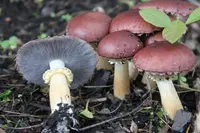
Wine-cap Stropharia (Stropharia rugosoannulata) is a wood-loving mushroom species, not a leafy plant. It forms large, thick, burgundy to reddish-brown caps with pale gills that darken as spores mature. Sturdy white stems with a wrinkled ring are typical.
This fungus naturally occurs in temperate regions, often in wood chip beds, garden paths, and rich, disturbed soils. It grows in clusters and can spread through a bed over several seasons.
Gardeners value it for fast growth, tolerance of cool conditions, and its role in breaking down woody mulch. Those learning how to care for Wine-cap Stropharia usually focus on providing consistent moisture, shade to partial shade, and a deep layer of fresh wood chips or straw.

Care Difficulty
Moderate Care

Light Preference
Partial Shade

Water Requirements
Keep Soil Moist

Temperature Preference
Cool Climate

Hardiness Zone
4–9

Soil Texture
Loamy, Peaty, Organic-rich

Soil pH
Acidic (5.5–6.5), Slightly acidic (6.5–7.0)

Soil Drainage
Moist but well-drained

Fertilization
Minimal (feed rarely)
Scan your plant to receive care tips personalized for your specific plant
Available on iOS and Android
This wood-loving mushroom thrives in bright, dappled outdoor light rather than intense full sun.
This fungus prefers consistently moist, not waterlogged, wood-based beds in garden or landscape settings.
This species fruits best in cool to mild conditions and tolerates a moderate climate range outdoors.
This decomposer mushroom prefers moderately moist, cool air close to the ground rather than specific indoor humidity control.
Stropharia rugosoannulata fruits best in loose, organic-rich, consistently moist substrate rather than typical garden soil.
This species can be grown in large outdoor containers if the vessel allows deep, cool, well-aerated substrate.
This wood-decomposing fungus relies mainly on organic matter rather than heavy fertilization.
Stropharia rugosoannulata does not need classic pruning, but fruiting bed hygiene is useful.
This fungus is usually grown in outdoor beds, so transplanting focuses on moving colonized substrate rather than classic repotting.
This species is propagated by spreading mycelium rather than by traditional plant methods such as cuttings or seeds.
Outdoor beds are generally cold hardy and need only minimal winter management in most temperate regions.

Plant Health Check
Not sure what's wrong with your plant? Check your plant's health inside the app.
This species is widely used in permaculture and organic gardens because it colonizes woodchip mulch, helps break down woody debris, and can improve soil structure while producing edible mushrooms.
Its spore print is a deep reddish to reddish-brown color, a key field characteristic that helps distinguish it from many other large, gilled garden mushrooms with paler or darker spore prints.
The species name rugosoannulata refers to its thick, wrinkled ring on the upper stem, which often appears ribbed or cog-like and is an important macroscopic trait for identification.

This mushroom is well studied as a mycoremediation organism because its mycelium can tolerate and help degrade certain agricultural pollutants and excess nutrients in woodchip and straw substrates, making it useful in experimental systems for cleaning runoff from farms and gardens.
This mushroom is considered a good edible when correctly identified and harvested young, with firm white gills turning gray, not dark black. Always use a reputable guide or local expert, as misidentification with toxic species is possible.
Keep your plants happy and healthy with plant identification, disease detection, and easy care guidance.