Host tree selection
Establish the fungus in mixed hardwood stands with healthy oaks or beeches, as this ectomycorrhizal species depends on forming root partnerships with suitable mature trees rather than in isolated beds.

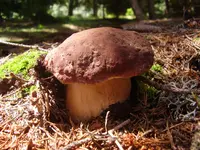
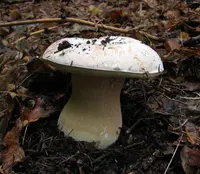
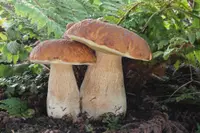
Boletus luridellus is a fleshy, bolete-type mushroom rather than a leafy green plant. It forms a thick, sturdy stem and a smooth, rounded cap that often shows warm brown tones. The pores beneath the cap, instead of gills, are a key identification feature.
This species is typically found on the ground in forests, growing in association with trees, especially in temperate regions of North America. It can be challenging to cultivate because it depends on a close root partnership (mycorrhiza) with host trees, so most people do not try to care for Boletus luridellus at home.
In nature, it favors well-drained, organic-rich soils with consistent moisture and dappled woodland light.

Care Difficulty
Moderate Care

Light Preference
Partial Shade

Water Requirements
Keep Soil Moist

Temperature Preference
Warm Climate

Hardiness Zone
Unknown

Soil Texture
Loamy, Silty, Organic-rich

Soil pH
Acidic (5.5–6.5)

Soil Drainage
Moist but well-drained

Fertilization
Minimal (feed rarely)
Scan your plant to receive care tips personalized for your specific plant
Available on iOS and Android
This ectomycorrhizal mushroom depends on balanced woodland light rather than direct, open sun.
Moist but not waterlogged soil is essential for this forest-dwelling ectomycorrhizal fungus.
Stable, mild temperatures support healthy mycelium and reliable fruiting of this woodland fungus.
This fungus does not require managed air humidity in typical outdoor conditions.
Boletus luridellus relies on specific soil conditions in the ground rather than potting media.
This species is not suitable for container growing, as it depends on complex mycorrhizal relationships with tree roots in natural soil.
This wild ectomycorrhizal fungus gains nutrients mainly through its tree partners, so Boletus luridellus needs little or no direct fertilization.
This mushroom-forming fungus is not a plant and does not benefit from pruning in the horticultural sense.
This ectomycorrhizal species is adapted to forest soils and tree roots rather than containers or garden beds.
This forest fungus is usually left to spread naturally through spores and mycelium rather than being actively propagated.
This temperate woodland fungus survives winter in the soil as mycelium and normally needs no targeted winter care.

Plant Health Check
Not sure what's wrong with your plant? Check your plant's health inside the app.
The flesh of this bolete stains dark blue almost instantly when bruised or cut, a reaction caused by oxidative changes in specific pulvinic acid derivatives present in the tissues.
This species forms ectomycorrhizal associations with oaks in eastern North America, exchanging mineral nutrients and water from the soil for sugars produced by the tree through photosynthesis.
Its yellow pores and strong blue staining can cause confusion with some toxic red-pored boletes, so accurate identification is important before any consideration of edibility.
This bolete is generally regarded as inedible or of unknown edibility. Identification within the genus is difficult, and some similar-looking species are toxic. For safety, it is best not to consume specimens from this group.
Keep your plants happy and healthy with plant identification, disease detection, and easy care guidance.