Orange polypore Care (Trametes sanguinea)

Also known as: Tropical Cinnabar bracket, Common Cinnabar Polypore, Cinnabar Bracket
Orange polypore

About Orange polypore

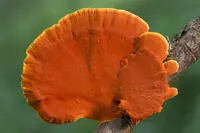
Orange polypore (Trametes sanguinea) is a shelf fungus, not a leafy plant, that grows on dead or decaying wood. It forms thin, tough brackets with bright orange to reddish upper surfaces and pale undersides.

This species is native to tropical and subtropical regions and is often found on hardwood logs and stumps. It plays an important role in breaking down wood and recycling nutrients in forest ecosystems.

Because it is a wood-decaying fungus, it is not commonly cultivated, and attempts to care for Orange polypore at home are usually challenging. It generally prefers shaded, humid conditions on well-rotted wood rather than soil.

Main Plant Requirements

Care Difficulty

Moderate Care

Light Preference

Partial Shade

Water Requirements

Keep Soil Moist

Temperature Preference

Cool Climate

Hardiness Zone

Unknown

Soil Texture

Loamy, Organic-rich

Soil pH

Acidic (5.5–6.5)

Soil Drainage

Moist but well-drained

Fertilization

Minimal (feed rarely)

Get Personalized Care Plan

Scan your plant to receive care tips personalized for your specific plant

Available on iOS and Android

How to Care for the Orange polypore

This bracket fungus grows on dead wood and relies on shaded forest light rather than direct sun.

  • Provide bright to medium shade, such as dappled woodland light for 2–4 hours combined with open shade the rest of the day, to mimic its natural habitat.
  • Protect Orange polypore from harsh midday and afternoon sun, which can dry the substrate and bleach the fruiting bodies, reducing longevity and color intensity.
  • In summer, use leaf canopy or shade cloth to filter strong light; in winter, slightly increased indirect light is acceptable if the substrate remains cool and moist.

Trametes sanguinea grows on dead wood and depends on consistently moist, not saturated, substrate.

  • Keep the host log or wood slab evenly damp, allowing the surface to approach dryness 1–2 mm deep before rewetting, rather than following a fixed number of days.
  • Increase moisture inputs during warm, dry periods, lightly soaking the wood until it feels heavy but avoiding standing water around it to prevent anaerobic, foul-smelling decay.
  • Reduce soaking frequency in cool seasons, watching for shriveling or pale, brittle brackets as signs of dryness and for soft, slimy tissue as an indicator of chronic overwatering.

This wood-decay fungus prefers mild, stable temperatures similar to a cool, shaded woodland.

  • Aim for 59–77°F (15–25°C) for steady growth and fruiting, as sustained conditions in this range support active wood decomposition and bracket formation.
  • Tolerate short drops to about 41°F (5°C), but protect from hard frost below 32°F (0°C), which can damage or halt development of young Trametes sanguinea brackets.
  • In hotter weather above 82°F (28°C), provide deep shade and higher ambient humidity so the substrate does not overheat or dry rapidly, which can shorten fruit body life.

This bracket fungus prefers consistently moist, humid air similar to a damp woodland environment.

  • Aim for 70–90% humidity, as prolonged levels below 50% slow growth and dry the fruiting bodies.
  • In very dry air, brackets become brittle, pale, and crack along the edges, indicating humidity stress.
  • Increase humidity by misting nearby surfaces, using trays with wet gravel, or placing cultures in a ventilated, humid chamber.

This species grows naturally on decaying wood rather than in soil, so the key is preparing a wood-based, well-aerated substrate.

  • Use hardwood logs or blocks supplemented with sawdust and a small amount of bran instead of mineral soil, as Trametes sanguinea is a wood-decaying fungus.
  • Ensure the substrate drains freely yet stays evenly moist by avoiding fine, compacted sawdust that holds stagnant water.
  • Maintain a slightly acidic environment, roughly pH 5.5–6.5, by choosing hardwoods like oak, beech, or maple and avoiding limed materials.
  • Improve aeration by drilling several small holes through logs or containers filled with wood substrate so internal layers receive oxygen and do not sour.

This fungus can be grown in containers using wood-based substrates rather than standard pots of soil.

  • Choose a wide, shallow tub or tray to give colonized wood pieces stable support and prevent tipping as brackets fan outward.
  • Provide several side and lid ventilation holes so the container retains moisture but still allows fresh air exchange around the fruiting bodies.
  • Raise the container slightly on blocks so any free water can drain or evaporate, preventing stagnant moisture around the wood pieces.

Trametes sanguinea is a wood-decaying fungus that normally does not need fertilizer when growing on suitable logs or stumps.

Pruning is generally not required for Trametes sanguinea, as each bracket fungus naturally completes its life cycle on dead wood.

This species is typically established on dead or decaying wood and is not suited to standard pot culture or frequent transplanting.

  • Transplant only if a colonized log must be relocated, keeping the original wood intact to avoid disturbing the fungal network.
  • Move sections during cool, moist weather to reduce desiccation stress on the mycelium.
  • Handle the substrate gently, lifting the whole log or branch rather than scraping off fruiting bodies.
  • Place the wood in a similar shaded, humid environment so the colony can reestablish with minimal shock.

Propagation of Trametes sanguinea is usually left to natural spore dispersal and colonization of suitable dead wood.

This bracket fungus is naturally cold hardy in temperate climates and typically needs no special winter care when growing outdoors on wood.

Care Tips

Select proper substrate

Use freshly cut, disease-free hardwood logs or blocks with intact bark, as Trametes sanguinea colonizes clean, solid wood more reliably than decayed or contaminated material.

Pre-drill and plug

Drill evenly spaced holes (about 10–15 cm apart in a diamond pattern) and insert commercial plug spawn deeply so the mycelium can establish in the core of the log, then seal each hole with food-grade wax to prevent drying and contamination.

Control moisture load

Soak logs for 12–24 hours before inoculation if they are very dry, then maintain them at field capacity (moist but not dripping) by occasional soaking or heavy watering during extended dry periods.

Shade and airflow placement

Stand or lean inoculated logs in a shaded, wind-sheltered outdoor spot with good airflow, such as under deciduous trees, to reduce surface cracking while still allowing the wood to dry slightly between rains.

Monitor colonization progress

Check cut ends of the logs every 1–2 months for whitening or visible mycelial growth, and only move them to a more exposed fruiting position once colonization is established to support healthy and predictable growing Orange polypore.‎

Common Pests and Diseases

Wood-boring beetles

These insects use the fruiting bodies and underlying wood as a food source and breeding site, tunneling through the tissue. Symptoms include small round exit holes, powdery frass, and structurally weakened brackets.

Solution

Physically remove and destroy heavily infested brackets, and if the fungus is being cultivated on logs, store them off the ground and under cover to reduce beetle access. For outdoor displays, use fine mesh netting around valuable specimens and promptly remove old, decaying brackets that attract beetles.

Mycophagous fly larvae

This pest consists of fly larvae that develop inside the fruiting bodies, feeding on the soft tissue. Symptoms include soft, water-soaked patches, small holes, and sometimes maggot-like larvae visible when the bracket is cut open.

Solution

Cut away and discard infested brackets to break the life cycle and reduce future populations. If cultivating brackets for study or display, keep them in insect-proof enclosures and use sticky traps nearby to intercept adult flies before they lay eggs.

Competing saprobic fungi

This disease pressure comes from other wood-decaying fungi colonizing the same log or stump, outcompeting Trametes sanguinea for resources. Symptoms include mixed colonies of different bracket or crust fungi and a decline in size, color intensity, or frequency of T. sanguinea fruiting.

Solution

When intentionally growing Orange polypore on logs, select fresh, clean hardwood and inoculate promptly so the mycelium establishes before competitors. Remove and discard sections of wood heavily colonized by other fungi and avoid reusing those pieces as substrate for grow Trametes sanguinea projects.

Interesting Facts

Bright blood‑red bands

The fruiting bodies develop distinctive, thin, bracket-like caps with striking blood-red to orange-red concentric zones that often fade to paler colors with age but remain clearly banded against the whitish pore surface.

White-rot wood decomposer

This species is a white-rot fungus that breaks down both lignin and cellulose in dead hardwoods, leaving behind a pale, fibrous wood and playing an important role in nutrient recycling in forest ecosystems.

Tropical-subtropical specialist

Trametes sanguinea occurs mainly in tropical and subtropical regions, where it grows on dead branches and logs of broadleaf trees rather than in cooler temperate forests where more familiar Trametes species dominate.

Botan icon

Did you know?

The pore surface of Trametes sanguinea is finely pored and typically whitish to pale cream, but it may bruise slightly darker when handled, which can help mycologists distinguish it from some similar red or orange bracket fungi in the field.

FAQs about Orange polypore

This bracket fungus is generally regarded as inedible due to its tough, corky texture and lack of culinary value. It is not used as food and should not be treated as an edible mushroom.

Grow Healthy Plants with Botan Care

Keep your plants happy and healthy with plant identification, disease detection, and easy care guidance.

Botan plant care app — identify plants on mobile

Explore More Plants