Jelly-antler Care (Calocera viscosa)

Also known as: Yellow Stagshorn
Jelly-antler

About Jelly-antler

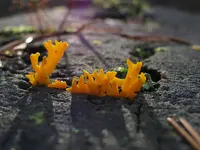
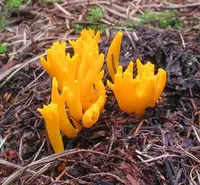
Jelly-antler, Calocera viscosa, is not a true plant but a jelly fungus that grows on decaying conifer wood. It forms bright yellow to orange, antler-like clumps with a firm, gelatinous texture.

This species is common in coniferous forests across Europe and North America, often appearing after rain in cool, moist weather. It does not grow from soil but from rotting wood, which makes it unsuitable as a typical houseplant, and attempts to care for Jelly-antler at home are rarely successful.

In nature, it prefers shaded to dappled light, consistently damp conditions, and wood that is already decomposing, reflecting its role in breaking down dead trees.

Main Plant Requirements

Care Difficulty

Hard Care

Light Preference

Partial Shade

Water Requirements

Keep Soil Moist

Temperature Preference

Cool Climate

Hardiness Zone

3–8

Soil Texture

Loamy, Organic-rich

Soil pH

Acidic (5.5–6.5)

Soil Drainage

Moist but well-drained

Fertilization

Minimal (feed rarely)

Get Personalized Care Plan

Scan your plant to receive care tips personalized for your specific plant

Available on iOS and Android

How to Care for the Jelly-antler

Calocera viscosa, commonly called jelly-antler, is a forest fungus that depends on shaded, moist light conditions rather than direct sun.

  • Thrives in dappled or filtered light under conifers or mixed woodland, receiving indirect daylight for 4–8 hours while remaining protected from direct midday sun.
  • Tolerates deep shade but fruiting bodies become smaller or less frequent if light is extremely limited, especially under dense summer canopies.
  • Strong direct sun and drying winds rapidly desiccate the gelatinous tissue, so intact logs or stumps in cool, shaded, north- or east-facing sites are preferred.

This wood-decaying fungus relies on consistently moist, not waterlogged, substrates rather than traditional watering.

  • In natural settings, focus on maintaining evenly moist wood or forest duff; if cultivating, allow only the upper 1–2 cm of the substrate surface to lose slight moisture before re-wetting.
  • Increase moisture support during warm, dry periods with gentle misting or soaker use, and reduce supplemental water in cool, rainy seasons to avoid saturation.
  • Signs of excess water include sour or anaerobic smell and slimy, collapsing tissue, while prolonged dryness leads to shriveling, tougher fruiting bodies and reduced emergence of Calocera viscosa.

This species forms fruiting bodies best in cool to mild conditions typical of moist, shaded forests.

  • Optimal temperatures for growth and fruiting are around 50–68°F (10–20°C), especially during humid periods following rain.
  • Tolerates down to about 32°F (0°C); light frosts may halt visible growth, but mycelium in wood often survives and resumes activity in milder weather.
  • Sustained heat above 77–86°F (25–30°C), particularly with low humidity, shortens fruiting lifespan and can dry or deform tissue, so shaded, cool microclimates are important in summer.

Calocera viscosa is a woodland fungus that does not adapt well to dry indoor air and prefers consistently moist, humid outdoor conditions.

  • Thrives in 70–90% humidity typically found in shaded, damp forest habitats with decaying wood.
  • Prolonged exposure to dry air causes shrinking, dull color, and hardened, less jelly-like fruiting bodies on Jelly-antler.
  • To increase humidity outdoors, maintain thick leaf litter, avoid clearing mossy logs, and reduce direct sun and wind exposure.

This species develops on decaying conifer wood rather than in conventional soil and relies on consistently moist, decomposing organic material.

  • Grows best on well-rotted, moist, but not waterlogged conifer wood with abundant decomposing needles and bark fragments.
  • Requires freely draining yet consistently damp substrate; standing water or fully dry conditions quickly suppress fruiting of Calocera viscosa.
  • Prefers slightly acidic conditions, roughly pH 4.5–6.0, typical of conifer forests with accumulated organic debris.
  • To mimic its natural substrate, stack partially decomposed softwood logs over a bed of conifer sawdust, wood chips, and needle-rich litter kept evenly moist.

This fungus is generally unsuitable for conventional container growing, as it depends on colonizing decaying wood in stable, humid forest-like conditions.

Calocera viscosa is a saprophytic fungus that decomposes wood and does not benefit from conventional fertilization used for vascular plants.

Pruning is not a standard cultural practice for Calocera viscosa, as it is a wood-inhabiting fungus rather than a garden shrub or houseplant.

This species is not suited to typical repotting, since Calocera viscosa grows from decaying conifer wood rather than from a root system in soil.

  • Transplant only by moving the colonized wood, not the fruiting bodies themselves, which are short-lived and fragile.
  • If relocation is essential, move the wood substrate during cool, moist weather to reduce desiccation stress.
  • Place the wood in a similar environment with partial shade and consistent moisture to maintain fungal activity.
  • Avoid disturbing or cutting into the wood, as excessive damage can disrupt the fungal mycelium network.

Purposeful propagation of this fungus is rarely attempted, because Calocera viscosa depends on specific wood-decay conditions in coniferous substrates.

Jelly-antler is naturally cold hardy in temperate forests and generally needs no special winter care in gardens or woodlands.

Care Tips

Substrate rotation

Rotate or replace the conifer wood substrate every 1–2 years so the fungus always has relatively fresh, resinous wood to colonize, since old logs that are fully decomposed will sharply reduce fruiting.

Log preparation

Before introducing spawn, strip loose bark and chainsaw shallow grooves into the conifer log surface to expose more sapwood, which increases contact points and improves establishment of the mycelium.

Moisture shielding

Place a breathable shade cloth or slatted cover above inoculated logs to reduce direct rainfall and rapid drying, keeping the wood evenly moist without waterlogging the fruiting bodies.

Microclimate clustering

Group several inoculated logs close together and partially sink their bases into the soil or mulch layer to stabilize moisture and temperature, which supports more consistent flushes.

Minimal handling

Avoid touching or brushing against fresh fruiting bodies and instead cut them at the base with a clean knife if collection is needed, as physical damage can quickly degrade texture and shorten their visible lifespan when growing Jelly-antler.

Common Pests and Diseases

Mycophagous springtails

These insects feed on fungal tissue and can graze on the jelly-like branches, causing pitting, surface roughness, or slow disintegration of fruiting bodies under persistently wet conditions.

Solution

Limit excessive surface moisture by improving drainage of the decaying wood substrate and reducing constant waterlogging, and gently flush or dislodge clusters with clean water if numbers are high. In contained displays or culture, use fine mesh barriers and remove heavily grazed fruiting bodies to reduce food sources and population size.

Fungus gnat larvae

These insects develop in very damp, organic substrates and may tunnel in and around the gelatinous fruiting structures, leading to soft collapse or distortion.

Solution

Allow the substrate surface to approach just slightly damp between waterings, and improve air movement around the log or wood pieces to discourage chronic saturation. In enclosed or indoor culture, apply a biological control such as Bacillus thuringiensis israelensis (Bti) to the substrate and use yellow sticky traps to reduce adult gnats.

Parasitic fungi

This disease occurs when other fungi colonize or overgrow the jelly antler fruiting bodies, often visible as white, gray, or differently colored molds that distort or replace the normal bright yellow-orange tissue.

Solution

Physically remove and discard parasitized or misshapen fruiting bodies to slow spread, and avoid overcrowding of wood pieces so air can circulate freely. Reduce continuous high humidity on the surface by spacing substrates, providing gentle airflow, and avoiding overhead misting that keeps the fruiting bodies constantly wet.

Interesting Facts

Gelatinous yet tough

The fruiting body of this species is jelly-like and flexible when moist but becomes tough and rubbery as it ages or dries, an adaptation that helps it withstand fluctuations in humidity in conifer forests.

Wood-decaying specialist

This fungus is a saprotroph, meaning it feeds on dead organic matter, and it primarily decomposes very rotten conifer wood, contributing to nutrient recycling in pine and spruce ecosystems.

False coral look-alike

Although it resembles coral fungi, this species belongs to the Dacrymycetaceae, a different fungal family characterized by Y-shaped basidia, the microscopic spore-bearing structures.

Botan icon

Did you know?

This species often appears in the same patch of woodland year after year because its main body is a long-lived network of mycelium hidden inside the decaying wood, with the visible yellow-orange branches representing only the temporary reproductive structure.

FAQs about Jelly-antler

This fungus is technically considered inedible rather than poisonous. The texture is tough and gelatinous, and it lacks notable flavor. It is not used as food and is best left for observation only.

Grow Healthy Plants with Botan Care

Keep your plants happy and healthy with plant identification, disease detection, and easy care guidance.

Botan plant care app — identify plants on mobile

Explore More Plants