Use hardwood blocks
For reliable fruiting, colonize clean, untreated hardwood blocks or tightly packed chips in filter bags, as these hold moisture more evenly than loose substrate in open trays.

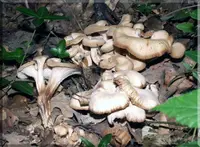
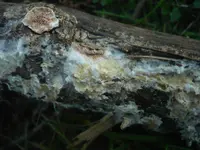
Aniseed cockleshell, Lentinellus cochleatus, is a wild wood-rotting fungus rather than a traditional garden plant. It forms layered, shell-shaped caps with wavy edges, often in tight clusters on decaying hardwood. The caps are typically brown to reddish with pale gills, and the whole fungus can develop a mild anise-like scent.
This species occurs mainly in temperate forests of Europe and North America, fruiting in cool, damp seasons on stumps, logs, or buried wood. It is generally not cultivated at home, so information on how to care for aniseed cockleshell is limited, and its growth is best appreciated in natural woodland conditions.

Care Difficulty
Moderate Care

Light Preference
Shade

Water Requirements
Keep Soil Moist

Temperature Preference
Cool Climate

Hardiness Zone
Unknown

Soil Texture
Loamy, Organic-rich, Peaty

Soil pH
Acidic (5.5–6.5), Slightly acidic (6.5–7.0)

Soil Drainage
Moist but well-drained

Fertilization
Minimal (feed rarely)
Scan your plant to receive care tips personalized for your specific plant
Available on iOS and Android
This wood-loving fungus prefers cool, low to moderate light similar to a shaded forest floor.
Moist, not waterlogged, conditions are essential for consistent fruiting of this fungus.
This species thrives in cool to mild conditions typical of temperate woodlands.
This wood-inhabiting fungus needs consistently high humidity for reliable fruiting rather than dry indoor air conditions.
This species grows on decaying wood rather than mineral soil, so the focus is on a wood‑based substrate with air spaces and stable moisture.
This fungus can be grown in containers if they are set up as controlled, moist, wood‑based fruiting environments rather than conventional pots.
This saprophytic fungus usually gains enough nutrients from decaying wood, so fertilizing aniseed cockleshell is rarely necessary.
Pruning Lentinellus cochleatus is generally unnecessary, as fruiting bodies are short-lived and the main organism lives hidden in the wood.
Transplanting focuses on moving colonized wood rather than handling a typical root system.
Propagation of Lentinellus cochleatus at home is possible but more advanced than standard plant techniques.
This fungus is naturally cold hardy and usually needs minimal winter care in outdoor woodland settings.

Plant Health Check
Not sure what's wrong with your plant? Check your plant's health inside the app.
The fruiting bodies produce a distinct anise or fennel-like smell, which is unusually strong for a wood‑decay mushroom and helps field mycologists separate it from similar brown, fan-shaped fungi.
The gills have finely toothed or saw-like edges, a hallmark of the genus Lentinellus, and this rough texture is clearly visible without a hand lens when the caps are mature and well developed.
This species most often fruits in clustered rosettes on old hardwood stumps, buried roots, and logs, especially of beech and other broadleaf trees, where it contributes to the breakdown of lignin-rich wood.

Although sometimes reported as edible in older literature, this species is now widely regarded as inedible because of its very bitter taste and tough texture, and is mainly valued by mycologists as a clear diagnostic example of a serrate-gilled wood-decay fungus rather than as a food source.
This fungus is technically edible but strongly bitter and tough, so it is not recommended for regular consumption. Identification errors with similar-looking toxic species are possible, so foragers generally avoid eating it.
Keep your plants happy and healthy with plant identification, disease detection, and easy care guidance.