Substrate rotation
Rotate or replace small pieces of decayed wood every 6–12 months so the fungus always has fresh, partially decomposed hardwood to colonize and does not stall on exhausted substrate.

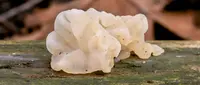
White jelly fungus, Ductifera pululahuana, is a gelatinous wood-decaying fungus rather than a traditional green plant. It forms small, soft, translucent white to pale cream cushions on rotting wood, often merging into irregular patches.
This species occurs mainly in humid forests, where it helps break down dead branches and logs. It prefers shaded, consistently moist locations and thrives on thoroughly decayed wood.
In cultivation it is considered niche and somewhat challenging, as it needs stable moisture, cool to mild temperatures, and a constant supply of suitable wood. Hobbyists who care for white jelly fungus usually focus on providing clean, naturally decomposing hardwood in a sheltered, humid environment.

Care Difficulty
Moderate Care

Light Preference
Partial Shade

Water Requirements
Keep Soil Moist

Temperature Preference
Warm Climate

Hardiness Zone
Unknown

Soil Texture
Loamy, Silty, Organic-rich

Soil pH
Acidic (5.5–6.5), Slightly acidic (6.5–7.0)

Soil Drainage
Moist but well-drained

Fertilization
Minimal (feed rarely)
Scan your plant to receive care tips personalized for your specific plant
Available on iOS and Android
This wood-inhabiting fungus prefers low, indirect light typical of shaded forest habitats.
This species thrives on consistently moist, decaying wood rather than direct watering of the fruiting bodies.
This fungus favors cool to mild conditions similar to those in shaded, moist woodlands.
This wood-inhabiting jelly fungus prefers consistently moist, humid air rather than dry conditions.
This species is a saprophytic fungus that colonizes dead wood rather than true soil, so focus on the substrate instead of ground preparation.
This jelly fungus is not well suited to typical decorative container growing, but it can be maintained on wood pieces kept in trays or boxes for observation.
Ductifera pululahuana (white jelly fungus) usually gains enough nutrients from decaying wood and surrounding organic matter, so extra fertilizer is rarely needed.
Ductifera pululahuana does not need true pruning, but surrounding material can be managed to keep colonies observable and healthy.
This species is not suited to traditional repotting; management focuses on relocating or adjusting colonized wood rather than moving an individual plant.
Propagation of Ductifera pululahuana is specialized and usually left to natural spore dispersal on suitable dead wood.
This fungus is generally cold hardy and needs little targeted winter care in most outdoor settings.

Plant Health Check
Not sure what's wrong with your plant? Check your plant's health inside the app.
This species was first documented from high-elevation cloud forests on the slopes of Volcán Pululahua in Ecuador, where it grows on very wet, decaying wood in cool, humid mountain conditions.
It produces soft, translucent white to pale gelatinous cushions that merge into irregular patches, each surface densely covered with microscopic spore-bearing structures called basidia.
This fungus was only formally described in the 21st century, based on careful microscopic study of its basidia and spores, which differ from related white jelly-like species and justified recognizing it as a distinct taxon.
Growth is relatively slow and strongly dependent on moisture and temperature. Fruiting bodies can appear within days after sustained wet weather, then stabilize and persist for several weeks before gradually shrinking and drying back into the wood.
Keep your plants happy and healthy with plant identification, disease detection, and easy care guidance.