Use shallow trays
Grow mushrooms in wide, shallow trays or containers with 5–8 cm of pasteurized substrate to encourage even fruiting and make it easier to observe and remove short-lived caps before they decompose.

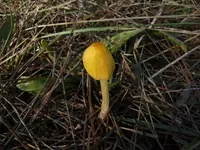
Yellow fieldcap, Bolbitius titubans, is a small, short-lived mushroom often appearing in potted plants, lawns, and nutrient-rich soil. It is a saprophytic fungus, meaning it feeds on decaying organic matter rather than living roots. Caps are bright yellow when young, becoming paler and more fragile within hours as the mushroom matures and collapses. Stems are thin and delicate, and clusters may appear suddenly after watering or rain. This species occurs widely in temperate regions and is frequently seen in greenhouse and indoor container situations. It does not indicate poor plant health, but regular moisture and rich soil favor its growth and affect how to care for yellow fieldcap indoors or outdoors.

Care Difficulty
Hard Care

Light Preference
Partial Shade

Water Requirements
Keep Soil Moist

Temperature Preference
Warm Climate

Hardiness Zone
Unknown

Soil Texture
Loamy, Silty, Organic-rich

Soil pH
Acidic (5.5–6.5), Slightly acidic (6.5–7.0)

Soil Drainage
Moist but well-drained

Fertilization
Minimal (feed rarely)
Scan your plant to receive care tips personalized for your specific plant
Available on iOS and Android
This saprotrophic mushroom thrives in bright, indirect conditions similar to open lawns and compost-rich beds.
Water management focuses on maintaining evenly moist, not waterlogged, organic-rich soil where this fungus feeds and fruits.
This species prefers mild, moist conditions and fruits best during warm, humid periods.
This species tolerates a wide humidity range but fruits best in moderately moist air.
This saprotrophic fungus prefers loose, organic-rich, consistently moist but not waterlogged substrates.
This species can be grown in shallow outdoor containers if the substrate stays evenly moist and rich in decaying organic matter.
This fungus is short-lived and usually requires no fertilization when growing in organic-rich lawns, beds, or pots.
Bolbitius titubans does not need true pruning, only simple cleanup of fruiting bodies.
Transplanting is rarely necessary, as this mushroom colonizes organic debris rather than behaving like a typical potted plant.
Reproduction in this species relies on spores rather than standard plant propagation methods.
Outdoor colonies in mild-winter regions usually need no specific winter care, as the fungus persists in the substrate rather than through visible caps.

Plant Health Check
Not sure what's wrong with your plant? Check your plant's health inside the app.
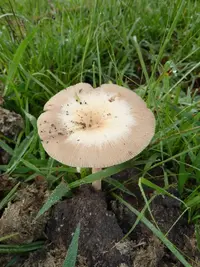
The fruiting body starts bright yellow and slimy, then fades to pale cream and becomes fragile within hours as the cap tissues rapidly lose pigments and water.
This species appears most often in nutrient-rich, manured or composted soils, where it breaks down organic waste and contributes to rapid nutrient recycling.
Its crowded gills undergo partial deliquescence, meaning they soften and darken quickly as spores mature, which helps release large numbers of spores in a short time.

Bolbitius titubans is so short-lived that individual mushrooms can emerge, expand, discolor, and collapse within a single warm, humid day, making it one of the more transient lawn fungi commonly noticed after summer rain.
This mushroom is not recommended for consumption. Identification is difficult, and closely similar species may contain harmful compounds. Treat it as inedible and remove fruiting bodies from areas where children or pets might sample them.
Keep your plants happy and healthy with plant identification, disease detection, and easy care guidance.