Encourage bushy habit
Pinch back soft new shoots after flowering to encourage a denser, more compact shrub rather than a sparse, leggy form.

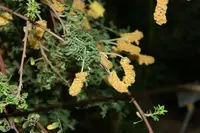
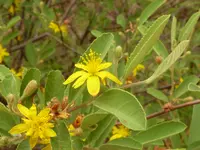
Drummond's wattle, Acacia drummondii, is a compact shrub from southwestern Australia, valued for its soft foliage and bright yellow pompom flowers in late winter to spring. It usually grows with a bushy, rounded habit, making it suitable for dry gardens and native-style plantings.
This species naturally occurs in well-drained, sandy or gravelly soils, often in open woodland or heath. Once established, it tends to be drought-tolerant but dislikes heavy, waterlogged ground.
For gardeners wanting to care for Drummond's wattle successfully, good drainage, moderate watering, and a sunny position are usually the key requirements.

Care Difficulty
Moderate Care

Light Preference
Full Sun

Water Requirements
Low Water

Temperature Preference
Warm Climate

Hardiness Zone
9–11

Soil Texture
Sandy, Loamy, Rocky

Soil pH
Acidic (5.5–6.5), Slightly acidic (6.5–7.0)

Soil Drainage
Well-drained

Fertilization
Minimal (feed rarely)
Scan your plant to receive care tips personalized for your specific plant
Available on iOS and Android
This shrub prefers bright outdoor conditions that mimic its native open woodland habitat.
This species prefers deep but relatively infrequent watering once established.
This plant is adapted to mild, dry climates with warm days and cool, frost-light winters.
This species tolerates a wide humidity range and rarely needs special humidity management indoors or outdoors.
Acacia drummondii prefers very well-drained, sandy soil that mimics its native, low-fertility conditions.
This species can be grown in containers if the pot and mix maintain fast drainage and moderate root space.
This Australian native generally grows well in lean soils, so fertilizing Acacia drummondii should be light and infrequent.
Pruning Acacia drummondii is mainly done to maintain structure and remove unhealthy growth.
This species is usually grown in the ground, so focus on careful transplanting rather than frequent repotting.
Propagation of Acacia drummondii is usually done from seed, with some growers also using semi-hardwood cuttings.
This plant is adapted to mild, Mediterranean-type climates and has limited tolerance to hard frost.

Plant Health Check
Not sure what's wrong with your plant? Check your plant's health inside the app.
This shrub is naturally restricted to the southwest of Western Australia, occurring in kwongan heath and open woodland on well-drained, sandy or lateritic soils that are low in nutrients.
Unlike many Australian wattles with simple phyllodes, this species retains fine, bipinnate leaves, giving it a soft, feathery appearance that can help distinguish it from related acacias in the wild.
It produces masses of bright yellow, spherical flower heads on short racemes from late winter into spring, providing an important nectar and pollen resource for native insects at a time when other floral resources can be limited.

Acacia drummondii forms specialized root nodules that host nitrogen-fixing bacteria, allowing it to capture atmospheric nitrogen and improve poor, sandy soils, which in turn supports the surrounding plant community in its native ecosystems.
Lack of flowers often comes from plants being too young, pruned at the wrong time, or stressed by poor drainage. Excessive shade and high-nitrogen fertilizer also reduce buds. Light pruning only after flowering helps preserve next season’s blooms.
Keep your plants happy and healthy with plant identification, disease detection, and easy care guidance.