Sheep Polypore Care (Albatrellus ovinus)

Sheep Polypore

About Sheep Polypore

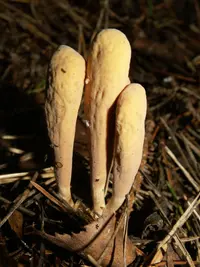
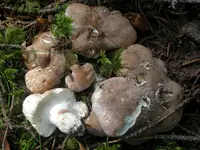
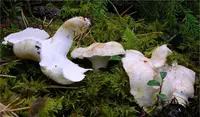
Sheep polypore, Albatrellus ovinus, is a terrestrial polypore fungus rather than a leafy plant. It forms thick, fleshy, overlapping caps that are usually pale cream to yellowish. The undersides have tiny pores instead of gills. Clumps often appear on soil or moss near conifer roots, especially in boreal and montane forests of North America and Europe.

This species is mycorrhizal, meaning it forms a nutrient-sharing partnership with trees, so it cannot be grown like a typical houseplant. Attempts to care for Sheep Polypore at home are challenging because it depends on specific forest soils, cool temperatures, and stable moisture conditions.

In nature, it favors undisturbed, well-drained, slightly acidic sites with consistent humidity and partial shade under conifers.

Main Plant Requirements

Care Difficulty

Hard Care

Light Preference

Partial Shade

Water Requirements

Keep Soil Moist

Temperature Preference

Cool Climate

Hardiness Zone

Unknown

Soil Texture

Loamy, Sandy, Organic-rich

Soil pH

Acidic (5.5–6.5), Slightly acidic (6.5–7.0)

Soil Drainage

Moist but well-drained

Fertilization

Minimal (feed rarely)

Get Personalized Care Plan

Scan your plant to receive care tips personalized for your specific plant

Available on iOS and Android

How to Care for the Sheep Polypore

This woodland fungus prefers cool, dappled light rather than open, direct sun.

  • Provide 2–4 hours of gentle morning sun with bright, filtered light for the rest of the day, similar to light on a forest floor.
  • Allow partial shade under light tree cover; Sheep Polypore declines in deep shade where less than 1–2 hours of ambient daylight reach the site.
  • Avoid strong midday and late-afternoon sun in open areas, which can overheat the substrate and dry it too quickly, especially in summer.

This species needs consistently moist, not saturated, conditions around its host roots or woody substrate.

  • Maintain soil or duff that feels evenly moist 2–5 cm down; allow only the top surface to dry slightly between natural rains or supplemental watering.
  • Increase watering during warm, dry periods when the substrate dries within 24–48 hours, and reduce input in cool, wet seasons to prevent waterlogging.
  • Watch for signs of overwatering such as standing water, foul odor, or slimy substrate; underwatering shows as brittle, rapidly shrinking fruiting bodies.

This fungus performs best in cool to mildly warm conditions typical of temperate forests.

  • Aim for an active growth range of 50–68°F (10–20°C), when mycelium activity and fruiting are most likely.
  • Tolerates short dips near 32°F (0°C) in dormant periods but prolonged hard frost below 25°F (−4°C) can damage fruiting bodies at the surface.
  • Limit exposure to heat above 77–82°F (25–28°C), which can dry the substrate and stress the organism, especially without shade and steady moisture.

Humidity is not a primary factor for Albatrellus ovinus cultivation and is usually managed indirectly through substrate moisture and airflow.

Albatrellus ovinus requires a loose, well-aerated substrate that mimics forest soil and allows steady but not stagnant moisture.

  • Use a mix of sifted compost, fine bark, and mineral grit or coarse sand to create an open, crumbly structure.
  • Ensure rapid drainage so water passes through in seconds, leaving the substrate moist but never waterlogged.
  • Aim for slightly acidic to neutral conditions, around pH 5.5–7.0, which support compatible host roots and fungal activity.
  • Avoid heavy clay, peat-only mixes, or compacted media that hold standing water or collapse after repeated watering.

This species is generally unsuitable for long-term container cultivation, as it forms complex associations with tree roots in the ground.

Albatrellus ovinus is a wild mycorrhizal fungus that normally requires no fertilization when grown in natural soil with its tree partners.

Albatrellus ovinus needs no true pruning, but fruiting bodies can be managed for cleanliness and observation.

  • Remove old, decaying fruiting bodies at ground level once they soften or discolor, using a clean knife.
  • Cut away insect-damaged or moldy tissue promptly to limit spore spread and reduce mess near paths.
  • Avoid disturbing the underlying mycelium in the soil; only trim visible caps and stem bases above the surface.

This fungus is rarely kept in containers, so care focuses on minimal disturbance of its soil habitat rather than routine repotting.

  • Transplant only if the associated host tree or sod must be moved, since the fungus depends on this root partnership.
  • Plan any move during cool, moist weather in spring or early fall to reduce stress on roots and mycelium.
  • Lift and move a large, intact soil root ball, keeping it shaded and moist during the process.
  • Replant at the same depth, water thoroughly, and avoid soil compaction so the mycelial network can re-establish.

Propagation of Albatrellus ovinus is technically complex and not usually attempted by home growers.

  • In nature, the species spreads by spores that germinate only when suitable host tree roots and soil conditions are present.
  • Laboratory culture uses sterile techniques and specific growth media, which typical home setups cannot provide reliably.
  • Gardeners interested in growing Sheep Polypore usually rely on naturally occurring colonies in appropriate forest or woodland settings.

This species is cold hardy in its native temperate forests and usually needs no special winter care.

  • Mycelium in the soil tolerates freezing conditions, while above-ground fruiting bodies naturally die back.
  • Leave undisturbed leaf litter or a light organic mulch to maintain stable soil moisture and temperature.
  • Container experiments, if attempted, should overwinter in a cold, frost-exposed but shaded spot to match natural dormancy.

Care Tips

Use Log Sandwiches

To maintain consistent moisture without waterlogging, place hardwood slabs above and below the spawn layer like a sandwich, which stabilizes humidity and temperature around the developing mycelium.

Shaded Wind Break

Set up a low wind break of boards or shade cloth around outdoor beds to protect fruiting bodies from drying winds and physical damage while still allowing good air exchange.

Calcium-Rich Substrate

Incorporate a small portion of finely crushed, untreated limestone gravel or agricultural lime into the substrate to mimic the naturally calcareous forest soils that support strong and reliable fruiting.

Staggered Inoculation Blocks

Prepare several small, separate inoculated blocks or beds rather than one large one so that if a section becomes contaminated, it can be removed without sacrificing the entire culture.

Spore Print Monitoring

Collect occasional spore prints from mature caps onto clean foil or paper to confirm healthy, even spore production, which indicates the culture is vigorous and that conditions for caring for Sheep Polypore are appropriate.

Common Pests and Diseases

Mycophagous springtails

These insects feed on young fruiting bodies and mycelial tissue, leaving small pits or eroded areas on caps and stems. This pest is most common in humid, organic-rich cultivation setups.

Solution

Reduce excess moisture in the substrate, improve ventilation, and remove heavily damaged fruiting bodies. If needed, use fine physical barriers such as mesh over fruiting containers and keep surrounding organic waste and leaf litter to a minimum to discourage populations.

Fungus gnat larvae

These insects develop in damp, nutrient-rich substrates and chew on developing mycelium, which can slow or distort fruiting. Symptoms include poor or uneven mushroom development and visible tiny black adults around trays or bags.

Solution

Allow the surface of the substrate to dry slightly between misting, use sticky traps to reduce adult numbers, and cover substrate with a breathable but fine mesh to block egg‑laying. For persistent problems, targeted biological controls such as Bacillus thuringiensis israelensis (BTI) can be introduced according to label directions.

Green Trichoderma mold

This disease appears as fast‑spreading white mycelium that quickly turns bright green on the substrate or damaged fruiting bodies. Symptoms include stalled growth of the mushroom mycelium and green powdery spores on the surface.

Solution

Promptly remove and discard contaminated substrate or blocks to prevent spore spread, and clean surrounding surfaces with a 10% bleach solution. For future cycles, use well‑pasteurized or properly sterilized substrate, maintain good air exchange, and avoid mechanical damage to the mycelium.

Bacterial blotch

This disease causes greasy, water‑soaked spots on caps that may turn yellow to brown, often associated with standing water on the fruiting surface. Symptoms include soft, slimy tissue and an unpleasant odor in advanced cases.

Solution

Reduce direct overhead misting, avoid water sitting on caps, and increase air movement to dry surfaces more quickly. Remove and discard affected mushrooms and sanitize tools and trays before the next cropping cycle to lower bacterial load.

Interesting Facts

Sheep-like cap surface

The fruiting bodies have a dry, finely cracked, off‑white to pale yellow cap that often resembles the texture of a sheep’s woolly coat, which is the origin of its common name, sheep polypore.

Unusual pore structure

Instead of gills, this species has a dense layer of small, round pores on the underside of the cap where spores are produced and released, a typical trait of polypores but with a distinct, even pore surface in this species.

Widespread boreal distribution

This fungus is characteristic of boreal and montane conifer forests across northern Europe, Asia, and North America, often fruiting on the ground among mosses rather than directly from wood, which is less common for many polypores.

Botan icon

Did you know?

Genetic and morphological studies have shown that what was once treated as a single species under the name Albatrellus ovinus is part of a complex of closely related taxa, leading to regional splits and re-identifications in Europe and North America as mycologists refine its taxonomy.

FAQs about Sheep Polypore

This fungus is generally considered edible when young and fresh, with firm white flesh and a mild flavor. As it ages, the texture becomes tough and unpalatable. Always confirm identification with a local expert before eating any wild mushroom.

Grow Healthy Plants with Botan Care

Keep your plants happy and healthy with plant identification, disease detection, and easy care guidance.

Botan plant care app — identify plants on mobile

Explore More Plants