anemone stinkhorn fungus Care (Aseroe rubra)

Also known as: anemone fungus, starfish fungus, Star Stinkhorn, Anemone Stinkhorn
anemone stinkhorn fungus

About anemone stinkhorn fungus

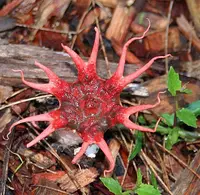
Anemone stinkhorn fungus (Aseroe rubra) is a saprophytic fungus, not a true plant, that breaks down decaying organic material in soil and mulch. It forms star-shaped red arms around a central spongy column, often emerging from a whitish egg-like structure. The surface carries dark, foul-smelling slime that attracts flies, which spread its spores. This species occurs naturally in Australia and parts of the Pacific, but it has spread to gardens and landscaped areas in other mild, moist regions. It tends to appear suddenly in rich, damp, well-aerated soils, especially in mulched beds. Gardeners who care for anemone stinkhorn fungus mainly manage its presence rather than actively cultivate it, as it can be unpredictable and short-lived.

Main Plant Requirements

Care Difficulty

Hard Care

Light Preference

Partial Shade

Water Requirements

Keep Soil Moist

Temperature Preference

Tropical / Frost Sensitive

Hardiness Zone

10–11

Soil Texture

Loamy, Sandy, Organic-rich

Soil pH

Acidic (5.5–6.5), Slightly acidic (6.5–7.0)

Soil Drainage

Moist but well-drained

Fertilization

Minimal (feed rarely)

Get Personalized Care Plan

Scan your plant to receive care tips personalized for your specific plant

Available on iOS and Android

How to Care for the anemone stinkhorn fungus

Aseroe rubra prefers bright but softened outdoor light similar to a lightly shaded forest floor.

  • Aim for 2–4 hours of gentle morning sun with dappled or filtered light the rest of the day, avoiding strong midday and afternoon sun that can dry the substrate too quickly.
  • Site anemone stinkhorn fungus under shrubs, ferns, or trees where it receives broken light rather than exposed lawn conditions with full overhead sun.
  • In hotter summers, increase shade or leaf-litter cover; in cooler, darker seasons, use slightly more open positions so the area still gets 2–3 hours of indirect daylight.

This fungus needs consistently moist, well-drained organic material rather than strict watering schedules.

  • Keep leaf litter or mulch evenly damp, allowing only the top 1–2 cm to dry slightly before rewetting to avoid soggy, anaerobic conditions that cause rot.
  • Use coarse, free-draining organic matter so rainfall or irrigation can pass through, preventing standing water around the base of Aseroe rubra.
  • Increase moisture during warm, dry periods by checking the substrate daily; in cooler or rainy seasons, reduce added water and watch for foul smell or slime as signs of overwatering.

This species develops best in mild, frost-free conditions typical of temperate to warm coastal climates.

  • Provide an optimal range of 59–77°F (15–25°C), where growth and fruiting are most reliable in humus-rich, moist soil or mulch.
  • Protect sites from frost, as tissue damage can occur below 32°F (0°C); prolonged cold below 41°F (5°C) reduces activity and visible fruiting.
  • In hot weather above 86°F (30°C), ensure deep shade, thicker mulch, and steady moisture to buffer soil temperature and prevent drying of the mycelium.

This fungus tolerates a broad humidity range but fruits best in consistently moist air.

  • Aim for 60–90% humidity by maintaining evenly moist, but not waterlogged, surrounding substrate.
  • It tolerates brief dips to 40–50%, but repeated dry spells slow fruiting and cause caps to dry and collapse prematurely.
  • If conditions are very dry, increase local humidity with damp organic mulch, shaded placement, and reduced direct wind exposure around anemone stinkhorn fungus colonies.

Aseroe rubra develops best in loose, organic-rich, well-aerated substrate that drains freely yet retains some moisture.

  • Use a mix of roughly 50–70% decomposed leaf litter or compost with 30–50% coarse material such as bark chips or sand to keep the structure open.
  • Ensure excess water can move away quickly; raised beds or mounded planting areas help prevent standing water and anaerobic (oxygen-poor) conditions.
  • Aim for slightly acidic to neutral conditions (pH 5.5–7.0), avoiding heavily limed or strongly alkaline ground that reduces fungal vigor.
  • Avoid compacted clay, peat-only mixes, or plastic-mulched surfaces; periodically top-dress with fresh leaf litter or wood-based mulch to maintain aeration and food source.

This species can be grown in containers if the pot mimics a loose, decomposing woodland substrate.

  • Select a wide, shallow container so the fungal mycelium can spread laterally through the mix rather than downwards.
  • Use a heavy or weighted pot if placed outdoors, since fruiting bodies and wet mix can make lightweight containers tip in strong wind.
  • Elevate the container slightly on feet or bricks to enhance drainage and prevent the pot base from staying saturated after rain or watering.

Aseroe rubra is a saprophytic fungus that gains nutrients from decomposing organic matter, so it needs little direct fertilization.

Pruning Aseroe rubra is minimal and focuses on hygiene rather than shaping growth.

  • Remove collapsed, decaying fruiting bodies using disposable gloves or tongs as soon as they fade to limit odor and spore spread near paths.
  • Discard removed material in sealed bags with household trash rather than composting, to reduce unwanted spread.
  • Avoid cutting or disturbing the underground mycelium network, which is the true body of the fungus, to maintain normal fruiting.

Transplanting Aseroe rubra focuses on moving colonized substrate rather than handling individual fruiting bodies.

  • Transplant only when a bed is crowded, poorly sited, or producing unwanted odor near seating or doorways.
  • Best timing is during mild, moist weather in spring or fall, when the substrate can be moved without drying out.
  • Lift and relocate chunks of colonized soil, woodchip, or mulch with a trowel, disturbing the material as little as possible.
  • Water gently after transplanting to settle the substrate and reduce stress on the hidden mycelium network.

Propagation of Aseroe rubra is usually passive, as spores spread naturally in suitable organic mulch or soil.

  • Encourage new colonies by maintaining moist, rich organic mulch, where spores can germinate and the mycelium can develop.
  • For deliberate spread, move small pieces of colonized mulch to a new shaded, moist site and keep evenly damp.
  • Avoid commercial spore sowing; reliable sources are limited and natural dispersal is typically sufficient for new growth.

In mild, frost-free climates Aseroe rubra needs little winter care, as the mycelium rests in the soil while fruiting bodies appear only in suitable conditions.

  • In regions with light frost, maintain a 5–8 cm organic mulch layer to buffer soil temperature around the mycelium.
  • Avoid waterlogged conditions in winter by ensuring good drainage in beds or mulched areas.
  • Container-grown colonies, if any, can be moved to a cool, frost-free, bright sheltered spot during severe cold.

Care Tips

Control spore spread

If you want to limit self-seeding in a small garden or pot, gently collect and bag the slimy spore mass as soon as it appears and dispose of it in household trash rather than in compost or green waste.

Manage strong odor

For outdoor beds near seating areas, place the fungus on the downwind side of the garden and use a light mulch layer so you can quickly cover fresh fruiting bodies if the odor becomes too intense.

Use dedicated tools

Keep a small trowel, gloves, and collection container reserved only for handling this fungus to avoid spreading spores or odorous residue to other areas and tools.

Encourage detritivores

Leave some leaf litter and coarse organic matter around the colony to support insects and microfauna that help break down spent fruiting bodies more quickly.

Monitor substrate aging

In containers or confined beds, refresh part of the woody or compost-rich substrate every 1–2 years, as the fungus will decline once most of the easily decomposed organic matter has been exhausted, which is key when growing anemone stinkhorn fungus in a controlled space.

Common Pests and Diseases

Slugs and snails

These pests are attracted to the moist, organic-rich substrate around fruiting bodies and can chew the soft tissues of young or emerging structures. Symptoms include ragged edges, missing sections of the fungus, and slime trails nearby.

Solution

Hand-pick slugs and snails at dusk or early morning and remove them from the area, and reduce dense groundcover or debris that shelters them. Where necessary, use iron phosphate-based slug baits placed away from children and pets, and maintain moderate, not excessive, surface moisture around the fungus.

Fungus gnat larvae

This pest thrives in constantly moist, organic substrates and the larvae can feed on decaying material around the fungus, sometimes damaging developing fruiting bodies. Symptoms include small black adult gnats flying near the substrate surface and thinning or collapse of very young structures.

Solution

Allow the top layer of the substrate to dry slightly between waterings and use yellow sticky traps to reduce adult populations. For more direct control, a biological treatment such as Bacillus thuringiensis israelensis (BTI) can be applied to the substrate according to label directions, which targets larvae without harming the fungus.

Mite infestations

These insects, particularly soil and saprophytic mites, are naturally attracted to decomposing organic matter and can cluster on or around the fruiting bodies. Symptoms include tiny moving dots on the surface and slow deterioration or distortion of delicate tissues.

Solution

Gently rinse the surface of affected fruiting bodies with a fine stream of water to dislodge mites and reduce their numbers. Improve hygiene by removing excess decaying debris and avoid overfertilizing organic substrates, and only if populations remain high consider introducing predatory mites that feed on pest mites without harming the fungus.

Bacterial soft rot

This disease develops in very wet, poorly ventilated conditions and causes the tissues of the fruiting body to become water-soaked, slimy, and collapse prematurely. Symptoms include a foul odor stronger than usual, mushy texture, and rapid breakdown of the structures.

Solution

Remove and discard heavily affected fruiting bodies and any surrounding, visibly slimy organic material, then improve drainage and air movement around the colony. In anemone stinkhorn fungus indoor care setups, reduce watering frequency, avoid overhead misting, and increase ventilation to limit bacterial growth.

Opportunistic mold overgrowth

This disease occurs when fast-growing molds colonize the same substrate and overrun developing fruiting bodies, especially in stagnant, humid conditions. Symptoms include visible white, gray, or green fuzzy growth covering the base or surface and stunted or deformed emergence of the fungus.

Solution

Carefully scrape away and discard moldy substrate, then replace it with fresh, well-draining organic material while avoiding disturbance of healthy mycelium. Improve airflow, reduce continuous surface wetness, and if growing indoors, use a small fan and adjust humidity so the surface dries slightly between waterings while the deeper substrate remains moist.

Interesting Facts

Sea-anemone mimic

This stinkhorn fungus has bright red, radiating arms with a central disc that closely resemble a sea anemone, which is the origin of both its common name and the species epithet rubra, meaning red.

Fly-dispersed slime

Its arms and central disc are coated in a dark, foul-smelling spore slime (gleba) that attracts flies; as the insects feed and walk over the surface, they pick up spores and disperse them to new locations.

Egg to starburst

The visible fruiting body emerges rapidly from a whitish, gelatinous 'egg' structure in soil or mulch, splitting open and expanding into a starburst-like form within a matter of hours under suitable conditions.

Botan icon

Did you know?

Aseroe rubra is one of the earliest documented stinkhorn fungi from Australia, first described scientifically in 1800, and has since become naturalized in several other regions, including parts of Europe and North America, likely transported with soil or plant material.

FAQs about anemone stinkhorn fungus

This species spreads efficiently by spores carried on insects attracted to its smell. In woodchip or mulch beds it can appear in clusters, but it does not aggressively overrun established plants or damage roots.

Grow Healthy Plants with Botan Care

Keep your plants happy and healthy with plant identification, disease detection, and easy care guidance.

Botan plant care app — identify plants on mobile

Explore More Plants