


Use controlled substrate
Prepare small trays with well-aged, fully composted manure mixed 1:1 with pasteurized straw or coco coir to provide a clean, uniform substrate that fruits more reliably than raw dung alone.

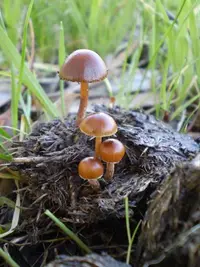
Deconica coprophila, commonly called dung-loving Deconica, is a small saprotrophic mushroom that decomposes animal dung and very rich organic matter. It forms slender stems with small, smooth, brownish caps that appear quickly after rain and disappear just as fast.
This fungus occurs worldwide, especially in pastures, fields, and other nutrient-rich, disturbed sites. It is not typically grown as a decorative or edible species, and cultivation at home is uncommon.
Those who attempt to grow or care for dung-loving Deconica need consistently moist, nutrient-rich substrate and cool to mild conditions, but the species is generally considered challenging and unpredictable under controlled conditions.

Care Difficulty
Moderate Care

Light Preference
Partial Shade

Water Requirements
Keep Soil Moist

Temperature Preference
Cool Climate

Hardiness Zone
Unknown

Soil Texture
Loamy, Silty, Organic-rich

Soil pH
Slightly acidic (6.5–7.0), Neutral (7.0)

Soil Drainage
Moist but well-drained

Fertilization
Minimal (feed rarely)
Scan your plant to receive care tips personalized for your specific plant
Available on iOS and Android
This small coprophilous mushroom prefers cool, gentle light rather than strong direct sun.
Moist but not waterlogged conditions are essential for stable fruiting of this species.
This species fruits best in mild, cool to moderately warm conditions with stable moisture.
This fungus has minimal humidity needs and usually thrives in typical outdoor ranges.
This dung-inhabiting fungus prefers very moist, loose, organic-rich substrate rather than conventional potting soil.
This species can be grown in containers mainly for observation or study rather than display.
Deconica coprophila normally grows on nutrient-rich dung and rarely needs added fertilizer in cultivation.
Deconica coprophila has a short-lived fruiting body and does not benefit from structured pruning.
This dung-inhabiting mushroom is seldom grown in permanent containers, so focus on renewing its substrate rather than classic repotting.
This fungus spreads mainly through spores rather than conventional plant-style propagation methods.
In most outdoor settings, this species disappears outside its natural season and needs no special winter care beyond normal site conditions.

Plant Health Check
Not sure what's wrong with your plant? Check your plant's health inside the app.
This small saprotrophic fungus grows almost exclusively on herbivore dung, especially from horses and cows, where it helps break down resistant plant fibers and recycle nutrients into the soil.
It was long confused with hallucinogenic Psilocybe species due to similar size and habitat, but chemical studies show it lacks psilocybin and related psychoactive compounds.
The cap is strongly hygrophanous, meaning it changes color as it loses or absorbs water, appearing reddish brown when moist and fading to a pale, straw-like tone as it dries.
This small mushroom is considered inedible and is not collected for food. Identification can be tricky, and confusion with toxic look-alikes is possible, so it should not be eaten under any circumstances.
Keep your plants happy and healthy with plant identification, disease detection, and easy care guidance.

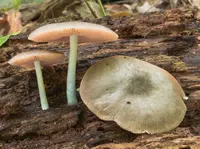
Pluteus americanus
Pluteus americanus
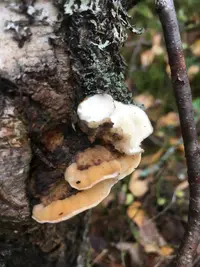
Antrodiella pallescens
Antrodiella pallescens
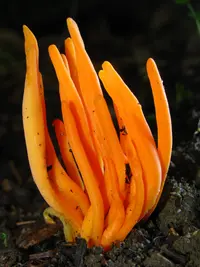
Clavulinopsis aurantiocinnabarina
Clavulinopsis aurantiocinnabarina
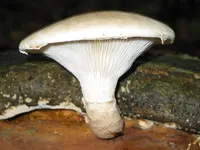
Veiled Oyster
Pleurotus dryinus
Ginkgo Spot
Bartheletia paradoxa
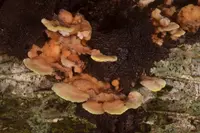
Antrodiella serpula
Antrodiella serpula
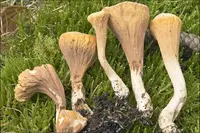
truncated club
Clavariadelphus truncatus
Toothed Crust
Basidioradulum radula