Clean substrate rotation
Use small, sterilized hardwood blocks or chips in rotating trays or containers so each batch can fully colonize and fruit, then be removed and replaced without disturbing actively growing mycelium nearby.

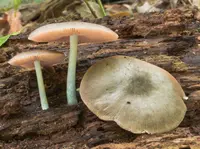
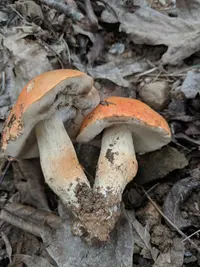
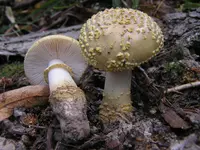
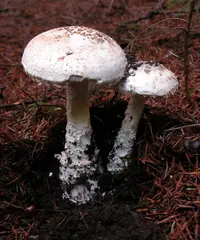
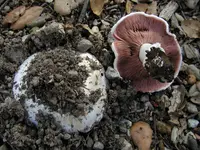
Pluteus americanus is a saprophytic mushroom, not a leafy houseplant. It grows on decaying hardwood, helping break down dead wood and recycle nutrients in forest ecosystems. Caps are usually yellowish to olive with a smooth surface, and the gills turn pink as spores mature.
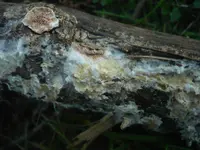
This species is native to North America and is usually found in moist woodlands, often on fallen logs or buried wood. It prefers shaded, humid conditions and does not adapt well to typical pot culture.
Because it needs consistently moist wood and specific microclimate conditions, it is not an easy species to cultivate at home. Anyone who wants to care for Pluteus americanus should understand basic mushroom-growing techniques and wood-based substrates.

Care Difficulty
Moderate Care

Light Preference
Partial Shade

Water Requirements
Keep Soil Moist

Temperature Preference
Warm Climate

Hardiness Zone
Unknown

Soil Texture
Loamy, Organic-rich

Soil pH
Acidic (5.5–6.5)

Soil Drainage
Moist but well-drained

Fertilization
Minimal (feed rarely)
Scan your plant to receive care tips personalized for your specific plant
Available on iOS and Android
This wood-rotting mushroom prefers shaded woodland light rather than direct, open sun.
Moist, not waterlogged, woody substrate is essential for reliable mushroom formation.
This species fruits best in mild, cool conditions typical of temperate forests.
This wood-rotting mushroom is not suitable for typical home humidity control and is best managed in specialized cultivation conditions.
In nature this saprophytic fungus fruits on decaying wood rather than in garden soil, so cultivation focuses on substrate composition, not soil.
This species is not well suited to conventional decorative container growing and is usually handled as a short-term cultivation project on wood-based substrates rather than as a long-term potted specimen.
This native saprotrophic fungus grows on decaying wood and does not benefit from direct fertilization.
As a wild wood-inhabiting mushroom, Pluteus americanus does not require pruning in the horticultural sense.
This species is not managed as a potted or garden plant, so repotting or deliberate transplanting is not part of normal care.
Reproduction is primarily through spores, so conventional plant-style propagation methods do not apply.
Outdoor populations are cold hardy in their native range and need no special winter care from a gardening perspective.

Plant Health Check
Not sure what's wrong with your plant? Check your plant's health inside the app.
When damaged or handled, the gills and sometimes the cap surface can bruise bluish to blue-green, a reaction associated with the presence of psilocybin and related indole alkaloids.
This saprotrophic fungus typically fruits on well-decayed herbivore dung or very rich plant debris, especially in grassy or disturbed sites such as lawns and pastures in eastern North America.
This species was only formally described in 2010, after molecular studies showed that certain blue-bruising North American Pluteus collections were distinct from European look-alikes such as Pluteus salicinus.

Molecular phylogenetic studies place this species in Pluteus section Celluloderma, grouping it with other blue-bruising, psilocybin-containing taxa and helping mycologists better understand the evolutionary relationships of psychoactive mushrooms in this genus.
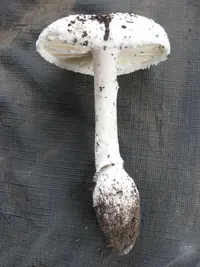
Identification for this species is difficult, and look-alike mushrooms can be dangerously toxic. It should not be eaten unless confirmed by an experienced mycologist. For most people, avoiding consumption is the safest approach.
Keep your plants happy and healthy with plant identification, disease detection, and easy care guidance.