Substrate rotation
Rotate the alder cones or catkins used as substrate every 4–6 weeks to fresher, similarly aged material to prevent nutrient depletion and mold buildup that can suppress new fruiting bodies.

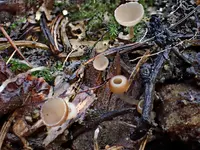
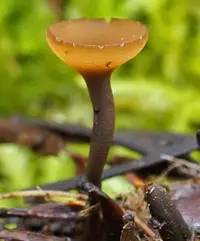
Alder goblet, Ciboria caucus, is a small cup fungus that fruits on fallen alder catkins, forming tiny goblet-shaped discs on short stalks. It is a decomposer, helping break down alder litter in moist woodland floors and along stream banks in cooler regions of the Northern Hemisphere.
The fruiting bodies are usually pale to yellow-brown, with smooth cups that appear in clusters close to the ground. It relies on consistently damp, organic-rich substrates and cool conditions, so it is not a typical indoor or ornamental species.
Because it has specialized habitat needs and depends on alder debris, it is challenging to cultivate intentionally, and attempts to care for alder goblet at home are rarely successful.

Care Difficulty
Moderate Care

Light Preference
Partial Shade

Water Requirements
Regular Water

Temperature Preference
Cool Climate

Hardiness Zone
Unknown

Soil Texture
Loamy, Silty, Organic-rich

Soil pH
Slightly acidic (6.5–7.0)

Soil Drainage
Moist but well-drained

Fertilization
Minimal (feed rarely)
Scan your plant to receive care tips personalized for your specific plant
Available on iOS and Android
This small cup fungus prefers cool, shaded woodland conditions rather than direct sun exposure.
This fungus depends on consistently moist, not waterlogged, leaf litter around alder catkins to fruit well.
This species fruits best in cool to mild conditions typical of late winter to early spring in temperate woodlands.
Humidity is not a major factor for Ciboria caucus, which fruits outdoors on naturally moist alder catkins.
This fungus develops on fallen alder catkins rather than in standard garden soil.
This species is not well suited to ornamental container growing, as it naturally colonizes fallen alder catkins outdoors.
This tiny saprobic fungus usually grows on nutrient-rich alder catkins and needs no deliberate fertilization in cultivation.
Pruning is not relevant for Ciboria caucus, as it is a short-lived cup fungus that completes its life cycle on fallen catkins.
In garden or laboratory contexts, moving this fungus focuses on its substrate rather than traditional repotting.
Propagation of Ciboria caucus is specialized and usually limited to research or fungal cultivation settings.
This species overwinters naturally in outdoor leaf litter and alder catkins and needs no intentional winter care in typical conditions.

Plant Health Check
Not sure what's wrong with your plant? Check your plant's health inside the app.
This fungus fruits almost exclusively on fallen male catkins of alder trees, using the compact, nutrient-rich tissue as its substrate.
Its fruiting bodies form small, pale yellow to ochre cups only a few millimeters across, each lifted on a slender stem that arises from the buried catkin.
The cups typically appear in late winter to early spring, often in large groups on moist ground where alder catkins have accumulated.
This cup fungus is considered inedible. It is small, thin-fleshed, and not collected for food. There is limited information on toxicity, so it should not be eaten or used in cooking under any circumstances.
Keep your plants happy and healthy with plant identification, disease detection, and easy care guidance.