


Use decaying wood
Establish a small bed with partially rotted hardwood branches or chips mixed into leaf litter, since this fungus fruits most reliably where there is a stable source of slowly decomposing woody material.

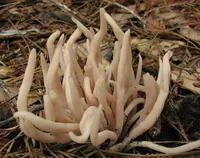
Smoky spindles, Clavaria fumosa, is a small club fungus, not a leafy plant. It forms tight clusters of upright, smoky-gray to beige clubs that resemble tiny coral branches. Fruiting bodies usually appear on soil or moss in mixed woodlands.
This species is found across temperate regions, including parts of Europe and North America, often in late summer to autumn. It relies on natural woodland conditions, so it can be challenging to cultivate intentionally.
For those interested in how to care for Smoky Spindles, it generally prefers undisturbed, moist, humus-rich ground with consistent shade and natural leaf litter, similar to its forest habitat.

Care Difficulty
Hard Care

Light Preference
Shade

Water Requirements
Keep Soil Moist

Temperature Preference
Cool Climate

Hardiness Zone
Unknown

Soil Texture
Loamy, Silty, Organic-rich

Soil pH
Acidic (5.5–6.5)

Soil Drainage
Moist but well-drained

Fertilization
Minimal (feed rarely)
Scan your plant to receive care tips personalized for your specific plant
Available on iOS and Android
This fungus prefers cool, shaded woodland light that mimics its natural forest-floor habitat.
Moist, not saturated, conditions are essential for stable fruiting of Clavaria fumosa.
This species thrives in cool to mild woodland temperatures with moderate seasonal fluctuation.
Clavaria fumosa needs consistently moist, high-humidity conditions similar to a damp forest floor, not typical indoor air.
This fungus fruits best in loose, organic-rich, well-aerated substrate that mimics decaying woodland litter.
This species is only moderately suitable for container growing and is usually kept in shallow trays of substrate rather than decorative pots.
Clavaria fumosa is a woodland fungus that usually does not need fertilization when grown in natural, undisturbed soil.
Pruning is not used as a care technique for Clavaria fumosa, since each fruiting body is temporary and naturally decomposes after releasing spores.
Transplanting Smoky Spindles is rarely successful, as this fungus depends on specific soil fungi and decaying organic matter.
Propagation of Clavaria fumosa is specialized and mainly of interest to experienced mycologists, not typical home growers.
This species is naturally cold hardy in its range and does not require dedicated winter care in gardens or woodlands.

Plant Health Check
Not sure what's wrong with your plant? Check your plant's health inside the app.
This fungus forms tight clusters of upright, club-like fruitbodies with rounded tips that create a smoky, hazy look, which is the basis for both its common and species names.
It is a saprotrophic species, meaning it feeds on dead organic matter in leaf litter and mossy soil, helping to break down plant debris and recycle nutrients in temperate forest ecosystems.
It occurs mainly on nutrient-poor, often moss-rich soils in coniferous and mixed woodlands across Europe and parts of North America, and it tends to appear in late summer to autumn after consistent moisture.

Molecular studies have shown that many former Clavaria species belong in other genera, but Clavaria fumosa has remained a well-supported member of Clavaria, making it a reference species when mycologists compare and revise club fungus classifications.
This fungus is generally regarded as inedible due to its tough texture and lack of culinary value. Identification is difficult, and confusion with other club fungi is possible, so it is safest not to consume it.
Keep your plants happy and healthy with plant identification, disease detection, and easy care guidance.

aromatic earthfan
Sistotrema confluens
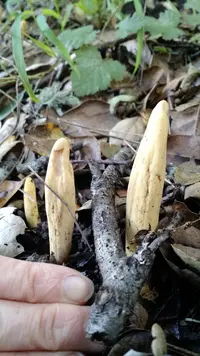
western club coral fungus
Clavariadelphus occidentalis
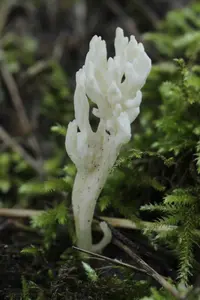
wrinkled club fungus
Clavulina rugosa
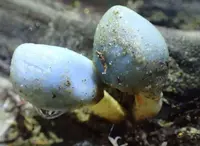
Blue Pouch Fungus
Clavogaster virescens
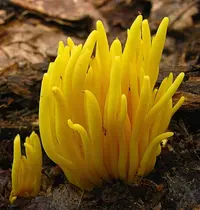
Golden Spindles
Clavulinopsis fusiformis
Ascodichaena rugosa
Ascodichaena rugosa
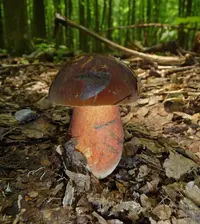
Scarletina Bolete
Neoboletus luridiformis
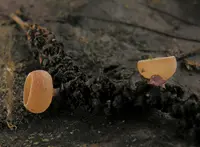
catkin cup
Ciboria amentacea