Host material rotation
Rotate and partially replace spent pine cone or conifer litter in the culture tray each season to provide fresh substrate and reduce buildup of competing fungi and bacteria.

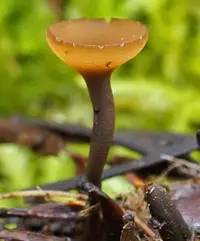
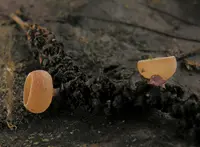
Ciboria rufofusca is a small cup fungus rather than a typical leafy plant. It produces tiny, shallow, brownish cups on slender stalks, often on fallen conifer cones or woody debris. The fruiting bodies appear in cool, moist conditions and can be overlooked due to their size and muted color.
This species occurs mainly in temperate forests of the Northern Hemisphere, especially in conifer woodlands with undisturbed litter. It relies on consistently damp, organic-rich substrates and good air circulation.
Because it is a specialized saprobe, it is not commonly cultivated, and how to care for Ciboria rufofusca is not well established for home conditions.

Care Difficulty
Moderate Care

Light Preference
Shade

Water Requirements
Keep Soil Moist

Temperature Preference
Cool Climate

Hardiness Zone
Unknown

Soil Texture
Organic-rich, Peaty, Loamy

Soil pH
Strongly acidic (4.5–5.5), Acidic (5.5–6.5)

Soil Drainage
Moist but well-drained

Fertilization
Minimal (feed rarely)
Scan your plant to receive care tips personalized for your specific plant
Available on iOS and Android
This small cup fungus prefers cool, shaded woodland light rather than direct sun exposure.
This fungus relies on consistently moist, not waterlogged, conifer litter to develop properly.
This species develops best in cool, moist conditions typical of late winter to early spring in coniferous woods.
This fungus is not typically managed in cultivation, and humidity control is generally unnecessary for Ciboria rufofusca outdoors.
Ciboria rufofusca is a saprophytic fungus that develops on moist, decaying conifer cones rather than in conventional potting soil.
This species is not well suited to conventional container growing, as it depends on natural forest-floor cone beds for normal development.
This fungus typically grows on natural substrates and does not benefit from routine fertilization in cultivation.
Ciboria rufofusca does not require structured pruning because it is a small, short-lived fungus rather than a woody plant.
Transplanting focuses on moving colonized substrate rather than handling individual fungal fruiting bodies.
Practical home propagation of Ciboria rufofusca is specialized and not commonly attempted outside research or advanced mycology.
This species is adapted to natural outdoor seasonal changes and generally does not require targeted winter care in temperate climates.

Plant Health Check
Not sure what's wrong with your plant? Check your plant's health inside the app.
This fungus produces very small, brownish cup-shaped fruiting bodies (apothecia) that typically appear on fallen conifer cones, especially those of spruce and fir, often going unnoticed due to their size and cryptic coloration.
It is strongly associated with decomposing conifer cones and plays a role in breaking down their tough tissues, contributing to nutrient recycling in coniferous forest floors.
In many parts of Europe and North America, its fruiting bodies appear in late winter to early spring, taking advantage of cool, moist conditions on forest litter when competition from other fungi is relatively low.
This fungus is not considered edible or a culinary species. It is small, insubstantial, and poorly documented for human consumption. It is best treated as inedible and left in place for ecological and observation purposes only.
Keep your plants happy and healthy with plant identification, disease detection, and easy care guidance.