Substrate hygiene
Remove and discard spent fruiting bodies and any moldy substrate promptly to reduce spore buildup and opportunistic contaminants that can weaken new flushes.

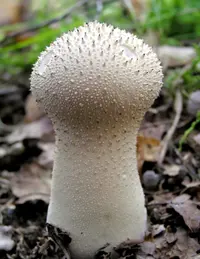
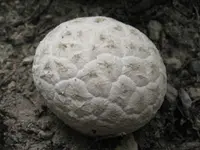
Devil's snuff-box, Lycoperdon perlatum, is a small puffball fungus rather than a leafy plant. It forms rounded, white to tan fruiting bodies covered in tiny spines that darken and smooth with age. When mature, the top opening releases brown spores in a visible puff when tapped. It typically appears on rich, decaying leaf litter or soil in woodlands, parks, and gardens across temperate regions. Growth is seasonal and short-lived, which makes it unpredictable to cultivate at home. Those who try to care for devil's snuff-box often focus on recreating moist, shaded woodland conditions with plenty of organic matter.

Care Difficulty
Moderate Care

Light Preference
Partial Shade

Water Requirements
Keep Soil Moist

Temperature Preference
Cool Climate

Hardiness Zone
Unknown

Soil Texture
Loamy, Organic-rich

Soil pH
Acidic (5.5–6.5), Slightly acidic (6.5–7.0)

Soil Drainage
Moist but well-drained

Fertilization
Minimal (feed rarely)
Scan your plant to receive care tips personalized for your specific plant
Available on iOS and Android
This woodland fungus prefers soft, filtered light similar to a deciduous forest floor.
This species develops best in consistently moist, humus-rich soil that never stays waterlogged.
This puffball is adapted to cool to mild woodland climates with moderate seasonal shifts.
Humidity is not a major factor for Lycoperdon perlatum, which copes well in typical outdoor ranges of 40–70%.
Lycoperdon perlatum prefers moist, airy, organic-rich ground that drains freely yet does not dry out quickly.
This species is poorly suited to container growing and is best established directly in the ground or in natural woodland substrates.
This fungus naturally thrives in low-nutrient woodland soils and usually does not need fertilization when growing devil's snuff-box outdoors.
Lycoperdon perlatum does not require structured pruning, but limited cleanup supports hygiene and spore dispersal in managed areas.
This woodland puffball is seldom grown in containers; management focuses on relocating colonized substrate rather than classic repotting.
Propagation of this puffball is mainly ecological, relying on natural spore production rather than controlled home methods.
This species is cold hardy in temperate climates and normally needs no special winter care outdoors.

Plant Health Check
Not sure what's wrong with your plant? Check your plant's health inside the app.
When the mature puffball is compressed by raindrops or a touch, it forces spores out through a small opening at the top in a visible brown cloud, a mechanism called puff dispersion that efficiently spreads spores into the air.
Young fruiting bodies are covered in dense, white, conical spines that detach with age, leaving a characteristic network of tiny scars that helps distinguish this species from other puffballs.
This species is considered edible only when the interior flesh is firm and uniformly white, since it turns yellowish to olive-brown and powdery as spores mature, at which point it is no longer recommended for consumption.

This puffball often appears in large, scattered groups along forest paths and grassy clearings, and genetic studies indicate that a single individual can release many millions of spores over its short fruiting period, contributing significantly to local fungal spore loads in the air.
Young, firm puffballs with white, marshmallow-like interior are considered edible when correctly identified and thoroughly cooked. Once the inside turns yellow, olive, or brown, they are no longer edible and should not be consumed.
Keep your plants happy and healthy with plant identification, disease detection, and easy care guidance.