Encourage Dense Mounding
Lightly pinch back new shoot tips in late spring to promote a tighter, more dome-shaped habit and increase the number of flowering and fruiting stems.

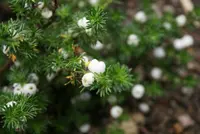
Pearl fruit (Margyricarpus pinnatus) is a small, evergreen shrub grown mainly for its dense habit and clusters of white, bead-like berries. It typically stays compact, forming a low mound with fine, narrow leaves that give it a neat, textured look in borders or containers.
This species is native to dry, open regions of South America, where it experiences bright light and relatively poor soils. It is generally robust once established, but needs good drainage and dislikes waterlogged conditions.
In suitable climates it is easy to maintain, provided excess moisture and heavy frost are avoided. Understanding how to care for Pearl fruit mainly involves balancing strong light with moderate watering and well-drained soil.

Care Difficulty
Easy Care

Light Preference
Full Sun

Water Requirements
Low Water

Temperature Preference
Warm Climate

Hardiness Zone
8–10

Soil Texture
Sandy, Loamy, Rocky

Soil pH
Slightly acidic (6.5–7.0), Neutral (7.0)

Soil Drainage
Well-drained

Fertilization
Minimal (feed rarely)
Scan your plant to receive care tips personalized for your specific plant
Available on iOS and Android
This sun-loving shrub thrives in open, bright sites typical of dry, coastal or steppe habitats.
This drought-tolerant shrub prefers infrequent, deep watering once established.
This species prefers mild, dry conditions and dislikes prolonged freezing or extreme humidity.
This species handles a wide humidity range and usually needs no special adjustment in homes.
Margyricarpus pinnatus prefers lean, fast-draining soil that mimics a sandy, rocky habitat.
This low shrub is suitable for container growing outdoors where winters are mild.
Margyricarpus pinnatus is a low-demand shrub that benefits from light feeding during active growth in poor soils.
Margyricarpus pinnatus responds well to light structural pruning aimed at keeping the shrub compact and healthy.
This shrub is more often grown in the ground than in pots, so focus on careful transplanting rather than frequent repotting.
Margyricarpus pinnatus is commonly propagated from seeds and semi-ripe cuttings when stock plants are healthy and vigorous.
This species is fairly cold tolerant in mild climates but benefits from some winter attention, especially when young or container-grown.

Plant Health Check
Not sure what's wrong with your plant? Check your plant's health inside the app.
This low shrub is native to the dry, windy steppes of southern South America, where it grows in open, rocky soils and tolerates strong exposure and seasonal drought.
The translucent white berries have a firm, almost bead-like skin and are mildly sweet to bland, which is why the plant is commonly called pearl fruit or pearl bush.
Its many short, fine branches form a compact, cushion-like mound, an adaptation that helps reduce wind damage and water loss in its exposed native habitats.
This species spreads slowly by woody stems and does not usually become aggressive in typical garden conditions. In light, well-drained soils it forms low mounds, but regular pruning keeps it compact and prevents unwanted sideways spread.
Keep your plants happy and healthy with plant identification, disease detection, and easy care guidance.