Install sturdy support
Use strong, rust-resistant wires or a trellis set 45–60 cm apart vertically to fan the long canes out, which increases light penetration, airflow, and ease of harvest.

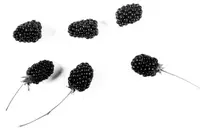
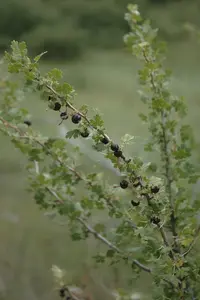
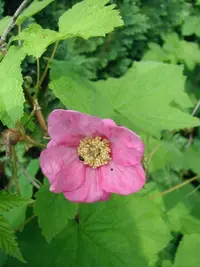
Smooth blackberry (Rubus canadensis) is a deciduous shrub known for its arching, nearly thornless canes and clusters of white flowers followed by black, edible berries. It typically forms dense thickets and spreads by underground stems, making it useful for naturalized hedges and slope stabilization.
This species is native to eastern North America, where it grows in forest edges, clearings, and along roadsides. It is generally easy to grow when given sun to light shade, consistent moisture, and well-drained soil, and understanding how to care for smooth blackberry helps keep plants productive and contained.

Care Difficulty
Moderate Care

Light Preference
Partial Sun

Water Requirements
Moderate Water

Temperature Preference
Cold Hardy

Hardiness Zone
3–7

Soil Texture
Loamy, Sandy, Organic-rich

Soil pH
Acidic (5.5–6.5), Slightly acidic (6.5–7.0)

Soil Drainage
Moist but well-drained

Fertilization
Minimal (feed rarely)
Scan your plant to receive care tips personalized for your specific plant
Available on iOS and Android
Rubus canadensis thrives in full sun but accepts some light shade in many garden settings.
This species prefers consistently moist, well-drained soil rather than cycles of drought and saturation.
This cold-hardy bramble tolerates a wide temperature range when planted outdoors in suitable climates.
This species is adaptable and humidity is rarely a limiting factor outdoors in its normal range.
Rubus canadensis prefers deep, moisture-retentive but well-drained, organic-rich loam for strong, productive growth.
This species can be grown in containers, but it performs best when provided with generous root volume and careful stabilization of its canes.
Rubus canadensis responds well to modest feeding when grown for higher fruit yields.
Pruning Rubus canadensis keeps plants productive, manageable, and healthier.
This species is normally grown in the ground, so focus on thoughtful site transplanting rather than frequent repotting.
Rubus canadensis is commonly multiplied by vegetative methods for consistent fruit quality.
This blackberry is cold hardy in much of its range and usually needs minimal winter attention in the ground.

Plant Health Check
Not sure what's wrong with your plant? Check your plant's health inside the app.
Unlike many other North American blackberries, this species typically lacks the stiff, sharp prickles on its stems, which makes moving through thickets and harvesting fruit easier for animals and people.
Smooth blackberry spreads vigorously by underground rhizomes, forming dense, genetically connected colonies that stabilize soil and provide extensive cover for wildlife.
Its fruits are an important midsummer food for birds, bears, and small mammals, while the dense thickets offer nesting and shelter habitat in eastern North American forests and edges.

Indigenous peoples in eastern North America have long used the edible fruits of smooth blackberry as a seasonal food and its leaves as a traditional astringent tea, and modern flora references still note these ethnobotanical uses as characteristic for this species.
This species spreads by arching canes and underground rhizomes, forming dense thickets over time. Regular pruning, mowing of new shoots, and installing root barriers help keep it contained, especially near property lines or natural areas.
Keep your plants happy and healthy with plant identification, disease detection, and easy care guidance.