


Spore collection setup
Place a sheet of clean paper or foil beneath mature fruiting bodies before they fully open to collect spores for future inoculation or study without disturbing the colony.

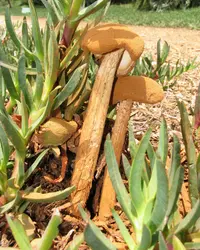
The sandy stilt-puffball, Battarrea phalloides, is an unusual desert-adapted fungus rather than a leafy plant. It produces a tall, dry, woody stalk topped with a rusty-brown spore head that breaks apart into powdery spores.
This species is typically found in arid and semi-arid regions, often in sandy or disturbed soils, and sometimes near shrubs or sparse trees. It is not commonly cultivated, and its specific needs make it challenging to grow intentionally.
Those who attempt to care for Sandy Stilt-puffball should know it favors very dry, open sites with well-drained, sandy soil and minimal organic matter.

Care Difficulty
Hard Care

Light Preference
Full Sun

Water Requirements
Low Water

Temperature Preference
Warm Climate

Hardiness Zone
Unknown

Soil Texture
Sandy, Loamy, Rocky

Soil pH
Slightly acidic (6.5–7.0), Neutral (7.0)

Soil Drainage
Well-drained

Fertilization
Minimal (feed rarely)
Scan your plant to receive care tips personalized for your specific plant
Available on iOS and Android
This desert fungus prefers open, sunny sites similar to its native arid habitats.
This species is adapted to very dry, sandy or desert soils and is highly drought tolerant.
This desert-adapted fungus prefers warm to hot, dry climates with mild to cool winters.
Humidity is not a significant factor for this dryland fungus, which thrives in arid, low-moisture air conditions when caring for Sandy Stilt-puffball.
This fungus requires very dry, mineral, sandy soil that mimics desert or semi-desert conditions.
This species is generally unsuitable for container growing because it depends on extensive, undisturbed soil and specific microhabitats that are difficult to reproduce in pots.
This wild, sand-dwelling fungus generally needs no fertilizer in cultivation or habitat.
Battarrea phalloides does not require true pruning, but spent fruiting bodies can be removed for tidiness or spore control.
Transplanting this fungus is rarely successful because Battarrea phalloides depends on specific sandy, well-drained, low-nutrient sites.
Propagation of this fungus is specialized and not recommended for general cultivation, as it relies on spore dispersal in very specific habitats.
This fungus is generally cold hardy and needs no special winter care once established in suitable sandy soil.

Plant Health Check
Not sure what's wrong with your plant? Check your plant's health inside the app.
This fungus produces a tall, woody, hollow stalk that lifts a powdery spore mass high above the ground, allowing wind to disperse the spores over long distances in open, sandy habitats.
It typically grows on dry, sandy or disturbed soils, often in semi-arid regions and along roadsides or in waste ground, reflecting a strong adaptation to nutrient-poor, low-organic substrates.
After the spore-bearing head has disintegrated, the tough, fibrous stalk can persist for months, sometimes years, acting as a long-lasting indicator that the fungus fruited at that spot.

Historically, its tall, drumstick-like fruiting bodies were sometimes collected as natural curiosities and misidentified as small desert plants because the woody stem and withered cap remain standing long after typical mushrooms have decayed.
Yes. This fungus reproduces from spores, which function like very fine seeds. In cultivation, spores are usually sown on sterile, sandy, well-drained substrates and kept dryish. Success is unpredictable and mainly of interest to specialist growers or researchers.
Keep your plants happy and healthy with plant identification, disease detection, and easy care guidance.

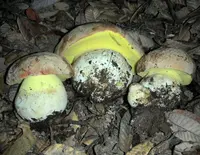
Brown Butter Bolete
Butyriboletus persolidus
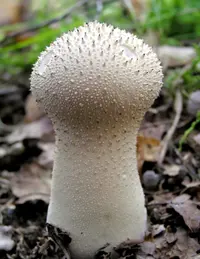
devil's snuff-box
Lycoperdon perlatum
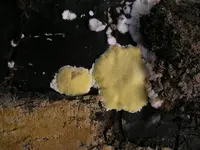
Lemon-colored Antrodiella
Antrodiella citrinella
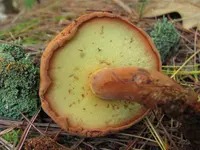
Wood Bolete
Buchwaldoboletus lignicola
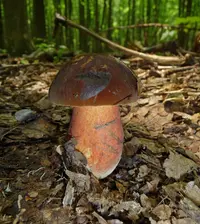
Scarletina Bolete
Neoboletus luridiformis
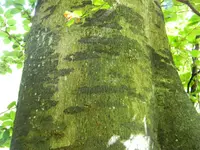
Ascodichaena rugosa
Ascodichaena rugosa
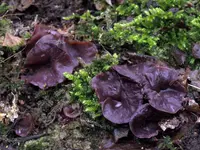
Ascocoryne cylichnium
Ascocoryne cylichnium
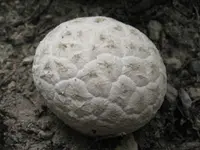
Calbovista
Calbovista subsculpta