Brunneoporus juniperinus Care

Brunneoporus juniperinus

About Brunneoporus juniperinus

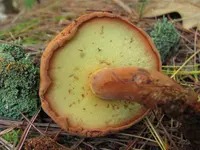
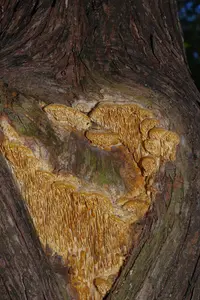
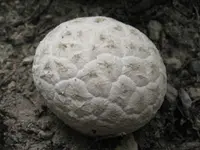
Brunneoporus juniperinus is not a typical leafy houseplant but a wood-decaying bracket fungus that forms flat, crust-like fruiting bodies on conifer wood, especially juniper. It has a brownish to cinnamon surface with tiny pores on the underside, creating a textured, often irregular layer on dead trunks or branches.

This species occurs mainly in temperate regions, where it plays an important role in breaking down dead wood and recycling nutrients in forest ecosystems. It is not commonly cultivated, so information on how to care for Brunneoporus juniperinus in gardens or indoors is very limited.

In nature it prefers cool, moist, shaded conditions and well-decayed, resinous conifer wood as its substrate, rather than soil in a pot or bed.

Main Plant Requirements

Care Difficulty

Moderate Care

Light Preference

Partial Shade

Water Requirements

Moderate Water

Temperature Preference

Warm Climate

Hardiness Zone

Unknown

Soil Texture

Loamy

Soil pH

Slightly acidic (6.5–7.0)

Soil Drainage

Well-drained

Fertilization

Minimal (feed rarely)

Get Personalized Care Plan

Scan your plant to receive care tips personalized for your specific plant

Available on iOS and Android

How to Care for the Brunneoporus juniperinus

This fungus prefers stable, moderate light conditions similar to those found on sheltered, shaded conifer wood.

  • Provide bright shade or dappled light, roughly the equivalent of 1–2 hours of weak morning sun filtered through canopy, avoiding direct midday or afternoon sun that can dry the substrate too quickly.
  • Allow partial shade to deep shade; aim for conditions similar to a north-facing edge or forest understory where light is indirect for most of the day.
  • In summer, protect the host wood from harsh sun and wind; in winter, ensure it still receives open shade rather than being buried under dense, light-blocking debris.

Moisture management focuses on keeping the host wood evenly damp without remaining waterlogged.

  • Maintain the substrate so it feels evenly moist but not spongy; allow the outer 2–5 mm of bark or wood surface to dry slightly before re-wetting if cultivated or stored.
  • During warmer, windy, or very dry periods, check moisture more often, as Brunneoporus juniperinus on small logs or branches can dry out quickly and become inactive.
  • Avoid standing water or constantly saturated wood, which favors competing molds; pale, shriveling pore surfaces signal dryness, while sour odor or slimy growth indicates excess moisture.

This species tolerates cool to mild conditions but is stressed by severe heat or prolonged hard frost.

  • Aim for a general range of 40–70°F (4–21°C) for sustained activity, with the most stable growth usually occurring in the cooler part of this span.
  • It can survive brief drops close to 20°F (−6°C), but repeated hard freezes combined with drying winds can damage the host wood and reduce fruiting.
  • Sustained heat above 80°F (27°C), especially when dry, can halt development; in hot seasons, shelter the substrate in shaded, cooler microhabitats to moderate temperature swings.

This fungus is tolerant of a wide humidity range and rarely needs special humidity control in cultivation.

Brunneoporus juniperinus requires a loose, well-aerated substrate that mimics decaying conifer wood rather than typical garden soil.

  • Use a coarse mix of shredded conifer bark, wood chips, and a small amount of compost to provide structure and nutrients.
  • Ensure very fast drainage; water must pass through within seconds, leaving the substrate moist but never waterlogged.
  • Aim for slightly acidic conditions, around pH 5.5–6.5, which match its natural conifer-associated habitat.
  • Avoid dense, clay-based, or peat-heavy mixes that stay wet for long periods and restrict airflow around the mycelium.

This species is generally unsuitable for conventional container growing and is best maintained on inoculated wood or logs rather than in pots.

This species is adapted to low-nutrient woodland conditions and usually needs little or no fertilization in garden or container culture.

  • If growth appears weak, use a balanced, dilute liquid fertilizer (for example 10-10-10 at 1/4–1/2 strength) in spring and early summer only.
  • Apply no more than every 4–6 weeks during active growth, and skip feeding entirely in winter dormancy.
  • Prefer gentle options such as compost extract or well-rotted leaf mold tea rather than heavy salt-based products.
  • Always water lightly before and after feeding to limit root burn and salt buildup in the substrate.

Brunneoporus juniperinus needs minimal structural pruning, mainly to maintain plant health and safe shape.

  • Carry out any pruning in late winter or very early spring, before strong new growth begins.
  • Remove only dead, diseased, or crossing branches, cutting back cleanly to a healthy junction with sterilized bypass pruners.
  • Thin crowded interior twigs sparingly to improve light and air movement without changing the natural form.
  • Avoid heavy cuts on mature wood, which can stress the plant and encourage weak, unbalanced regrowth.

This species is more often established outdoors than kept in long-term containers, so focus on careful transplanting rather than frequent repotting.

  • Plan transplanting for early spring or early fall, when temperatures are mild and moisture is reliable.
  • Look for signs such as roots circling the pot, slow top growth, and rapid drying of the substrate before repotting container-grown plants.
  • Move to a slightly larger container or new site, keeping the root ball intact and setting it at the same depth as before.
  • Water thoroughly after transplanting, then keep the root zone evenly moist and shaded for 1–2 weeks to reduce stress.

Propagation of Brunneoporus juniperinus is possible but usually slow and better suited to patient or experienced growers.

  • Use fresh spores or seeds in late winter to early spring, sowing on a sterile, moist, fine substrate.
  • Maintain consistently high humidity and stable temperatures, typically 65–72°F, with gentle indirect light to support germination or establishment.
  • If vegetative material is available, keep sections small and handle gently to avoid damaging delicate tissues.
  • Provide good air circulation and avoid overwatering to limit fungal problems during the extended establishment period.

This species is generally cold hardy in temperate climates and often needs only basic winter care once established outdoors.

  • In regions below its known hardiness, add a 5–8 cm layer of loose mulch around the root zone, keeping material off stems.
  • Container-grown specimens are more vulnerable and can be moved into an unheated garage or cold frame during severe freezes.
  • Reduce watering in winter, keeping the substrate just barely moist to prevent both desiccation and waterlogged conditions.

Care Tips

Substrate rotation

Rotate or slightly shift inoculated wood pieces every 3–4 months so fresh surfaces are exposed to air, which encourages even colonization and more uniform fruiting bodies.

Moisture buffering

Add a thin top layer of coarse, well‑soaked wood chips around colonized juniper wood to buffer rapid moisture loss and reduce cracking of the substrate during dry spells.

Targeted sanitation

Remove and discard any obviously contaminated or slimy wood sections as soon as they appear to prevent competing fungi from overtaking the Brunneoporus juniperinus colony.

Shaded airflow corridors

Position colonized logs in a single layer on slatted racks or bricks rather than directly on soil to maintain gentle cross‑ventilation while still providing shaded, protected conditions.

Seasonal hydration checks

In hot or windy periods, briefly lift a log to feel its weight and inspect cut ends; if the wood feels very light and the ends are pale and dry, rehydrate with a slow soak to support stable growth when caring for Brunneoporus juniperinus.

Common Pests and Diseases

White pocket rot

This disease causes white, spongy pockets in the wood as the fungus selectively decays lignin and leaves a pale, stringy texture. Symptoms include weakened branches or stems that break easily and show pale, fibrous interiors.

Solution

Prune out and safely dispose of affected woody material as soon as decay is noticed, cutting back into firm, sound tissue. Improve plant vigor through proper watering and nutrition, avoid wounding trunks or branches, and keep dead wood and logging debris away from living hosts to limit new infections when growing Brunneoporus juniperinus outdoors near woody plants.

Brown cubical rot

This disease produces dark brown, brittle wood that breaks into cube-like blocks as the structural tissues fail. Symptoms include reduced structural stability, cracking, and breakage of stems or adjacent woody hosts where the fungus is present.

Solution

Remove and destroy severely decayed wood and reduce mechanical stress on affected trees or structural timbers. Keep nearby living hosts healthy, avoid chronic moisture against wood surfaces, and maintain good airflow to slow fungal development and limit spread to new material.

Bark beetle association

These insects can tunnel through bark and underlying wood, creating galleries that allow the fungus to colonize and further weaken woody tissues. Symptoms include small round exit holes, fine wood dust, and localized dieback around infested areas.

Solution

Cut out and dispose of heavily infested branches or sections, and avoid leaving fresh cut logs or stumps nearby that attract beetles. Support tree health with appropriate watering and mulching, and when necessary use targeted trunk or bark treatments approved for bark beetles, applied according to local extension service guidance.

Wood-boring larvae

These insects develop inside dead or weakened wood, increasing internal damage and facilitating fungal spread through their tunnels. Symptoms include hidden internal galleries, frass (powdery or granular waste), and progressive structural weakness in affected stems or timbers.

Solution

Remove and destroy wood that shows extensive tunneling, and promptly clear dead branches or cut material that could host larvae. Encourage natural predators such as birds where possible and, in high-value timber or structural settings, consider localized injection or surface treatments specifically labeled for wood borers, following all product directions.

Interesting Facts

Juniper specialist fungus

This polypore fungus grows specifically on dead or dying juniper wood, especially Juniperus communis, and is rarely reported on other hosts.

Brown pore surface

Its fruiting body has a distinct brown, poroid undersurface instead of gills, with tiny round tubes that release spores into the air.

Northern distribution pattern

It has a mainly boreal to temperate distribution and is recorded from northern and central Europe, where it helps decompose juniper in dry, open habitats.

FAQs about Brunneoporus juniperinus

This species is primarily an outdoor organism associated with juniper wood, thriving in cool, humid, shaded forest conditions. Indoors it is difficult to maintain because its natural substrate, airflow, and microbial partners are hard to replicate consistently.

Grow Healthy Plants with Botan Care

Keep your plants happy and healthy with plant identification, disease detection, and easy care guidance.

Botan plant care app — identify plants on mobile

Explore More Plants