Encourage Compact Shape
Pinch soft shoot tips every 4–6 weeks during active growth to keep plants dense, increase branching, and produce more flower clusters instead of tall, sparse stems.

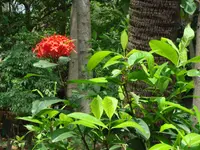
Chinese ixora (Ixora chinensis) is a compact tropical shrub valued for its dense clusters of small, star-shaped flowers in warm reds, oranges, pinks, or yellows. It often forms a rounded bush with glossy green leaves and is commonly used as a flowering hedge or container plant in warm climates.
This species occurs naturally in parts of tropical Asia and thrives in consistently warm, humid conditions. It prefers bright light, evenly moist but well-drained soil, and benefits from slightly acidic conditions. With the right environment, it is a rewarding choice for those who want to learn how to care for Chinese Ixora.

Care Difficulty
Moderate Care

Light Preference
Full Sun

Water Requirements
Keep Soil Moist

Temperature Preference
Tropical / Frost Sensitive

Hardiness Zone
10–11

Soil Texture
Sandy, Loamy, Organic-rich

Soil pH
Strongly acidic (4.5–5.5), Acidic (5.5–6.5)

Soil Drainage
Moist but well-drained

Fertilization
Moderate (every 2–4 weeks)
Scan your plant to receive care tips personalized for your specific plant
Available on iOS and Android
This shrub needs bright light to flower well but burns in harsh conditions.
Moist, well-drained soil is essential for healthy growth and flowering.
This tropical shrub prefers consistently warm, frost-free conditions for reliable flowering.
This shrub needs sustained moderate to high humidity for best foliage and flowering.
Ixora chinensis prefers a moist, airy, slightly acidic mix that drains quickly but does not dry out too fast.
This species is well suited to container growing in warm climates and bright locations.
This shrub benefits from consistent, moderate feeding to support dense foliage and flowering.
Thoughtful pruning keeps Ixora chinensis compact, healthy, and flowering well.
Container-grown plants and young shrubs benefit from careful repotting or transplanting to maintain vigor.
This species is most commonly propagated from semi-hardwood cuttings for consistent flowering plants.
Cold-sensitive plants like Ixora chinensis need structured winter care in climates with frost.

Plant Health Check
Not sure what's wrong with your plant? Check your plant's health inside the app.
Ixora chinensis is naturally native to southern China and parts of Southeast Asia, rather than broadly across the tropics, and many wild populations grow in warm, lowland shrublands and forest edges rather than deep rainforest.
The species has long, thin flower tubes that are well adapted to pollinators with narrow mouthparts, such as certain butterflies, which can reach the nectar at the base of the tube while transferring pollen between flowers.
Compared with several other Ixora species, I. chinensis typically has smaller, relatively narrow evergreen leaves, which helps it tolerate high light and heat without excessive water loss in exposed garden settings.

In several regions of southern China, long-flowering forms of Ixora chinensis have been used in classical garden design as living color accents positioned near walkways and courtyards, because the dense clusters of small red or orange flowers hold their color for extended periods and create a visual focal point even in compact urban gardens.
Poor flowering usually comes from insufficient light, nutrient imbalance, or old, unpruned wood. Moderate, regular feeding, pruning lightly after flushes, and avoiding heavy shade generally restore blooms. Consistent conditions matter more than frequent changes or strong interventions.
Keep your plants happy and healthy with plant identification, disease detection, and easy care guidance.