Selective cane thinning
Every 2–3 years, remove a few of the oldest, thickest stems at ground level to keep the shrub open, improve air flow, and encourage vigorous new shoots that fruit better.

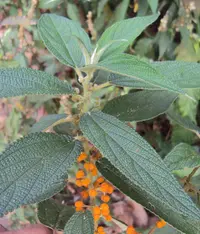
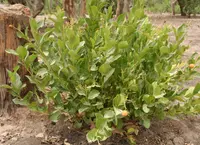
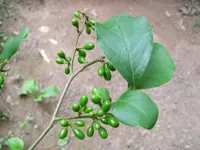
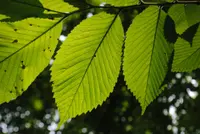
Orange wild rhea (Debregeasia longifolia) is a fast-growing shrub or small tree from the nettle family, usually found in warm, humid hills and forest edges. It often forms dense thickets with many upright stems and softly hairy, elongated leaves. Small, clustered flowers are followed by orange to reddish, bead-like fruits that attract wildlife. In gardens it is mainly used as an informal hedge, wildlife plant, or for naturalistic plantings rather than as a showy ornamental. It generally prefers bright light, steady moisture, and well-drained, fertile soil. Understanding how to care for orange wild rhea starts with providing space for its vigorous growth and managing its spread if needed.

Care Difficulty
Moderate Care

Light Preference
Partial Shade

Water Requirements
Moderate Water

Temperature Preference
Warm Climate

Hardiness Zone
9–11

Soil Texture
Loamy, Silty, Organic-rich

Soil pH
Acidic (5.5–6.5), Slightly acidic (6.5–7.0)

Soil Drainage
Moist but well-drained

Fertilization
Minimal (feed rarely)
Scan your plant to receive care tips personalized for your specific plant
Available on iOS and Android
Debregeasia longifolia grows best with bright, indirect light similar to an open forest edge.
Debregeasia longifolia prefers consistently moist but not waterlogged soil.
This species prefers mild, frost‑free conditions and responds best to stable temperatures.
This species handles a wide humidity range but benefits from moderately moist air.
Provide deep, loose, moisture-retentive but well-drained soil for Debregeasia longifolia.
This species can adapt to container growing when given enough root space and stable support.
Debregeasia longifolia is a tough shrub that benefits from light feeding in poor soils but usually needs only modest nutrition.
Debregeasia longifolia responds well to structured pruning that maintains size and encourages dense, healthy growth.
This species is usually grown in the ground, so transplanting young plants correctly matters more than frequent repotting.
New plants are most often raised from semi-ripe cuttings or seed under warm, stable conditions.
In mild climates this shrub is fairly cold tolerant and usually needs only light winter attention.

Plant Health Check
Not sure what's wrong with your plant? Check your plant's health inside the app.
Although it belongs to the nettle family (Urticaceae), this shrub lacks the stinging hairs typical of many relatives, so its leaves can usually be handled without irritation.
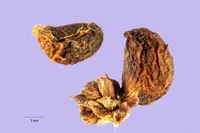
The plant produces small orange to red drupes that are eaten by birds, which then disperse the seeds and help maintain forest-edge and riverside plant communities in its native range.
This species often colonizes landslides, forest gaps, and riverbanks, acting as an early-successional shrub that stabilizes soil and provides shade for later-establishing trees.

The bark fibers of this species have been traditionally used in parts of South and Southeast Asia to make coarse ropes and cordage, reflecting its long-standing value as a local fiber plant rather than only as a wild shrub.
Growth is moderately fast. In suitable warm, moist conditions it can add 30–60 cm of height per year, forming a dense shrub or small tree. Fertile soil, consistent moisture, and space to spread support growing orange wild rhea effectively.
Keep your plants happy and healthy with plant identification, disease detection, and easy care guidance.