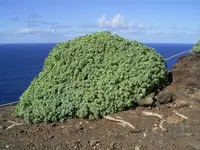
Wind-shaping early
In windy sites, lightly stake young trees for the first 1–2 years and prune to a single strong leader so the canopy develops a balanced, wind-resistant structure.

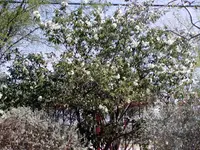
Anacahuita, Cordia boissieri, is a small evergreen tree or large shrub valued for its dense canopy and prolonged flowering season. It typically forms a rounded crown with gray bark and thick, slightly fuzzy leaves.
The plant bears clusters of white, funnel-shaped flowers that attract pollinators, followed by small yellowish fruits. In its native range of south Texas and northeastern Mexico, it thrives in hot, dry landscapes and poor, rocky soils.
Its tolerance of drought, heat, and alkaline soils makes it relatively easy to grow in arid and semi-arid climates. Gardeners who care for anacahuita should note that it prefers full sun, good drainage, and low to moderate moisture once established.

Care Difficulty
Easy Care

Light Preference
Full Sun

Water Requirements
Low Water

Temperature Preference
Warm Climate

Hardiness Zone
8–11

Soil Texture
Sandy, Loamy, Rocky

Soil pH
Neutral (7.0), Slightly alkaline (7.0–7.5)

Soil Drainage
Well-drained

Fertilization
Minimal (feed rarely)
Scan your plant to receive care tips personalized for your specific plant
Available on iOS and Android
Cordia boissieri thrives in bright, direct light typical of hot, sunny climates.
This drought-tolerant shrub prefers deep, infrequent watering once established.
This species is adapted to hot, semi-arid climates and prefers warm to hot conditions year-round.
Cordia boissieri tolerates dry conditions and typically does not need special humidity management.
Cordia boissieri prefers lean, fast-draining soil that mimics its native arid habitats.
This species can be grown in containers, mainly in warm regions or where winter protection is needed.
Cordia boissieri grows reasonably well in lean soils, but light feeding improves flowering and canopy density.
Pruning Cordia boissieri helps maintain structure, encourage flowering, and keep it manageable in landscapes.
This species is usually grown in-ground, so focus on transplanting young trees rather than frequent repotting.
Cordia boissieri is most often propagated by seeds and semi-hardwood cuttings under warm conditions.
Cordia boissieri is moderately frost sensitive and benefits from basic winter protection in cooler regions.

Plant Health Check
Not sure what's wrong with your plant? Check your plant's health inside the app.
This species is native to the Tamaulipan thornscrub and dry woodlands of northeastern Mexico and southern Texas, where it naturally grows on alkaline, limestone-derived soils with low rainfall.
In suitable warm climates it can flower for many months of the year, repeatedly producing clusters of white, funnel-shaped blooms that provide extended nectar resources for pollinators.
Its fleshy drupes are eaten by many bird species and small mammals in its native range, and the dense canopy offers shelter and nesting sites in otherwise open, arid landscapes.

In parts of northern Mexico, this species has been traditionally planted as a living fence and shade tree around homesteads and fields, taking advantage of its tolerance of heat, drought, and poor, calcareous soils.
Yes, this species grows reliably from fresh seed. Sow in warm conditions, lightly covered, and keep evenly moist until germination. Seedlings benefit from bright light and careful watering to prevent damping-off, a fungal issue that kills young plants.
Keep your plants happy and healthy with plant identification, disease detection, and easy care guidance.