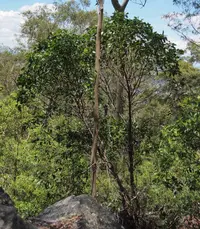
Weeping Myall Care (Acacia pendula)

Also known as: myall acacia, Balaar, Boree, Myall, Nilyah, Silver-leaf Boree, True Myall, Myall Tree
Weeping Myall

About Weeping Myall

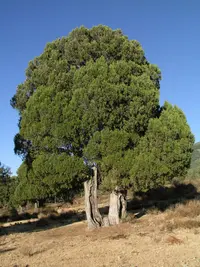
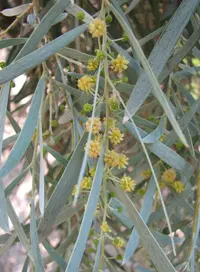
Weeping myall, Acacia pendula, is a small to medium evergreen tree from inland Australia, valued for its graceful, pendulous branches and fine blue‑grey foliage. It forms a dense, rounded crown that provides light, filtered shade and a distinct architectural look in dry gardens and larger landscapes.

This species naturally occurs in semi‑arid woodlands and floodplains, so it is adapted to drought, poor soils, and high light. Once established, it is generally low maintenance, which makes it attractive for gardeners wanting to care for Weeping Myall with minimal intervention.

Acacia pendula prefers full sun, well‑drained soil, and occasional deep watering rather than frequent shallow moisture, conditions that align well with water‑wise or xeric planting schemes.

Main Plant Requirements

Care Difficulty

Easy Care

Light Preference

Full Sun

Water Requirements

Low Water

Temperature Preference

Warm Climate

Hardiness Zone

8–10

Soil Texture

Sandy, Loamy, Clay

Soil pH

Slightly acidic (6.5–7.0), Slightly alkaline (7.0–7.5)

Soil Drainage

Well-drained

Fertilization

Minimal (feed rarely)

Get Personalized Care Plan

Scan your plant to receive care tips personalized for your specific plant

Available on iOS and Android

How to Care for the Weeping Myall

Acacia pendula thrives in open, bright sites with strong but not extreme sun exposure.

  • Provide full sun for 6–8 hours daily; morning and early afternoon sun are ideal, with some light shade in very hot late afternoons.
  • Young trees and newly planted Weeping Myall benefit from temporary filtered light or 30–40% shade cloth during intense summer sun to reduce leaf scorch.
  • In light shade (3–4 hours of direct sun), plants survive but grow looser; watch for sparse foliage and leggy shoots as signs of insufficient light.

Acacia pendula is drought-tolerant once established and prefers deep, infrequent watering over frequent light applications.

  • In the first 1–2 years, water when the top 5–8 cm of soil are completely dry, applying a slow, deep soak that moistens the root zone rather than the surface only.
  • Ensure fast-draining soil or a slope; persistent puddling, sour odor, or yellowing, soft leaves indicate overwatering and possible root rot risk.
  • Mature trees in the ground often rely on rainfall; prolonged heat or dry wind may show as slight leaf curling or dull foliage, signaling the need for a thorough watering.

This species is adapted to warm, dry climates and tolerates a wide temperature range once established.

  • Optimal growth occurs around 70–85°F (21–29°C), especially during the main growing season, with good airflow to limit heat stress.
  • Acacia pendula tolerates brief drops to about 20–25°F (-6 to -4°C) when mature, but young plants are more vulnerable and benefit from frost protection.
  • In hot periods above 100°F (38°C), the tree usually copes well if roots are mulched and soil is not waterlogged, which reduces heat and drought stress.

This species is adapted to arid climates, so humidity is rarely a concern for healthy growth.

Acacia pendula prefers lean, well-drained mineral soils that do not stay wet for long.

  • Use sandy or sandy-loam soil with low to moderate organic matter to mimic its native dry woodland habitat.
  • Ensure very sharp drainage; mix roughly 50–60% coarse sand or fine gravel with 40–50% loam-based mix.
  • Aim for slightly acidic to neutral pH, around 6.0–7.2, as this supports root function and nutrient uptake.
  • Avoid compacted, heavy clay or constantly moist substrates, which promote root rot and poor aeration.

This species can be grown in containers when young or kept small, but long-term size and root depth limit its suitability.

  • Select a deep, heavy container to counterbalance the weeping top growth and reduce tipping in strong winds.
  • Use a very fast-draining mix and raise the pot on feet so excess water escapes quickly after rain or irrigation.
  • Choose light-colored or thick-walled pots in hot climates to reduce root-zone overheating and moisture loss extremes.

Acacia pendula grows naturally in low‑nutrient soils and usually needs only light feeding in cultivation.

  • Use a low‑phosphorus, balanced NPK or native‑plant slow‑release fertilizer in spring at half the label rate.
  • Apply once at the start of the growing season; avoid repeated applications that can cause soft, weak growth.
  • In very poor soils, incorporate a thin layer of well‑aged compost around, not against, the trunk.
  • Do not feed during winter or dormancy; excess nutrients reduce drought tolerance in Weeping Myall.

Acacia pendula benefits from light, selective pruning to maintain a stable framework and safe clearance.

  • Prune in late winter or very early spring before active growth, avoiding extreme heat or drought periods.
  • Remove dead, diseased, crossing, or storm‑damaged wood first to reduce disease entry points.
  • Thin congested inner branches to improve airflow while keeping the natural weeping silhouette.
  • Use clean, sharp bypass pruners or a pruning saw, making smooth cuts just outside the branch collar.

This species is usually planted in the ground; focus on careful transplanting rather than frequent repotting.

  • Transplant young trees in late winter to early spring when growth is just starting and temperatures are mild.
  • Move when roots circle the pot, growth slows, or the root ball dries out very quickly after watering.
  • Choose a sunny site with free‑draining soil; plant at the same depth and water in thoroughly to settle soil around roots.
  • Minimize root disturbance, keep the root ball intact, and mulch 5–8 cm deep to reduce stress and conserve moisture.

Propagation of Acacia pendula is typically done from seed, with some use of semi‑hardwood cuttings by experienced growers.

  • Collect ripe seed pods, remove seeds, then scarify by nicking the coat or soaking in just‑boiled water and cooling.
  • Sow in a free‑draining, low‑phosphorus mix in late winter to early spring and keep slightly moist, not wet.
  • Provide bright light, good airflow, and temperatures around 68–77°F to support steady germination and seedling growth.
  • Take semi‑hardwood cuttings in warm months, use rooting hormone, and place in a covered, well‑aerated propagation mix.

Acacia pendula is adapted to mild, dry winters and needs some attention in colder or wetter climates.

  • Mature trees tolerate light frosts but may suffer damage below about 20°F, especially when young.
  • Apply a 5–8 cm mulch layer around the root zone in late fall, keeping it clear of the trunk.
  • In colder regions, grow in large containers and move under cover or into an unheated, bright space for winter.
  • Avoid waterlogged soil; ensure good drainage so roots do not sit in cold, saturated conditions.

Care Tips

Early form training

In the first 2–3 years, lightly stake the central leader and prune only competing upright shoots so the plant develops a strong single trunk before the natural weeping canopy forms.

Wind‑hardening routine

In open or windy sites, gradually reduce staking tension over 6–12 months and allow controlled movement in the wind so the trunk and roots strengthen rather than relying long term on rigid supports.

Weed‑free dripline

Keep a 30–60 cm weed‑free circle around the base using coarse mulch or landscape fabric so roots do not compete with turf or vigorous weeds for limited moisture in dry conditions.

Low‑disturbance mulching

Refresh mulch once a year by adding a thin top‑up layer instead of disturbing the existing mulch and surface roots, which helps preserve the delicate biological crust that benefits Acacia pendula care.

Legume‑aware fertilizing

Use only light, low‑nitrogen fertilizer or none at all once the tree is established, since this legume can fix its own nitrogen and heavy feeding can cause weak, overly lush growth when growing Weeping Myall.

Common Pests and Diseases

Galling psyllids

These insects cause swollen, blister-like galls on leaves and young stems, often leading to distorted growth and reduced vigor. Symptoms include thickened foliage, yellowing patches, and premature leaf drop on affected branches.

Solution

Prune and destroy heavily galled shoots to reduce the population and improve appearance, avoiding removal of more than 20–25% of the canopy at one time. Encourage natural predators, and if infestations are heavy on young plants, use a horticultural oil or systemic insecticide labeled for psyllids, applied during early flush growth following local label directions.

Acacia leaf miner

This pest creates winding, pale tunnels inside leaves, which can lead to browning, curling, and loss of photosynthetic area. Symptoms include thin, papery patches and serpentine trails visible when leaves are held to the light.

Solution

Remove and dispose of leaves with fresh mines to lower larval numbers, focusing on young foliage. For repeated or severe attacks on small trees, use a systemic insecticide or a spinosad-based product targeting leaf miner larvae, applied when new flushes of growth start to show initial tunneling.

Armillaria root disease

This disease, caused by Armillaria fungi, leads to gradual decline, sparse foliage, branch dieback, and sometimes sudden collapse in stressed or overwatered trees. Symptoms include poor growth, excessive resin at the base, and white fan-shaped fungal growth under the bark near the root collar.

Solution

Remove and destroy severely affected trees including as much of the root system as practical, and avoid replanting susceptible woody species in the same spot for several years. Improve drainage, avoid excess irrigation, and keep mulch and soil from piling against the trunk to lower the risk for nearby or newly planted acacias, following targeted Acacia pendula care instructions for arid-climate species.

Scale insects

These insects attach to stems and leaf bases as small bumps and feed on sap, leading to yellowing foliage, reduced growth, and sticky honeydew that can foster sooty mold. Symptoms include rough, crusty patches on twigs and the presence of blackish mold on leaves or nearby surfaces.

Solution

Scrape or wipe off light infestations with a soft brush or cloth, then rinse the foliage with water to remove honeydew and mold. For heavier infestations, apply horticultural oil or insecticidal soap thoroughly to all twig and branch surfaces during mild weather, repeating as needed according to product directions.

Fungal leaf spot

This disease causes small, dark brown to black spots on leaflets that may enlarge and merge, leading to patchy yellowing and some leaf drop, especially after extended wet or humid periods. Symptoms include irregular lesions often with a slightly darker border and a thin, papery texture in badly affected tissue.

Solution

Prune to thin dense inner branches and improve airflow, and avoid overhead watering that keeps foliage wet for long periods. Remove and dispose of fallen leaves, and if spots continue to spread, use a broad-spectrum fungicide labeled for ornamental trees, applied at the first sign of new lesions and repeated as directed in wet seasons.

Interesting Facts

Specialist arid-adapted foliage

The narrow, grey-blue structures that look like leaves on Acacia pendula are actually phyllodes, flattened leaf stalks that reduce water loss and reflect heat, helping the tree survive in hot, dry inland climates.

Important inland fodder tree

In its native Australian rangelands, this species is valued as a drought fodder source, since livestock can browse its foliage and fallen pods when other vegetation has dried off.

Salinity and clay tolerance

This tree naturally occurs on heavy clay soils, often in areas with some soil salinity, and is used in land restoration projects because it can stabilize degraded soils where many other woody species fail.

Botan icon

Did you know?

Acacia pendula has been widely planted outside its natural range in Australia, and in some regions it hybridizes with closely related acacia species, which is raising long-term conservation concerns about the genetic integrity of wild, pure populations.

FAQs about Weeping Myall

Yellowing foliage often results from waterlogged soil, poor drainage, or sudden changes from very dry to very wet conditions. Compacted or heavy clay soils, root damage from construction, and prolonged flooding can also reduce oxygen to roots and cause yellow leaves.

Grow Healthy Plants with Botan Care

Keep your plants happy and healthy with plant identification, disease detection, and easy care guidance.

Botan plant care app — identify plants on mobile

Explore More Plants