Rubus macrostachys Care

About Rubus macrostachys

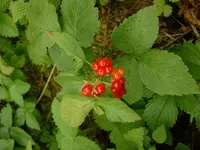
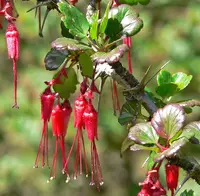
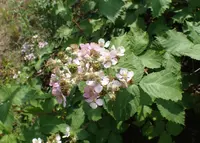
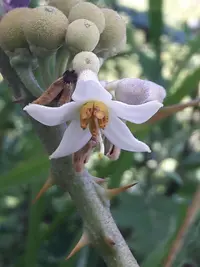
Rubus macrostachys is a perennial shrub in the blackberry and raspberry group, forming arching or scrambling canes with a bramble-like habit. It typically carries compound leaves and seasonal white to pale pink flowers, followed by small aggregate fruits.

This species is native to parts of Africa, where it often grows in thickets, forest margins, and other semi-wild habitats. It can spread by vigorous shoots and may form dense stands if conditions are favorable.

Gardeners who care for Rubus macrostachys should expect a hardy, resilient plant that tolerates a range of soils but prefers well-drained ground with regular moisture. It generally grows best in full sun to light shade, where airflow helps keep foliage healthy.

Main Plant Requirements

Care Difficulty

Moderate Care

Light Preference

Partial Sun

Water Requirements

Moderate Water

Temperature Preference

Warm Climate

Hardiness Zone

Unknown

Soil Texture

Loamy, Sandy, Organic-rich

Soil pH

Acidic (5.5–6.5), Slightly acidic (6.5–7.0)

Soil Drainage

Well-drained

Fertilization

Minimal (feed rarely)

Get Personalized Care Plan

Scan your plant to receive care tips personalized for your specific plant

Available on iOS and Android

How to Care for the Rubus macrostachys

This vigorous bramble prefers bright conditions with several hours of direct sun for strong flowering and fruiting.

  • Provide 6–8 hours of direct sun daily; cool-climate sites can handle full sun, while hotter regions benefit from light afternoon shade.
  • Tolerates partial shade, but in less than 4–5 hours of sun, Rubus macrostachys will produce fewer, smaller fruits and longer, weaker canes.
  • Favor morning sun with some filtered afternoon light to reduce leaf scorch, especially during summer heat waves or in very exposed positions.

This shrub prefers consistently moist, well-drained soil rather than cycles of drought and saturation.

  • Water when the top 3–5 cm of soil feels dry; aim for deep soaking that moistens the root zone instead of frequent shallow splashes.
  • During active growth and fruiting, increase watering frequency, while in late fall and winter, reduce inputs but do not allow the soil to stay bone dry for long.
  • Watch for yellowing, soft leaves and a sour soil smell as signs of overwatering, and for drooping, dry, crisp foliage and shrinking canes as signs of underwatering.

This cold-hardy bramble thrives in temperate climates with cool winters and mild to warm summers.

  • Active growth is strongest at 60–75°F (16–24°C), with good flowering and fruit set in areas that provide a cool winter rest period.
  • Established plants tolerate winter lows down to about 0°F (−18°C) with mulch over roots, though tender new shoots can be damaged by late spring frosts.
  • In hot climates, plants cope with short periods up to 90–95°F (32–35°C) if soil moisture is stable and roots are insulated with organic mulch.

This species handles a wide humidity range but benefits from moderate ambient moisture.

  • Aim for 40–60% humidity, which most outdoor settings provide naturally.
  • Plants tolerate brief drier air but prolonged very low humidity combined with heat can crisp leaf edges and tender shoots.
  • Increase humidity slightly by mulching the root zone and avoiding hot, reflective positions that intensify drying winds.

Rubus macrostachys prefers deep, moist, well-aerated soil that drains freely but does not dry out fast.

  • Use a loamy, organic-rich soil with a crumbly structure, mixing garden loam with 30–40% compost.
  • Ensure drainage by avoiding heavy, compacted clay; if unavoidable, raise the planting area into a low mound or ridge.
  • Target a slightly acidic to neutral pH around 6.0–7.0, avoiding very alkaline or saline conditions that reduce nutrient uptake.
  • Improve aeration and drainage by incorporating coarse sand or fine bark, but do not add gravel layers that can trap water around roots.

This species can be grown in containers if given enough depth and stable support.

  • Choose a tall, heavy container to counterbalance vigorous top growth and prevent tipping in wind.
  • Provide a deep substrate column so roots can extend downward rather than circling at the surface.
  • Place the pot where it can be anchored or tied to a trellis or support structure integrated with the container for secure growth.

This species is adapted to lean soils, but light feeding can support better growth and fruiting in managed plantings of Rubus macrostachys.

  • Apply a balanced NPK granular fertilizer or well-rotted compost in early spring, lightly working it into the topsoil.
  • Use a modest rate, roughly half the label recommendation, to avoid excessive, weak vegetative growth.
  • Repeat light feeding once in midsummer only if growth is poor or soil is very sandy.
  • Stop fertilizing by late summer to allow shoots to harden before winter.

Thoughtful pruning keeps Rubus macrostachys productive, contained, and healthy.

  • Prune in late winter to early spring before new growth, when stems are easy to see and handle.
  • Remove dead, diseased, or damaged canes at ground level using sharp, clean bypass pruners or loppers.
  • Thin crowded canes, keeping the strongest, well-spaced stems to improve airflow and light penetration.
  • Shorten overly long canes to maintain the desired shape and support manageable fruiting wood.

This bramble is usually grown in the ground, so management focuses on transplanting young plants rather than frequent repotting.

  • Transplant in early spring or early fall, when temperatures are mild and soil is moist but not waterlogged.
  • Look for slow growth, roots circling a nursery pot, or frequent wilting as signs that a container plant needs more space.
  • Move up only 1 pot size, disturbing roots minimally and keeping the original soil ball intact to reduce stress.
  • Water thoroughly after transplanting and mulch the root zone 5–8 cm deep, keeping mulch slightly away from the stems.

Rubus macrostachys is commonly multiplied by vegetative methods to maintain desired traits.

  • Use tip layering in late summer by pegging a flexible cane tip into moist soil until it roots, then sever and transplant.
  • Take semi-ripe stem cuttings in late spring to early summer, using a rooting hormone and keeping them in high humidity and bright shade.
  • Divide vigorous clumps in early spring, replanting sections with several healthy buds and firm roots.
  • Sow fresh seed outdoors in fall or use cold stratification, as many Rubus seeds need prolonged chilling to germinate.

This species is generally cold hardy, but young plantings and container specimens benefit from simple winter care.

  • Tolerates typical winter frosts in most temperate regions once established, given well-drained soil.
  • Mulch around the root zone with 5–8 cm of organic material to buffer temperature swings and reduce heaving.
  • In exposed sites, tie long canes loosely together to limit wind damage and breakage.
  • Move container-grown plants to a sheltered, unheated spot where roots will not freeze solid.

Care Tips

Install sturdy trellis

Provide a strong trellis or wire system before the canes elongate so young shoots can be tied in gently and spaced 15–20 cm apart for better light penetration and air movement.

Rotate fruiting canes

Label first-year and second-year canes with colored ties so old fruiting canes can be removed immediately after harvest while young replacement canes are kept and trained.

Manage suckers smartly

Allow a limited number of strong suckers to establish in a defined row and promptly remove unwanted shoots outside that strip to keep the planting contained and productive.

Mulch for cane stability

Apply a 5–8 cm layer of organic mulch in a band along the row to stabilize soil moisture, reduce weed pressure around the crown, and protect shallow feeder roots from disturbance when caring for Rubus macrostachys.

Monitor cane health

Inspect canes weekly during the growing season for discoloration, lesions, or wilting tips and prune out affected sections back to healthy tissue, disinfecting tools between cuts to limit disease spread.

Common Pests and Diseases

Raspberry cane borer

This insect creates girdling damage on young canes, leading to wilting and dieback of shoot tips. Symptoms include two distinct girdle rings on the stem with the section between them often wilting and bending over.

Solution

Prune out and destroy wilted shoot tips 15–20 cm below the lowest girdle as soon as they are noticed, since the larva remains inside the cane. Keep plantings well pruned and remove old canes after fruiting to reduce overwintering sites, and avoid nearby wild Rubus thickets that can act as a reservoir.

Raspberry cane blight

This disease causes dark, sunken lesions on canes, often starting from pruning wounds or mechanical injuries, and can lead to sudden wilting of laterals. Symptoms include cracked bark and dieback that progresses down the cane.

Solution

Cut out and destroy infected canes during dry weather, making pruning cuts well below visible lesions. Use sharp, clean tools, avoid pruning during wet conditions, improve airflow with proper spacing, and avoid excessive nitrogen fertilization that encourages very soft, susceptible growth, following general Rubus macrostachys care instructions for balanced nutrition.

Anthracnose

This disease produces small, purple to gray spots on young canes and leaves, which can merge into larger scabby lesions that weaken the plant. Symptoms include rough, gray patches on stems and reduced vigor and yield over time.

Solution

Remove and destroy heavily infected canes and fallen leaves to reduce inoculum. Maintain good spacing and trellising for airflow, avoid overhead irrigation when possible, and apply a labeled copper or other anthracnose-targeted fungicide in early spring if the problem recurs regularly.

Raspberry aphid

These insects cluster on young shoot tips and the undersides of leaves, sucking sap and causing curling, distortion, and sticky honeydew. This pest also acts as a vector for several raspberry viruses, which can severely reduce vigor and fruiting.

Solution

Regularly inspect young growth and wash colonies off with a firm stream of water in the early stages. Encourage or introduce natural enemies such as lady beetles, avoid heavy nitrogen that promotes soft growth, and use insecticidal soap or horticultural oil thoroughly on both leaf surfaces if populations build up.

Raspberry beetle

This pest lays eggs on flower buds and young fruits, and the larvae feed inside developing berries, causing misshapen, crumbly, or wormy fruit. Symptoms include browning patches on berries and small grubs inside when fruits are opened.

Solution

Monitor flower clusters and pick and destroy any early damaged fruit to reduce larval numbers. Keep the area under plants clean of fallen fruit, use early-maturing or less-susceptible cultivars where possible, and consider using fine mesh netting at flowering to reduce adult beetle access in areas with a history of damage.

Interesting Facts

East African native thickets

This species is native to moist montane regions of East Africa, where it often forms dense, shrubby thickets along forest margins and stream edges, contributing to understory structure and erosion control.

Bird-dispersed fruits

Its small aggregate fruits are an important food source for local birds, which disperse the seeds through their droppings and help maintain genetic exchange between distant plant populations.

Hooked prickles adaptation

Stems carry recurved, hook-like prickles that allow the plant to scramble over neighboring vegetation, gaining better light exposure while also deterring many large herbivores from browsing the shoots.

FAQs about Rubus macrostachys

This bramble forms suckers and arching canes that spread laterally over time. In favorable conditions it can become thicket-forming. Use root barriers, regular pruning, and removal of unwanted shoots to keep it within bounds.

Grow Healthy Plants with Botan Care

Keep your plants happy and healthy with plant identification, disease detection, and easy care guidance.

Botan plant care app — identify plants on mobile

Explore More Plants