Encourage Bushy Shape
Pinch out the soft tips of young shoots in late spring to encourage branching and a denser, wind-resistant shrub rather than tall, floppy stems.

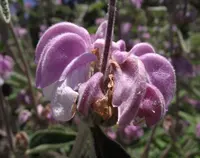
Purple lampwick, Phlomis purpurea, is an evergreen subshrub from the Mediterranean region, especially Spain and Portugal. It belongs to the mint family but has a woody, shrubby form rather than a soft herb habit.
Plants form upright clumps with fuzzy, gray-green leaves and distinct whorls of soft purple flowers along the stems. The woolly foliage and stems give it a dry, slightly silvery look that suits arid and coastal gardens.
It is adapted to poor, rocky soils, sun, and dry conditions, which makes it relatively easy to grow where winters are mild and soils drain freely. Gardeners who care for Purple Lampwick usually value it for low-maintenance structure, drought tolerance, and long-lasting flower display.

Care Difficulty
Easy Care

Light Preference
Full Sun

Water Requirements
Low Water

Temperature Preference
Warm Climate

Hardiness Zone
8–10

Soil Texture
Sandy, Loamy, Rocky

Soil pH
Slightly acidic (6.5–7.0), Slightly alkaline (7.0–7.5)

Soil Drainage
Well-drained

Fertilization
Minimal (feed rarely)
Scan your plant to receive care tips personalized for your specific plant
Available on iOS and Android
This Mediterranean shrub prefers bright, open conditions with plenty of sun for compact, floriferous growth.
This drought-tolerant shrub prefers infrequent, deeper watering rather than frequent light applications.
This species thrives in mild, dry climates and tolerates both summer heat and moderate winter cold when established.
Humidity is rarely a concern for Phlomis purpurea, which thrives in dry, ventilated conditions.
Phlomis purpurea performs best in light, sharply drained soil that mimics dry Mediterranean slopes.
This species is suitable for container growing when drainage and stability are carefully managed.
This drought-tolerant Mediterranean subshrub needs only light feeding in average garden soil.
Phlomis purpurea responds well to thoughtful pruning that maintains a compact, flowering shape.
This shrub is usually grown in the ground, with transplanting more relevant than frequent repotting.
Phlomis purpurea is commonly propagated from semi-ripe cuttings, seeds, or division of older clumps.
This Mediterranean shrub is moderately frost tolerant but benefits from simple winter precautions in colder regions.

Plant Health Check
Not sure what's wrong with your plant? Check your plant's health inside the app.
This species naturally occurs on exposed coastal slopes in the western Mediterranean, where its softly hairy, felted leaves can intercept and condense sea mists, helping the plant access extra moisture in a dry climate.
The mauve‑purple flowers are arranged in stacked, ring‑like whorls along the stems, providing staggered nectar resources that attract a succession of bees and other pollinating insects through a long flowering season.
Unlike some other Phlomis species that favor inland or woodland habitats, this one forms a dense, woody shrub adapted to windy, salty, coastal conditions, which makes it unusually tolerant of sea spray in gardens.

In coastal parts of its native range, this shrub often becomes a structural component of low garrigue and maquis vegetation, where its dense, evergreen framework helps stabilize shallow, rocky soils and offers refuge for invertebrates and small vertebrates.
This species performs best outdoors in mild, dry climates, where light and airflow reduce disease. Indoors it often becomes leggy and prone to mildew, so Purple Lampwick indoor care is usually less successful long term.
Keep your plants happy and healthy with plant identification, disease detection, and easy care guidance.