Hosta Care (Hosta 'Regal Splendor')

About Hosta

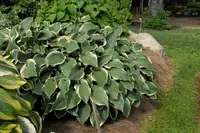
Hosta 'Regal Splendor' is a hardy, clump-forming perennial grown mainly for its striking foliage rather than flowers. It belongs to the shade garden group commonly called hostas. This cultivar has large, blue-green leaves with creamy, wavy margins and forms an upright, vase-shaped mound that gives a structured look to borders. Tall scapes carry pale lavender summer flowers that attract pollinators. Hostas originate from woodland habitats in East Asia, which explains their preference for partial shade, consistent moisture, and rich, well-drained soil. Hosta 'Regal Splendor' is considered vigorous and reliable, so gardeners often choose it when they want to learn how to care for Hosta with less frustration.

Main Plant Requirements

Care Difficulty

Easy Care

Light Preference

Partial Shade

Water Requirements

Regular Water

Temperature Preference

Cold Hardy

Hardiness Zone

3–8

Soil Texture

Loamy, Silty, Organic-rich

Soil pH

Acidic (5.5–6.5), Slightly acidic (6.5–7.0)

Soil Drainage

Moist but well-drained

Fertilization

Light (every 4–6 weeks)

Get Personalized Care Plan

Scan your plant to receive care tips personalized for your specific plant

Available on iOS and Android

How to Care for the Hosta

This cultivar thrives in bright shade with brief, gentle sun each day.

  • Provide 2–4 hours of morning sun with afternoon shade or filtered light under trees to keep leaves thick and colored.
  • Tolerates partial shade, but in very deep shade leaves may elongate, lose variegation contrast, and form fewer flowers.
  • Protect from strong midday and afternoon sun, which can scorch leaf margins; increase shade or mulch in summer as light and heat intensify.

Watering should maintain evenly moist but not waterlogged soil around the root zone.

  • Allow the top 3–5 cm of soil to dry slightly, then water deeply so moisture reaches 15–20 cm, especially in the first 1–2 growing seasons.
  • Increase watering frequency during hot, dry periods; wilting, dull, or folding leaves by midday signal thirst, while yellowing, mushy crowns suggest overwatering.
  • Plant in well-drained, humus-rich soil; improve clay with compost to prevent standing water, which raises risk of crown rot in Hosta 'Regal Splendor'.

Temperature needs shift with the season, from cool-dormant winters to mild, moist summers.

  • Optimal growing temperatures are 60–75°F (16–24°C); growth slows above 80°F (27°C), so provide shade and mulch to cool roots during heat waves.
  • Dormant crowns tolerate winter lows near -20°F (-29°C) when planted in the ground and mulched after the soil cools in late fall.
  • Young shoots are sensitive to late frosts below 30°F (-1°C); cover emerging growth on cold spring nights and avoid planting in frost pockets.

This cultivar grows well in typical outdoor humidity but benefits from moderately moist air in hot, exposed sites.

  • Aim for 40–60% humidity in sheltered or partially enclosed sites, such as patios or courtyards.
  • Dry air combined with strong sun can cause leaf edge browning and a papery texture on Hosta foliage.
  • Increase local humidity by mulching the soil and grouping pots, rather than misting leaves, to reduce fungal disease risk.

Hosta 'Regal Splendor' prefers deep, moisture-retentive but well-drained soil with plenty of organic matter.

  • Use a loamy structure enriched with compost or leaf mold to hold moisture yet keep air spaces around the roots.
  • Ensure drainage is free by avoiding compacted clay; lighten heavy ground with pine bark fines and coarse sand or grit.
  • Target a slightly acidic to neutral pH around 6.0–7.0, avoiding strongly alkaline sites that can reduce nutrient availability.
  • Do not plant where water stands after rain, since persistent saturation encourages root rot and crown decline.

This variety is well suited to container growing outdoors on patios, balconies, or shaded entries.

  • Choose a wide, moderately deep pot that allows the clump to spread laterally without crowding the outer roots too quickly.
  • Use a heavier material like ceramic or stone if the site is windy, since the tall foliage can act like a sail.
  • Raise the pot slightly on feet or bricks so drainage holes remain clear and excess water escapes freely after summer storms.

Nutrient-rich but not heavy feeders, Hosta 'Regal Splendor' respond well to modest, consistent fertilization during active growth.

  • Apply a balanced slow-release fertilizer (around 10-10-10) once in early spring as shoots emerge.
  • Top-dress with compost or well-rotted manure in spring to improve soil structure and steady nutrient supply.
  • Use half-strength balanced liquid feed every 4–6 weeks until midsummer if growth appears weak.
  • Stop feeding in late summer and avoid fertilization during fall and winter dormancy.

Pruning Hosta 'Regal Splendor' focuses on cleanliness and appearance rather than shaping the plant.

  • In spring, remove any remaining dead or mushy foliage from the previous season with clean hand pruners or scissors.
  • During the growing season, cut back yellowing, slug-damaged, or torn leaves at the base to maintain a tidy clump.
  • Deadhead spent flower stalks after bloom by cutting them near the crown to direct energy back to foliage and roots.
  • In late fall after frost has blackened leaves, shear foliage to ground level to reduce overwintering pests and diseases.

This cultivar is usually grown in the ground, so care focuses on dividing and transplanting mature clumps rather than frequent repotting.

  • Transplant or divide every 4–6 years when the clump becomes crowded, shows bare centers, or growth slows.
  • Plan moves for early spring as new shoots emerge or in early fall, allowing roots to establish in cool, moist soil.
  • Lift the clump carefully with a spade, keeping as many roots intact as possible to minimize transplant shock.
  • Divide with a sharp knife or spade into sections with several buds each, replant at the same depth, and water deeply.

Multiplication of Hosta 'Regal Splendor' is most reliable through division of established clumps rather than seed.

  • Schedule division for early spring when shoots just nose through soil, or early fall while soil is still warm.
  • Lift the parent clump with a spade, preserving a generous root ball to support new divisions.
  • Cut the clump into pieces, each holding 2–4 growing points and healthy roots, discarding any rotted sections.
  • Replant divisions promptly in moist, well-drained soil with light shade, then water consistently until well rooted.

This hosta is cold hardy in most temperate gardens and generally requires minimal winter care in the ground.

  • After hard frost, allow foliage to die back, then remove it to limit pests and fungal disease carryover.
  • Apply a 5–8 cm layer of mulch over the root zone in late fall, keeping it slightly away from the crown.
  • Container-grown plants in colder regions benefit from moving pots to an unheated garage or sheltered, frost-free corner.

Care Tips

Manage slug pressure

Place rough copper tape or gritty mineral barriers around clumps in early spring and refresh them after heavy rain to reduce slug and snail damage to the broad leaves.

Divide for vigor

Lift and divide mature clumps every 4–6 years in early spring or early fall, replanting firm, healthy divisions at the same depth to maintain strong growth and symmetrical form.

Mulch with care

Apply a 3–5 cm layer of fine, composted mulch around but not touching the crowns to keep roots cool, conserve moisture, and reduce weed competition without risking crown rot.

Label and map

Install durable plant labels and make a simple planting map, since foliage dies back in winter and this prevents accidental damage when digging or replanting nearby areas.

Staggered pest checks

Inspect the undersides of leaves and petioles every 1–2 weeks during peak growth, focusing on early morning or evening, and remove slugs, snails, or chewing insects by hand before damage accumulates when caring for Hosta.

Common Pests and Diseases

Slug and snail damage

Symptoms include large irregular holes in leaves, shredded edges, and slime trails, especially after rain or overhead watering. This pest is one of the most characteristic problems on hostas and often targets young, tender foliage of variegated cultivars like 'Regal Splendor'.

Solution

Use iron phosphate or metaldehyde slug baits placed around, not on, the crowns, and refresh after heavy rain. Reduce hiding spots by clearing debris, avoid evening overhead watering, hand-pick at dusk, and use barriers such as copper tape or sharp grit around prized clumps to reduce feeding.

Foliar nematodes

This disease is caused by microscopic roundworms that feed inside leaf tissue, leading to tan or brown streaks and blotches restricted between veins, often appearing in mid to late summer. Symptoms include a patchy, water-soaked look that later turns dry and papery, especially on older leaves low on the plant.

Solution

Remove and dispose of affected leaves in the trash, not compost, as soon as symptoms are noticed, and avoid overhead watering that splashes from leaf to leaf. If damage is severe, dig up and discard the entire plant and replant new hostas in a different spot, maintaining good spacing and dry foliage to limit spread when growing Hosta 'Regal Splendor' in collections.

Petiole rot

This disease causes the base of the leaf petioles to soften, turn brown, and collapse at soil level, often starting on the outer leaves. Symptoms include a foul smell and mushy tissue around the crown, most common in warm, wet conditions and heavy soils.

Solution

At first signs, cut and discard all affected leaves and remove rotted tissue down to firm, white tissue, then improve drainage by raising the planting area or amending soil with coarse material. Avoid piling mulch against the crown, water at soil level in the morning only, and discard severely affected plants to prevent spread to nearby hostas.

Hosta virus X

This disease produces mottled, streaked, or ink-bleed patterns on leaves, often with twisted or distorted growth, and symptoms become more obvious as the season progresses. This virus is systemic, meaning it spreads throughout the plant and cannot be cured once present.

Solution

Isolate any plant that shows unusual, blotchy variegation or deformed leaves, and confirm infection through testing if possible; once confirmed, dig up and discard the entire plant and its immediate surrounding soil in the trash. Sterilize tools with a 10% bleach solution or 70% alcohol between cuts and avoid dividing or sharing plants from suspect clumps to protect nearby hostas.

Black vine weevil

These insects chew distinct, rounded notches along leaf edges at night, while their larvae feed on roots and crowns below ground, causing gradual decline and wilting. Damage is often worst on container or raised plantings, where the root system is more confined.

Solution

Inspect at night with a flashlight and hand-pick adults from leaves, then use beneficial nematodes in the soil to target larvae during spring or late summer. Reduce nearby dense groundcovers that shelter adults, check nursery stock before planting, and consider physical barriers on pot rims to reduce climbing onto leaves.

Interesting Facts

Award-winning sport origin

This cultivar is a sport of Hosta 'Krossa Regal', selected for its stronger leaf variegation and more vivid contrast between blue-green centers and creamy margins, and it has received awards from the American Hosta Society for garden performance.

Distinct vase-shaped habit

Unlike many mound-forming hostas, it develops tall, upright, vase-shaped foliage that can reach roughly 60–90 cm in height, which lifts the leaves above the soil surface and makes the plant more visible in mixed shade borders.

Color-shifting foliage

Its foliage often emerges with bluish, glaucous (waxy) centers that can shift toward greener tones through the season, while the creamy to pale-yellow margins remain relatively stable, creating a long-lasting bicolor effect even in midsummer shade.

Botan icon

Did you know?

In mature clumps, the tall, vase-shaped foliage and high flower scapes can create a layered vertical structure that gardeners often use as a living backdrop, allowing smaller shade perennials and groundcovers to grow visually in front of the clump without being overwhelmed by its size.

FAQs about Hosta

Brown, crispy edges usually result from drought stress, excess sun, or fertilizer burn. Check soil moisture, provide more shade if leaves scorch, and avoid granular fertilizer touching foliage. Slug damage can also leave ragged, brown-edged holes.

Grow Healthy Plants with Botan Care

Keep your plants happy and healthy with plant identification, disease detection, and easy care guidance.

Botan plant care app — identify plants on mobile

Explore More Plants