Epidendrum fulgens Care

Epidendrum fulgens

About Epidendrum fulgens

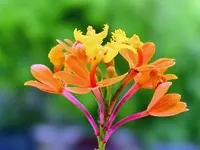
Epidendrum fulgens is a terrestrial or lithophytic orchid, known for upright canes topped with clusters of bright red, orange, or yellow star-shaped flowers. Plants often branch freely, forming loose, shrubby clumps over time.

This species is native to coastal regions of Brazil, where it grows in sunny, open habitats with good air movement. Its relatively tolerant nature compared with many orchids makes it suitable for growers with some basic experience.

Plants prefer bright light, moderate moisture, and a very free-draining, airy substrate that never stays waterlogged. Learning how to care for Epidendrum fulgens mainly involves providing enough light and avoiding heavy, compacted soils.

Main Plant Requirements

Care Difficulty

Moderate Care

Light Preference

Full Sun

Water Requirements

Moderate Water

Temperature Preference

Tropical / Frost Sensitive

Hardiness Zone

10–11

Soil Texture

Sandy, Rocky, Organic-rich

Soil pH

Acidic (5.5–6.5)

Soil Drainage

Well-drained

Fertilization

Light (every 4–6 weeks)

Get Personalized Care Plan

Scan your plant to receive care tips personalized for your specific plant

Available on iOS and Android

How to Care for the Epidendrum fulgens

This species prefers bright, direct sun but tolerates some light shade, especially in hot climates.

  • Provide 6–8 hours of direct sun daily, ideally with strong morning to early afternoon sun and some protection from intense late-afternoon summer sun.
  • In very hot regions, give light shade or filtered light during the hottest hours to reduce leaf scorch, especially on dark green, softer leaves.
  • If stems stretch, flowering declines, or foliage turns dull green, the plant is receiving too little light; move it to a sunnier, unobstructed spot for better Epidendrum fulgens care.

This orchid prefers slightly moist, sharply drained conditions rather than constant wetness.

  • Water thoroughly when the top 2–4 cm of soil or mix feels dry, allowing excess to drain away; avoid leaving the root zone saturated or standing in water.
  • In warm, active growth periods, expect to water more often, while in cooler seasons or during slower growth, extend the interval once drying is slower.
  • Watch for overwatering signs such as yellowing, limp leaves and a sour smell from the mix, and underwatering signs like wrinkled pseudobulbs and dry, papery roots.

This species grows best in mild, frost-free conditions with warm days and slightly cooler nights.

  • Aim for 65–80°F (18–27°C) for active growth, with a gentle night drop of 5–10°F (3–5°C) to support flowering and overall vigor.
  • Avoid temperatures below 40–45°F (4–7°C); brief light chills may be tolerated, but repeated exposure near freezing can damage foliage and roots.
  • In hot spells above 90°F (32°C), provide airflow, light shade, and consistent soil moisture to limit heat stress and leaf scorch on Epidendrum fulgens.

This species prefers moderate humidity but adapts well to many home environments.

  • Aim for 40–60% humidity, avoiding prolonged air below 30% in heated rooms.
  • Dry, crispy leaf tips and wrinkling pseudobulbs indicate humidity stress or chronic moisture loss.
  • Increase humidity with a nearby pebble tray, grouping plants, or a small fan on low to reduce leaf drying without stagnating air.

This orchid prefers a very free-draining, airy substrate rather than typical houseplant soil.

  • Use a coarse mix of medium orchid bark, perlite, and a small amount of inert gravel or pumice to keep roots aerated.
  • Ensure extremely rapid drainage; water should flow through within seconds, leaving the mix just lightly moist, not soggy.
  • Aim for slightly acidic to neutral conditions around pH 5.5–7.0, avoiding heavy lime additions or dense garden soil.
  • For growing Epidendrum fulgens outdoors in beds, amend sandy soil with fine bark and grit to improve structure while keeping high aeration.

This species is well suited to container culture in bright, warm locations.

  • Select a tall, relatively narrow pot or orchid basket that allows roots to anchor while preventing water pooling at the base.
  • Choose a heavier or wider-based container outdoors to prevent wind from toppling tall, upright canes.
  • Raise the pot slightly on pot feet or bricks so drainage holes stay clear and runoff exits quickly after watering.

Feeding supports strong flowering and growth in Epidendrum fulgens grown in containers or lean substrates.

  • Use a balanced NPK orchid fertilizer at 1/4–1/2 strength every 2–3 weeks during active growth in spring–summer.
  • Apply fertilizer to already-moist medium to avoid root burn and alternate with plain water flushes.
  • Incorporate a small amount of slow-release orchid food if watering is infrequent, following label rates.
  • Reduce feeding to monthly or stop entirely in late fall–winter, especially in cooler or lower-light conditions.

Light pruning keeps Epidendrum fulgens tidy and encourages better flowering over time.

  • Best time for pruning is after a main flush of blooms, removing only finished flower spikes.
  • Cut dead, damaged, or diseased stems and leaves back to healthy tissue with clean, sharp scissors or pruners.
  • Thin out weak or crowded canes to improve air movement and light penetration around the clump.
  • Avoid cutting green, healthy canes heavily, since they store reserves and help support future flowering.

Repotting or transplanting maintains a healthy root system and stable support for Epidendrum fulgens.

  • Plan to repot every 2–3 years or when roots circle the pot, emerge heavily from drainage holes, or growth slows.
  • Choose late winter to early spring, just before active growth, to reduce stress and speed recovery.
  • Use a free-draining orchid mix, gently loosen congested roots, and trim only dead, mushy sections.
  • After repotting, water lightly at first, keep in bright but softened light, and avoid fertilizing for 1–2 weeks.

Propagation of Epidendrum fulgens is usually done vegetatively to keep flower traits consistent.

  • Divide mature clumps in spring, ensuring each division has several healthy canes and a good root mass.
  • Plant divisions in fresh, free-draining orchid mix and keep slightly more humid until re-established.
  • Stem keikis, if present, can be removed once they show several roots 3–5 cm long and potted individually.
  • Seed propagation is possible but slow and requires sterile, specialized orchid flasking conditions.

Winter care depends on climate, as Epidendrum fulgens prefers mild, nearly frost-free conditions.

  • In-ground plants in mild regions benefit from a light mulch layer to insulate surface roots, keeping mulch off stems.
  • Move container plants indoors or to a bright, frost-free shelter when temperatures approach 35–40°F.
  • Reduce watering in winter, allowing the medium to dry slightly more while avoiding complete desiccation.
  • Provide as much light as possible indoors, using a cool-bright window or supplemental grow lights if needed.

Care Tips

Provide sturdy stakes

Install thin bamboo stakes or orchid supports early in the season and loosely tie each new cane with soft ties so the tall inflorescences stay upright and do not snap in wind or during transport.

Refresh medium regularly

Repot every 1–2 years by lifting the clump, trimming dead roots, and resetting the plant into a fresh, very free-draining mix while keeping the root base at the same height to avoid rot or setback.

Encourage branching

After flowering, cut spent canes just above a healthy node and keep the plant in active growth so new side shoots form and future flower spikes become denser.

Manage outdoor exposure

In mild climates, harden plants off gradually before placing containers outdoors for summer, then bring them back inside before nights stay below 55°F to prevent cold stress while still taking advantage of stronger light.

Monitor salt buildup

If using tap water or regular fertilizer, flush the pot thoroughly with plain water every 4–6 weeks until it drains freely from the bottom to prevent mineral accumulation that can burn roots and leaf tips when growing Epidendrum fulgens.

Common Pests and Diseases

Scale insects

This pest often settles along stems and flower spikes, sucking sap and weakening the plant over time. Symptoms include yellowing leaves, sticky honeydew, and sooty mold on the foliage.

Solution

Isolate the plant, then wipe stems and leaves with cotton pads dipped in 70% isopropyl alcohol to remove visible insects, repeating weekly until no new scale appears. Improve air movement and light, and if the infestation is heavy, use a labeled horticultural oil or systemic insecticide suitable for orchids, following the product instructions carefully.

Spider mites

These insects favor the relatively dry, bright conditions often used for Epidendrum fulgens and feed on the underside of leaves. Symptoms include fine webbing, tiny pale speckling on foliage, and a dull, dusty appearance of the leaves.

Solution

Increase humidity, rinse foliage thoroughly with a strong but gentle stream of lukewarm water, and wipe leaf undersides. For persistent infestations, apply insecticidal soap or a miticide labeled for orchids at 5–7 day intervals, ensuring full coverage of leaf undersides and flower spikes.

Aphids

These insects congregate on new growth, buds, and flower spikes, feeding on sap and distorting developing tissues. Symptoms include sticky honeydew, sooty mold, and deformed or aborted flower buds.

Solution

Rinse affected areas under running water to dislodge most aphids, then treat tender growth with insecticidal soap or neem oil, repeating every 5–7 days until no new aphids appear. Keep spent flower spikes trimmed and avoid excess nitrogen fertilization, which encourages soft, aphid-attracting growth.

Bacterial brown spot

This disease causes water-soaked, translucent patches on leaves that quickly turn brown and sunken, sometimes with a yellow halo. Symptoms include rapid expansion of lesions in warm, humid conditions and a foul smell if tissue begins to rot.

Solution

Immediately remove and discard affected leaves or leaf sections with a sterile blade, cutting into healthy tissue, and then disinfect tools. Reduce overhead watering, keep foliage dry, increase air circulation, and consider a copper-based bactericide labeled for orchids if new spots continue to appear.

Leaf tip dieback

Symptoms include gradual browning and drying of leaf tips, often progressing down the leaf margin, linked to high fertilizer salts, hard water, or chronic underwatering. This physiological issue is common in growing Epidendrum fulgens under indoor or container conditions with poor leaching.

Solution

Flush the pot thoroughly with clean, low-mineral water to wash out built-up salts, then adjust fertilizing to a weaker, balanced orchid formula applied less frequently. Trim only the dead brown tips with sterile scissors, maintain consistent moderate moisture, and avoid letting the medium swing between very dry and saturated.

Interesting Facts

Coastal dune specialist

This species naturally occurs on sandy coastal dunes and rocky outcrops in southeastern Brazil, where it endures intense sun, wind, and salt spray that many other orchids cannot tolerate.

Ever-blooming habit

In favorable conditions it can flower repeatedly over a long season, with new buds forming on the same inflorescence while older flowers are still open, giving the plant a noticeably prolonged display.

Pollinator color signal

Its bright orange to red star-shaped flowers with contrasting yellow centers are adapted to attract diurnal pollinators such as butterflies, using strong visual cues rather than fragrance.

Botan icon

Did you know?

This terrestrial orchid has been used extensively in hybridization within the so-called reed-stem Epidendrum group, contributing its vivid color and free-flowering habit to many modern ornamental hybrids grown far beyond its native Brazilian range.

FAQs about Epidendrum fulgens

Lack of flowers often comes from insufficient light, too little fertilizer, or using high-nitrogen feed. Crowded, old canes may also reduce blooms. After adjusting conditions, it can take a full season to respond.

Grow Healthy Plants with Botan Care

Keep your plants happy and healthy with plant identification, disease detection, and easy care guidance.

Botan plant care app — identify plants on mobile

Explore More Plants