Encourage Deep Roots
In the first 3–5 years, apply water slowly but less often so moisture penetrates 30–45 cm deep, which trains the tree to develop a deep, drought-resilient root system rather than shallow, surface-feeding roots.

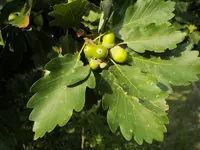
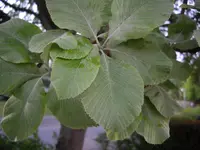
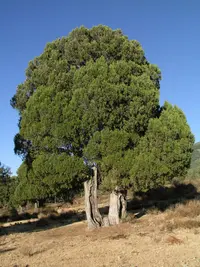
Sessile oak, Quercus petraea, is a long-lived deciduous tree known for its broad crown, sturdy trunk, and deeply lobed, matte green leaves. It produces acorns that sit directly on the twigs, a key feature that distinguishes it from many other oaks.
This species is native to much of Europe, where it forms mixed and pure woodlands on well-drained, often slightly acidic soils. It is generally robust but slow-growing, so it suits larger gardens, parks, and restoration projects rather than small spaces.
To care for Sessile Oak, provide full sun, moderately moist but well-drained soil, and protection from severe root disturbance while it establishes.

Care Difficulty
Moderate Care

Light Preference
Full Sun

Water Requirements
Moderate Water

Temperature Preference
Cold Hardy

Hardiness Zone
4–8

Soil Texture
Loamy, Sandy, Clay

Soil pH
Acidic (5.5–6.5), Slightly acidic (6.5–7.0)

Soil Drainage
Moist but well-drained

Fertilization
Minimal (feed rarely)
Scan your plant to receive care tips personalized for your specific plant
Available on iOS and Android
This long-lived woodland oak thrives in open sites with consistent, strong natural light.
This species prefers evenly moist but not saturated soil, especially during establishment years.
This hardy oak is well adapted to temperate outdoor climates with cold winters and mild to warm summers.
Humidity is not a critical factor for Quercus petraea, which suits typical outdoor conditions.
Quercus petraea prefers deep, stable, mineral soils that retain moisture yet drain freely.
This species is only moderately suitable for container growing and best kept as a temporary young tree in pots.
Quercus petraea in the ground usually needs little fertilizer once established, especially on moderately fertile soils.
Pruning Quercus petraea is mainly structural and sanitary, not cosmetic.
Young plants of Quercus petraea are often container-grown first, then transplanted to a permanent site.
Sexual propagation of Quercus petraea is primarily done from seed rather than cuttings.
Mature Quercus petraea trees are cold hardy in much of the temperate US and need minimal winter care.

Plant Health Check
Not sure what's wrong with your plant? Check your plant's health inside the app.
Sessile oak is a major climax forest species across much of Atlantic and central Europe, often dominating on upland, acidic soils where few other large broadleaf trees compete as successfully.
Unlike the closely related pedunculate oak (Quercus robur), sessile oak bears acorns almost directly on the twigs with very short or absent stalks, while its leaves have longer stalks, which is an important field identification feature.
Sessile oak naturally hybridizes with pedunculate oak where their ranges overlap, creating broad hybrid zones that are extensively studied by geneticists as models for understanding gene flow and species boundaries in forest trees.

Long‑lived individuals of sessile oak can exceed 500 years of age, and some historic specimens in western Europe are thought, based on ring counts and historical records, to date back to medieval times.
This species grows slowly to moderately, usually 25–35 cm per year in youth, then slowing as it matures. Growth rate improves with deep, fertile, well-drained soil, adequate moisture, full light, and protection from severe root disturbance.
Keep your plants happy and healthy with plant identification, disease detection, and easy care guidance.