Neck management
Stop high-nitrogen feeding and reduce watering once bulbs reach golf-ball size so the necks start to soften and cure properly instead of staying thick and prone to rot.

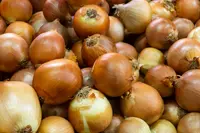
Spanish onion, Allium cepa var. cepa, is a cultivated bulb-forming herb grown mainly as an annual vegetable. It forms large, round bulbs with pale, thin skins and relatively mild, sweet-flavored flesh.
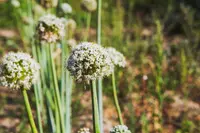
Plants develop upright, hollow, blue-green leaves and a shallow root system, so they need consistent moisture and loose, well-drained soil. In the right conditions, they may send up a tall flower stalk with a spherical cluster of small white flowers.
Spanish onions originated from domesticated onions in southwestern Asia but are now widely grown in temperate regions. Their moderate climate needs and straightforward growth from sets or seed make them accessible, especially once a gardener learns how to care for Spanish onion.

Care Difficulty
Moderate Care

Light Preference
Full Sun

Water Requirements
Moderate Water

Temperature Preference
Cool Climate

Hardiness Zone
3–9

Soil Texture
Sandy, Loamy, Silty

Soil pH
Acidic (5.5–6.5), Slightly acidic (6.5–7.0)

Soil Drainage
Moist but well-drained

Fertilization
Light (every 4–6 weeks)
Scan your plant to receive care tips personalized for your specific plant
Available on iOS and Android
Bulbing onions need strong, consistent sun exposure to form full-sized bulbs and firm foliage.
Onions prefer steady, moderate moisture in well-drained soil to build uniform, firm bulbs.
Onions respond strongly to temperature, which controls early root growth, leaf production, and bulb formation.
This species prefers relatively dry, well-ventilated air rather than high humidity.
Allium cepa var. cepa needs loose, well-aerated, fast-draining soil to form healthy bulbs.
This species is suitable for container growing when the pot is chosen and managed for stable, well-drained root and bulb conditions.
Allium cepa var. cepa responds well to moderate, consistent nutrition during active growth.
Pruning needs for Allium cepa var. cepa are minimal and mainly relate to plant hygiene and harvest management.
Onions are usually transplanted outdoors from seed trays, plug trays, or sets rather than being long-term container plants.
New Allium cepa var. cepa plants are most often propagated from seed or from small bulbs called sets.
Mature onions in the ground tolerate moderate cold, but young plants and containers need some winter attention.

Plant Health Check
Not sure what's wrong with your plant? Check your plant's health inside the app.
The familiar onion bulb is a compressed stem surrounded by swollen leaf bases that store carbohydrates, allowing the plant to survive unfavorable seasons and re-sprout when conditions improve.
When an onion is cut, the enzyme alliinase converts sulfur-containing compounds into a volatile gas called the lachrymatory factor, which dissolves in the eye’s tear film and forms mild sulfuric acid, triggering tearing as a protective reflex.
This cultivated onion variety likely originated in Central or Western Asia and has been selected for thousands of years, resulting in a wide range of bulb colors, day-length responses, and storage qualities while remaining a single botanical variety.

Onions of this variety are quantitative long-day plants, meaning bulb formation is triggered and controlled mainly by day length, so specific cultivars are bred for short-, intermediate-, or long-day regions to ensure reliable bulb development in different latitudes.
Yellowing foliage often signals natural bulb maturation, but can also result from overwatering, waterlogged soil, nitrogen deficiency, or onion thrips. Check drainage, avoid frequent shallow watering, inspect for pests, and remove severely affected leaves to limit stress.
Keep your plants happy and healthy with plant identification, disease detection, and easy care guidance.