Staking Flower Stems
Install slender stakes or low, open plant supports early in the season so the tall, moisture-loving stems stay upright and air can move freely through the clump, reducing the risk of flop and foliar disease after heavy rain.

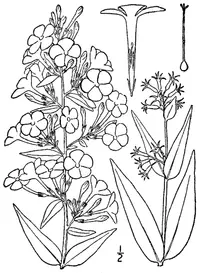
Wild sweetwilliam (Phlox maculata) is an upright, clump-forming perennial known for its dense clusters of fragrant, tubular flowers. It typically grows with sturdy, leafy stems that hold blooms above the foliage, giving a strong vertical accent in borders or naturalistic plantings.
This species is native to moist meadows and stream edges in eastern North America, so it favors consistently moist soil and good light, often full sun to light shade. Flowers attract butterflies and other pollinators, which adds ecological value to garden plantings.
Once established in suitable conditions, it is moderately easy to maintain. Understanding how to care for wild sweetwilliam mainly involves providing steady moisture, reasonably fertile soil, and enough air circulation to reduce mildew issues.

Care Difficulty
Moderate Care

Light Preference
Full Sun

Water Requirements
Regular Water

Temperature Preference
Cold Hardy

Hardiness Zone
4–8

Soil Texture
Loamy, Silty, Organic-rich

Soil pH
Acidic (5.5–6.5), Slightly acidic (6.5–7.0)

Soil Drainage
Moist but well-drained

Fertilization
Light (every 4–6 weeks)
Scan your plant to receive care tips personalized for your specific plant
Available on iOS and Android
Phlox maculata grows best with consistent sun exposure that supports strong flowering and sturdy stems.
Phlox maculata prefers evenly moist, not soggy, soil to maintain healthy growth and flowers.
This perennial tolerates a wide temperature range but performs best in moderate, stable conditions.
This species grows well outdoors in 40–60% humidity and usually does not need special humidity management.
This plant prefers moist, well-structured soil that stays aerated yet never waterlogged.
This species can grow in containers if the pot supports its moisture needs and upright habit.
Phlox maculata responds well to light, balanced feeding during active growth, though many native perennials like wild sweetwilliam manage in lean soils.
Pruning Phlox maculata helps maintain compact growth, reduce disease, and extend flowering.
This species is usually grown in garden beds, so focus on dividing and transplanting clumps rather than frequent repotting.
Phlox maculata is commonly propagated by division, with cuttings and seed used to build up larger plantings.
Once established, this perennial is cold hardy in most temperate climates and needs only modest winter care.

Plant Health Check
Not sure what's wrong with your plant? Check your plant's health inside the app.
This species is named for its often purple- or red-spotted stems, a visual trait that helps distinguish it from the otherwise similar Phlox paniculata and other tall phlox species in the field.
In the wild, this phlox is closely associated with moist meadows, stream banks, and wet thickets in eastern North America, reflecting its adaptation to consistently damp, but not waterlogged, soils.
It produces dense clusters of fragrant, tubular flowers in mid to late summer, providing an important nectar source for butterflies, moths, and long-tongued bees when some spring-flowering phlox species are already finished.
Lack of flowering usually comes from too much shade, poor soil fertility, or overcrowded clumps. Regular deadheading, division every few years, and balanced feeding are key parts of Phlox maculata care to support reliable blooms.
Keep your plants happy and healthy with plant identification, disease detection, and easy care guidance.