Aaron's rod Care (Thermopsis villosa)

Also known as: Carolina lupine
Aaron's rod

About Aaron's rod

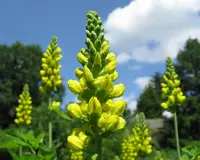
Aaron's rod, Thermopsis villosa, is a hardy herbaceous perennial in the legume family, grown mainly for its upright spikes of bright yellow, pea-like flowers. It forms clumps of gray-green foliage and sends up tall flowering stems in late spring to early summer, giving a strong vertical accent in garden borders.

This species is native to the southeastern United States, often found in open woodlands and sunny slopes. It is generally easy to grow where winters are cold enough and soil drains well. Gardeners who want to care for Aaron's rod should provide full sun, moderately moist but not waterlogged soil, and space for its clump to expand over time.

Main Plant Requirements

Care Difficulty

Easy Care

Light Preference

Full Sun

Water Requirements

Moderate Water

Temperature Preference

Cold Hardy

Hardiness Zone

5–8

Soil Texture

Sandy, Loamy, Clay

Soil pH

Acidic (5.5–6.5), Slightly acidic (6.5–7.0)

Soil Drainage

Well-drained

Fertilization

Minimal (feed rarely)

Get Personalized Care Plan

Scan your plant to receive care tips personalized for your specific plant

Available on iOS and Android

How to Care for the Aaron's rod

This sun-loving perennial thrives in open sites with strong light for sturdy growth.

  • Provide 6–8 hours of direct sun daily; Aaron's rod tolerates light afternoon shade in hotter regions to prevent leaf scorch.
  • Choose a site with unshaded morning sun and, if possible, light dappled shade after 2–3 p.m. in zones with intense summer sun.
  • Watch stems that lean or flop toward bright areas, which signals insufficient light; reduce shade by trimming overstory plants or repositioning nearby structures.

This prairie-style perennial prefers evenly moist but not saturated soil, especially during establishment.

  • Allow the top 3–5 cm of soil to dry between deep waterings, then soak the root zone so moisture reaches 15–20 cm deep.
  • During the first growing season, monitor rainfall and supplement only if the soil stays dry for several days; established Thermopsis villosa usually needs little extra water in typical rainfall areas.
  • Yellowing, limp foliage and a sour soil smell point to overwatering, while crisping lower leaves and slow growth indicate the plant has stayed too dry for too long.

This hardy outdoor perennial is adapted to temperate climates with cold winters and warm summers.

  • Active growth is best at 60–80°F (16–27°C), with flowering and foliage forming well under these moderate conditions.
  • Dormant plants tolerate winter lows near 0°F (-18°C) in the ground, provided soil drains well and roots are not exposed by heaving or erosion.
  • Short heat waves to 90–95°F (32–35°C) are tolerated if soil moisture is maintained; prolonged extreme heat with drought stress can reduce flowering the following season.

Humidity is rarely a concern for Aaron's rod, which adapts well to typical outdoor air conditions.

This species prefers moderately fertile, well-drained soil that stays evenly moist but not waterlogged.

  • Use a loamy or sandy-loam soil structure that is loose and crumbles easily in the hand.
  • Aim for slightly acidic to neutral pH, roughly 6.0–7.0, to support healthy nutrient uptake.
  • In garden beds, mix in compost and coarse sand or fine gravel to improve drainage and aeration.
  • Avoid heavy clay that stays wet for long periods, as this increases root rot risk and weak, floppy growth.

This plant can be grown in containers, but only if the pot is deep and stable enough for its tall, bushy growth.

  • Choose a heavy, wide-based container to prevent tipping in wind when stems reach full height.
  • Provide a deep pot to accommodate the long taproot and reduce stress during summer heat.
  • Use a very free-draining mix and elevate the pot slightly so water does not pool under the base.

Thermopsis villosa is a tough perennial that needs only light feeding, especially when grown in average garden soil.

  • Apply a thin layer of compost around the clump in early spring to support flowering and foliage.
  • If growth seems weak, use a balanced slow-release fertilizer (around 10-10-10) once in spring at label rate.
  • Avoid high-nitrogen products, which can cause lush, floppy growth with fewer blooms.
  • Skip feeding during winter dormancy; caring for Aaron's rod focuses more on soil quality than frequent fertilization.

Pruning Thermopsis villosa focuses on tidying the plant and maintaining a strong flowering clump.

  • Cut back spent flower spikes after blooming to reduce self-seeding and keep the plant neat.
  • Remove dead, damaged, or crossing stems at ground level in late fall or very early spring.
  • Use clean, sharp hand pruners to avoid tearing the stems and to limit disease entry.
  • In late season, allow some seed pods to remain if naturalizing or wildlife value is desired.

This deep-rooted perennial is usually grown in the ground, so care centers on careful transplanting rather than frequent repotting.

  • Transplant in early spring or early fall when temperatures are mild to reduce stress.
  • Move plants only when young; mature clumps develop a strong root system that resents disturbance.
  • Choose a sunny, well-drained site and keep the original soil level even with the new ground surface.
  • Water deeply after transplanting, then keep soil just moist while new roots establish, avoiding waterlogging.

Propagation of Thermopsis villosa is usually done by seed, with division used sparingly due to its deep root system.

  • Sow seeds in fall or early spring outdoors; natural winter chill often improves germination.
  • For indoor sowing, provide a cold stratification period of about 4–6 weeks at 35–40°F before warmth.
  • Plant seeds in a well-drained, gritty mix, keeping it lightly moist and in bright indirect light.
  • Divide only small, younger clumps in early spring, replanting divisions promptly and watering well.

This species is cold hardy in much of the US and normally needs minimal winter care once established.

  • After frosts, allow top growth to die back, then cut stems close to ground level in late fall or early spring.
  • Apply a 5–8 cm mulch layer over the root zone in colder regions to buffer freeze–thaw cycles.
  • Container-grown plants benefit from being moved to a sheltered, unheated but frost-free spot if roots may freeze solid.

Care Tips

Early clump spacing

Space new plants 45–60 cm apart and give them an open position so mature clumps can expand without crowding, which reduces mildew and makes dead-stem cleanup easier in winter.

Root disturbance control

Avoid frequent digging or division around established plants, as the deep, woody rootstock resents disturbance and can respond with reduced flowering for 1–2 seasons.

Seedpod management

After flowering, remove most seedpods but leave a few to mature if seed is desired; this keeps the plant from wasting energy on excess seed while still allowing collection for propagation.

Support against flopping

In windy or exposed sites, install low, unobtrusive hoop supports or a peony ring in early spring so stems grow through the support and remain upright when in full leaf and bloom.

Legume companion strategy

Plant near full-sun perennials that prefer lean soils, such as ornamental grasses or prairie species, so the nitrogen-fixing roots can subtly improve the surrounding soil without heavy fertilization while you are caring for Aaron's rod.

Common Pests and Diseases

Leaf-spotting fungi

This disease causes irregular brown to purplish spots on leaves, sometimes with yellow halos and premature leaf drop in humid conditions.

Solution

Remove and discard heavily spotted leaves, avoid overhead watering, and space plants for good air movement; if leaf spots progress each year, apply a copper or chlorothalonil-based fungicide labeled for ornamental perennials in early spring as new foliage emerges, following label directions.

Powdery mildew

This disease produces a white, powdery film on upper leaf surfaces, leading to distorted or yellowing foliage during warm, dry periods with high humidity.

Solution

Improve air circulation by thinning crowded stems, water at soil level to keep foliage dry, and remove the most affected leaves; in recurrent cases, use a sulfur or potassium bicarbonate fungicide labeled for powdery mildew on ornamentals, starting at the first visible patches.

Aphids

These insects cluster on young stems, buds, and leaf undersides, sucking sap and causing curling leaves, sticky honeydew, and sometimes sooty mold growth.

Solution

Dislodge colonies by spraying plants with a firm jet of water, encourage or conserve natural predators like lady beetles, and, if needed, apply insecticidal soap or a horticultural oil to thoroughly coat infested surfaces, repeating as labeled until populations decline.

Leafhoppers

These insects feed on foliage, causing pale stippling, small white spots, and occasional leaf edge browning, and they can spread some leaf pathogens between plants.

Solution

Reduce grassy weeds and tall vegetation near plantings, use a strong water spray to knock insects off foliage, and if damage is persistent, apply insecticidal soap or a low-impact systemic product labeled for leafhoppers on ornamentals during peak activity periods.

Nematode-related decline

This problem appears as uneven clumps with stunted growth, poor flowering, and yellow patches where underground plant-parasitic nematodes feed on roots in sandy or previously infested soils.

Solution

Remove and destroy severely affected clumps, avoid moving soil or roots from problem areas, and replant Thermopsis villosa in a new location with improved organic matter; in infested beds, rotate with non-host or cover crops and focus on building soil health rather than relying on chemical nematicides for home gardens.

Interesting Facts

Southeastern US native

This species is naturally restricted to the southern Appalachian region of the southeastern United States, rather than being a widely distributed Thermopsis species.

Hairy foliage adaptation

Its leaves and stems are distinctly villous, meaning densely covered with soft hairs, which likely help reduce water loss and protect tissues from intense sun and temperature swings in its open mountain habitats.

Legume with nitrogen nodules

As a member of the legume family, it forms root nodules that host nitrogen-fixing bacteria, allowing the plant to enrich poor, disturbed soils and contribute to local nutrient cycling.

Botan icon

Did you know?

Thermopsis villosa is considered of conservation concern in parts of its native range, and is monitored or listed in some southeastern US states because its naturally limited distribution and habitat pressures make wild populations vulnerable to decline.

FAQs about Aaron's rod

This species forms clumps and slowly expands by short rhizomes. In suitable conditions it can self-seed, but it is not typically rampant. Remove unwanted seedlings and spent seed pods if controlled spread is important.

Grow Healthy Plants with Botan Care

Keep your plants happy and healthy with plant identification, disease detection, and easy care guidance.

Botan plant care app — identify plants on mobile

Explore More Plants