


Improve Winter Drainage
In cold, wet climates, plant on a raised mound or shallow berm of gritty soil so the crown and roots shed excess winter moisture and avoid rot when caring for false aloe.

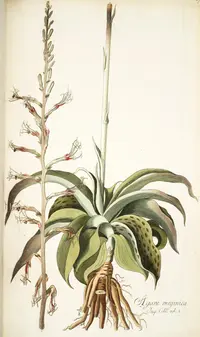
False aloe (Agave virginica) is a hardy, rosette-forming perennial native to prairies, open woods, and sandy soils in eastern North America. It has narrow, upright, strap-like leaves without the large, stiff spines seen on many other agaves.
Mature plants send up tall flower stalks with greenish to yellowish blooms that attract pollinators and create a striking vertical accent. The plant’s tolerance for poor, dry soils and heat makes it relatively low-maintenance in suitable climates.
It prefers full sun, well-drained soil, and infrequent watering once established. These traits make it useful for xeriscapes and help explain how to care for false aloe in low-input gardens.

Care Difficulty
Easy Care

Light Preference
Full Sun

Water Requirements
Low Water

Temperature Preference
Cold Hardy

Hardiness Zone
5–9

Soil Texture
Sandy, Loamy, Rocky

Soil pH
Acidic (5.5–6.5), Slightly acidic (6.5–7.0)

Soil Drainage
Well-drained

Fertilization
Minimal (feed rarely)
Scan your plant to receive care tips personalized for your specific plant
Available on iOS and Android
This sun-loving North American agave performs best in open, bright conditions.
This species prefers dry, fast-draining conditions and is sensitive to chronic moisture.
This hardy agave tolerates a wide temperature range when established in the ground.
Agave virginica handles low indoor humidity well and rarely needs special humidity management.
Agave virginica prefers fast-draining, mineral-based soil that prevents waterlogging around the roots.
This species grows reliably in containers when the pot is chosen to support its deep, spreading root system.
This native succulent, also known as false aloe, needs only light feeding in most garden soils.
Agave virginica needs minimal pruning, focused on hygiene and safety rather than shaping.
This species is usually grown in the ground, so focus on careful transplanting rather than frequent repotting.
Agave virginica is most often propagated from offsets, with seeds used mainly for larger or wild-type plantings.
This species is quite cold hardy but still benefits from simple winter care in colder regions.

Plant Health Check
Not sure what's wrong with your plant? Check your plant's health inside the app.
This species, sometimes called false aloe, is one of the few agaves native to the eastern United States, occurring naturally from the Midwest through the Southeast in dry prairies, glades, and open woodlands.
Unlike many agaves with nocturnal flowers, its pale yellow to greenish flowers open mainly in the daytime and are visited by bees, butterflies, and other diurnal pollinators.
Although it looks similar to desert agaves, its leaves are only moderately succulent and lack the extremely thick water-storing tissues seen in many southwestern Agave species, reflecting adaptation to more mesic, seasonally moist habitats.

Agave virginica has often shifted between genera in botanical classification, historically placed in Manfreda and Polianthes, and many botanists still refer to it as Manfreda virginica, illustrating its intermediate traits between classic agaves and related groups.
Flowering usually begins when the rosette is mature, often after several years. Lack of blooms is most often due to immaturity, insufficient light, nutrient-poor or overly rich soil, or stress from repeated disturbance or division.
Keep your plants happy and healthy with plant identification, disease detection, and easy care guidance.

 POPULAR
String of Fishhooks
Curio radicans

rainbow hedgehog cactus
Echinocereus rigidissimus
Gander's buckhorn cholla
Cylindropuntia ganderi
Acitrón barrel cactus
Ferocactus histrix
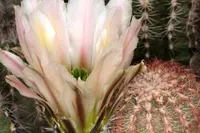
rainbow cactus
Echinocereus pectinatus
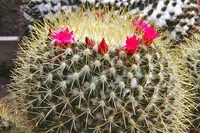
rainbow pincushion
Mammillaria rhodantha
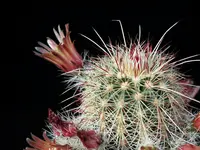
brownspine hedgehog cactus
Echinocereus russanthus
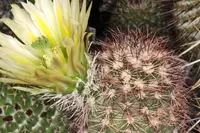
spiny hedgehog cactus
Echinocereus dasyacanthus