


Rotate for symmetry
Turn the pot 90° every 2–3 weeks so the cactus receives light evenly on all sides, which helps maintain a compact, even clump rather than leaning toward the brightest direction.

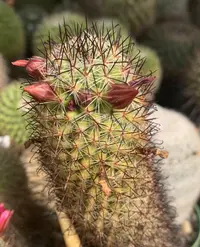
Mammillaria duoformis is a compact, slow-growing cactus species forming low, rounded clusters of stems covered in small tubercles and fine, usually short spines. It often produces small, pale flowers in a ring near the stem tip, adding subtle ornamental interest.
This species is native to Mexico, where it grows in arid, rocky habitats with strong light and very sharp drainage. It is generally considered easy to grow for beginners, as long as excess moisture is avoided and the plant receives bright light. Understanding how to care for Mammillaria duoformis mainly involves providing a sunny position, very free-draining mineral-rich soil, and careful watering during the warm growing season.

Care Difficulty
Easy Care

Light Preference
Full Sun

Water Requirements
Low Water

Temperature Preference
Tropical / Frost Sensitive

Hardiness Zone
10–11

Soil Texture
Sandy, Loamy, Rocky

Soil pH
Slightly acidic (6.5–7.0), Neutral (7.0)

Soil Drainage
Well-drained

Fertilization
Minimal (feed rarely)
Scan your plant to receive care tips personalized for your specific plant
Available on iOS and Android
This small cactus prefers bright, mostly direct sun but benefits from some protection during the hottest hours.
This species stores water in its stems and needs infrequent, careful watering to avoid root rot.
This cactus prefers warm, dry conditions and tolerates a moderate temperature range when kept out of frost.
This cactus prefers very dry air and usually does not need extra humidity management indoors.
This species needs a very fast-draining, mineral-rich substrate to prevent root rot.
This compact cactus is well suited to container growing.
This small cactus has modest nutrient needs, but light feeding supports healthy growth and flowering in Mammillaria duoformis.
Pruning needs are minimal and focus on hygiene and safety for Mammillaria duoformis.
This cactus grows slowly and prefers infrequent repotting in a stable, well-drained container environment.
Propagation of Mammillaria duoformis is commonly done from offsets but can also be achieved from seed.
This cactus needs cool, very dry conditions in winter and is not suited to prolonged freezing.

Plant Health Check
Not sure what's wrong with your plant? Check your plant's health inside the app.
This species is notable for producing both solitary stems and clustering offsets, so a single plant can change from a simple globe to a tight cushion of many heads over time.
The tubercles carry small, woolly areoles that become especially noticeable near the crown, creating a pale, felted ring around the top when the plant is in good light.
It typically forms a neat ring of pale cream to yellowish flowers around the upper part of the stem, which contrasts strongly with the green body and white radial spines.
This species grows slowly, usually adding only a few millimeters in height and girth each year. Clumping offsets appear gradually over several years, so patience is essential when growing Mammillaria duoformis in containers or rock gardens.
Keep your plants happy and healthy with plant identification, disease detection, and easy care guidance.

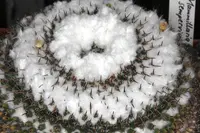
Mammillaria sempervivi
Mammillaria sempervivi
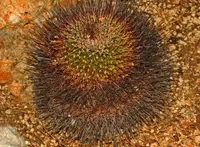
Mammillaria grusonii
Mammillaria grusonii
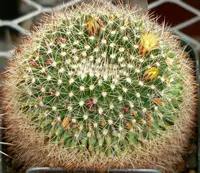
Cactus
Mammillaria petrophila
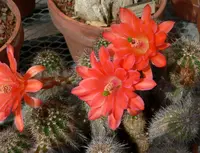
Mojave mound cactus
Echinocereus polyacanthus
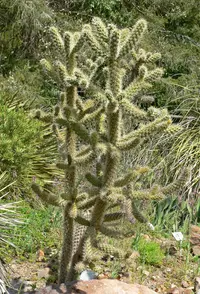
Munz's cholla
Cylindropuntia munzii

Mexican pincushion cactus
Mammillaria magnimamma
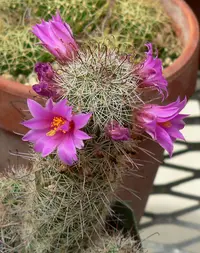
Mammillaria mazatlanensis
Mammillaria mazatlanensis
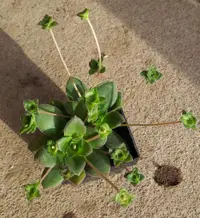
Rock Stonecrop
Crassula orbicularis