


Deep pot anchoring
Use a heavy, deep terracotta pot with a wide base and gritty fill to keep mature clumps stable and prevent toppling as stems elongate and offset.

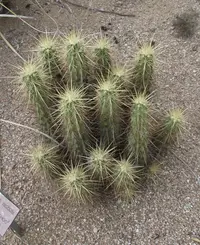
Nichol's hedgehog cactus, Echinocereus nicholii, is a small, clumping desert cactus native to rocky slopes of southern Arizona and northern Mexico. It grows as short, cylindrical stems covered in dense, sharp spines that protect the plant from herbivores and sun exposure.
In spring it produces large, showy funnel-shaped flowers, usually pink to magenta, which attract pollinators and are a key ornamental feature. This species is adapted to strong sun, high heat, and very dry, fast-draining soils, so overwatering is the main challenge in cultivation.
For those learning how to care for Nichol's hedgehog cactus, it generally suits growers who can provide bright light, low humidity, and infrequent but deep watering in a gritty mix.

Care Difficulty
Moderate Care

Light Preference
Full Sun

Water Requirements
Low Water

Temperature Preference
Warm Climate

Hardiness Zone
9–11

Soil Texture
Sandy, Rocky, Loamy

Soil pH
Slightly acidic (6.5–7.0), Neutral (7.0)

Soil Drainage
Well-drained

Fertilization
Minimal (feed rarely)
Scan your plant to receive care tips personalized for your specific plant
Available on iOS and Android
This desert cactus needs strong light that mimics full-sun habitat conditions.
Watering must stay sparse and carefully timed to avoid root rot in this species.
This cactus thrives in hot, dry conditions but has some cold tolerance if kept dry.
Humidity is not a critical factor for Echinocereus nicholii, which is adapted to very dry air.
This cactus needs a very fast-draining, mineral-heavy substrate to prevent root rot.
This species is well suited to container culture when planted in a sharply draining setup.
This desert cactus needs only light feeding to support healthy growth in cultivation.
Pruning Echinocereus nicholii is minimal and mainly focused on health and safety.
This cactus grows slowly and dislikes frequent disturbance, so repot or transplant only when clearly needed.
Propagation of Echinocereus nicholii is usually done by offsets, with seeds as a slower backup method.
This species is fairly cold tolerant when kept dry but still benefits from simple winter precautions.

Plant Health Check
Not sure what's wrong with your plant? Check your plant's health inside the app.
This cactus is naturally restricted to a small area of south-central Arizona and adjacent Sonora, Mexico, growing on very specific rocky limestone and granite slopes rather than across broad desert plains.
It is listed as endangered under the U.S. Endangered Species Act because of its limited range and threats from mining, road construction, and habitat disturbance, so wild populations are legally protected and monitored.
The plant often roots in narrow rock crevices with a relatively shallow but wide-spreading root system, allowing it to access brief rainwater pulses that collect in fractures while avoiding deep, compacted soils.

Genetic and field studies show that this species forms highly localized, fragmented populations, and some of these tiny colonies contain only a few hundred individuals, which makes habitat protection critical for long-term survival.
Blooming usually occurs in spring, sometimes into early summer, after a cool, dry winter rest. Flowers are showy, funnel-shaped, often magenta to pink-purple, and form near the stem tips, attracting native pollinators in habitat.
Keep your plants happy and healthy with plant identification, disease detection, and easy care guidance.

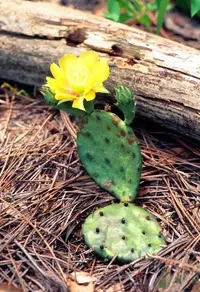
Eastern Prickly Pear
Opuntia humifusa
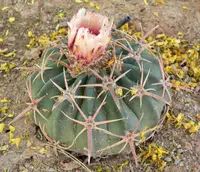
horse crippler
Echinocactus texensis
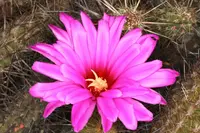
Brandegee's Hedgehog Cactus
Echinocereus brandegeei
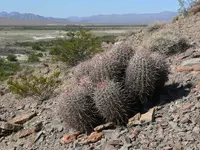
cottontop cactus
Echinocactus polycephalus
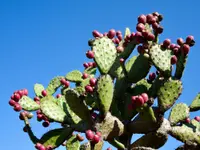
Prickly pear
Opuntia ficus-indica
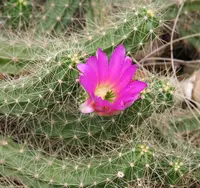
Echinocereus cinerascens
Echinocereus cinerascens
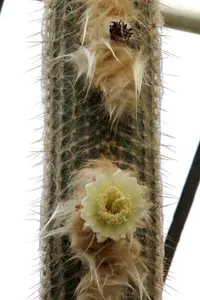
Espostoa melanostele
Espostoa melanostele
 POPULAR
Monstera
Monstera deliciosa