

Establish deep roots
During the first 1–2 years in the ground, apply an occasional slow, deep soak rather than light surface watering to encourage a deep root system that improves long-term drought and wind resistance when growing Bigelow's nolina.

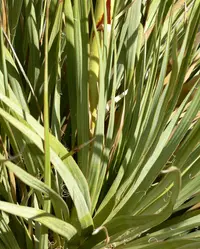
Bigelow's nolina (Nolina bigelovii) is a slow-growing, desert-adapted shrub or small tree with a swollen base and stiff, narrow leaves forming dense tufts. Mature plants can develop a tall, upright trunk topped with a fountain of foliage and, in season, tall flowering spikes with many small, cream-colored flowers.
This species is native to arid regions of the southwestern United States and northern Mexico, where it thrives in rocky, well-drained soils and full sun. Its drought tolerance and tough leaves make it relatively low-maintenance, but slow growth and sensitivity to excess moisture mean gardeners must learn how to care for Bigelow's nolina with attention to drainage and watering restraint.

Care Difficulty
Easy Care

Light Preference
Full Sun

Water Requirements
Low Water

Temperature Preference
Warm Climate

Hardiness Zone
8–10

Soil Texture
Sandy, Rocky, Loamy

Soil pH
Neutral (7.0), Slightly alkaline (7.0–7.5)

Soil Drainage
Well-drained

Fertilization
Minimal (feed rarely)
Scan your plant to receive care tips personalized for your specific plant
Available on iOS and Android
This desert shrub thrives in strong sun but needs gradual acclimation in milder or coastal climates.
This species is highly drought-tolerant and prefers infrequent, deep watering in fast-draining soil.
This desert-adapted plant tolerates heat very well but is sensitive to prolonged hard frost.
This desert species handles low indoor humidity well, so moisture in the air is rarely a concern.
Nolina bigelovii needs very fast-draining, mineral-based soil to prevent root rot.
This species can adapt to container growing if the pot is large, heavy, and drains very freely.
This desert-adapted shrub needs only light feeding in containers or very poor soil, so fertilizer use should stay modest for Bigelow's nolina.
Pruning Nolina bigelovii is mainly hygienic, aimed at removing unsightly or unhealthy tissue rather than reshaping the plant.
This species is usually landscape-grown, so focus on careful transplanting or infrequent container upsizing to avoid root damage.
Reproduction of Nolina bigelovii is usually done from seed and is relatively slow, so propagation is more common in nursery production than at home.
Mature plants are cold hardy in many arid and semi-arid climates, so winter care is minimal in the ground.

Plant Health Check
Not sure what's wrong with your plant? Check your plant's health inside the app.
This species forms a tall, woody trunk that can reach several meters, storing water in fibrous tissues to survive extremely arid Sonoran and Mojave Desert conditions.
It often grows on steep, rocky slopes and desert mountainsides, where excellent drainage and low competition from other plants give it a survival advantage.
Mature plants can resprout after fire from protected buds on the trunk and stem bases, allowing populations to persist in fire-prone desert shrublands.

This plant can live for many decades, and old individuals in undisturbed desert habitats often form striking, tree-like silhouettes that serve as long-term landmarks for hikers and field botanists.
Container growing is possible if the pot is very deep, heavy, and has excellent drainage. Use a gritty, mineral-based mix and allow plenty of root space. Expect slower growth and increased watering needs compared with plants in the ground.
Keep your plants happy and healthy with plant identification, disease detection, and easy care guidance.

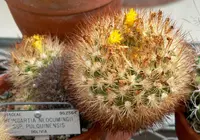
Cuming crown cactus
Rebutia neocumingii
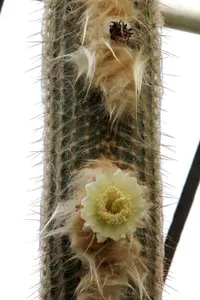
Espostoa melanostele
Espostoa melanostele
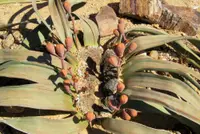
Tree Tumbo
Welwitschia mirabilis
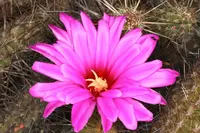
Brandegee's Hedgehog Cactus
Echinocereus brandegeei
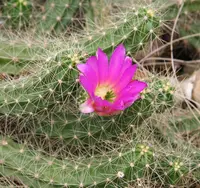
Echinocereus cinerascens
Echinocereus cinerascens
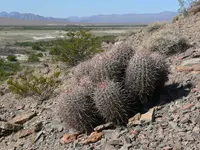
cottontop cactus
Echinocactus polycephalus
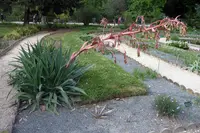
Beschorneria yuccoides
Beschorneria yuccoides
Sedum mendozae
Sedum mendozae