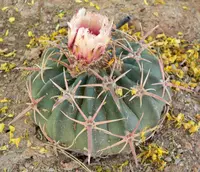
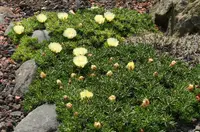
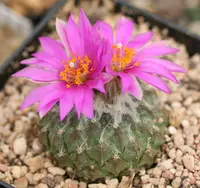
Rocky mound planting
Plant on a gritty, slightly raised mound or rock garden berm so water drains quickly away from the cushion, reducing stem rot and keeping the plant compact over time.

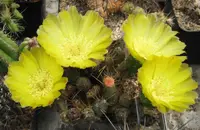
Maihueniopsis ovata is a low-growing, mat-forming cactus from arid regions of Chile and Argentina. It forms dense cushions of small, rounded segments covered with short spines. Over time, it creates a tight, ground-hugging clump that can spread wider than it grows tall, making it suitable for rock gardens and troughs. In spring, it may produce small, bright flowers that contrast with its compact pads. This species prefers strong light, minimal moisture, and very free-draining, gritty soil. These adaptations make it drought tolerant but sensitive to excess water, which is the main challenge in how to care for Maihueniopsis ovata.

Care Difficulty
Moderate Care

Light Preference
Full Sun

Water Requirements
Low Water

Temperature Preference
Cold Hardy

Hardiness Zone
7–10

Soil Texture
Sandy, Loamy, Rocky

Soil pH
Slightly acidic (6.5–7.0), Neutral (7.0)

Soil Drainage
Well-drained

Fertilization
Minimal (feed rarely)
Scan your plant to receive care tips personalized for your specific plant
Available on iOS and Android
This high-altitude cactus thrives in strong sun but still benefits from gradual light acclimation.
This species prefers sparse, deep watering with thorough drying between soakings.
This cushion-forming cactus tolerates a wide temperature range but needs protection from prolonged hard frost.
This species is adapted to very dry air and usually does not need humidity adjustments indoors.
Maihueniopsis ovata needs very fast-draining, mineral-rich soil to prevent root rot.
This cactus is well suited to container growing, especially in regions with cold or wet winters.
This high-desert cactus needs only light feeding in containers; in the ground, Maihueniopsis ovata often grows well with no added fertilizer.
Pruning needs are minimal and mainly corrective for this low, mat-forming cactus.
Container-grown plants and young clumps benefit from infrequent but careful transplanting to maintain healthy roots.
This species is most often propagated from detached pads, with seeds used less commonly.
This hardy cushion cactus tolerates substantial cold when kept dry but still benefits from thoughtful winter management, especially in containers.

Plant Health Check
Not sure what's wrong with your plant? Check your plant's health inside the app.
This species grows as low, dense cushions rather than tall columns, an adaptation that reduces exposure to cold, desiccating winds in its native high Andean habitats of Chile and Argentina.
Unlike many desert cacti, it can tolerate regular frosts and occasional snow, reflecting its evolution in high-elevation steppe and shrubland rather than hot lowland deserts.
Its small, oval pads are jointed and easily detach, allowing the plant to spread vegetatively when segments break off and root nearby, which helps it colonize open, rocky ground efficiently.

Maihueniopsis ovata often forms near-continuous cushion carpets that can dominate patches of Patagonian steppe, creating microhabitats that trap litter and moisture and subtly modify local soil conditions for other small plants and invertebrates.
This species forms low, slowly expanding mats through branching pads, not rapid runners or underground rhizomes. It can gradually cover a sunny, dry rock bed but is not considered aggressive or difficult to contain in most gardens.
Keep your plants happy and healthy with plant identification, disease detection, and easy care guidance.