


Glove and tool safety
Use thick leather gloves and long-handled tongs when handling pads or removing debris so the fine glochids do not lodge in skin or spread to other plants and tools.

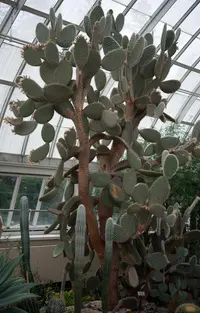
Opuntia pilifera is a shrubby cactus species known for its upright, branching pads covered with long, hair-like spines and dense clusters of fine bristles. It forms clumps over time and can become a striking architectural feature in arid and dry gardens.
This species is native to central and southern Mexico, where it grows in rocky, well-drained habitats with intense sun and low rainfall. Its drought tolerance and slow to moderate growth rate make it relatively low-maintenance, though handling requires care due to the irritating spines and bristles.
It prefers bright, direct light, very free-draining mineral soil, and sparse watering, especially in cooler seasons. Understanding how to care for Opuntia pilifera mainly involves avoiding overwatering and providing strong light with excellent drainage.

Care Difficulty
Easy Care

Light Preference
Full Sun

Water Requirements
Low Water

Temperature Preference
Warm Climate

Hardiness Zone
9–11

Soil Texture
Sandy, Loamy, Rocky

Soil pH
Slightly acidic (6.5–7.0), Slightly alkaline (7.0–7.5)

Soil Drainage
Well-drained

Fertilization
Minimal (feed rarely)
Scan your plant to receive care tips personalized for your specific plant
Available on iOS and Android
This cactus prefers strong, direct light but benefits from some protection in very intense sun.
This species is highly drought-tolerant and must dry well between waterings to avoid root problems.
This cactus prefers warm, dry conditions and is sensitive to hard frost.
This cactus prefers dry air and generally does not need humidity adjustment indoors.
Opuntia pilifera needs a very fast-draining, mineral-rich substrate to prevent root rot.
This species is suitable for container growing when the pot is chosen to manage weight, spread, and drainage.
This cactus grows well in lean soil but benefits from light feeding during the warm growing season.
Pruning is mainly used to manage size, remove damage, and keep pads safely spaced.
This species dislikes frequent disturbance, so repot or transplant only when clear signs appear.
New plants are most often produced from individual pads rather than seeds.
This cactus has some cold tolerance but needs protection from prolonged freezing, especially in containers.

Plant Health Check
Not sure what's wrong with your plant? Check your plant's health inside the app.
This cactus develops dense clusters of long white hair-like bristles emerging from its areoles, which partly shade the stem surface and help reduce water loss in its sunny, arid habitats in central Mexico.
Unlike many flat-padded prickly pears, this species forms thick, elongated, almost cylindrical cladodes that stack and branch, giving mature plants a shrubby, columnar appearance.
It produces deep purple to reddish edible fruits after flowering, an important dry-season food source for local wildlife such as birds and small mammals in its native range.

Wild populations of this species are naturally restricted to central Mexican states such as Hidalgo and Querétaro, where it often grows on rocky slopes and semi-arid scrub, making it a characteristic element of the region’s xeric cactus flora.
Growth is moderate for a hardy cactus. In suitable outdoor conditions, it often adds 5–15 cm of new pad growth per year, slowing in cool seasons. Young plants establish more quickly, then growth rate becomes more gradual.
Keep your plants happy and healthy with plant identification, disease detection, and easy care guidance.

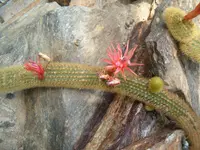
Golden Rat-tail Cactus
Cleistocactus winteri
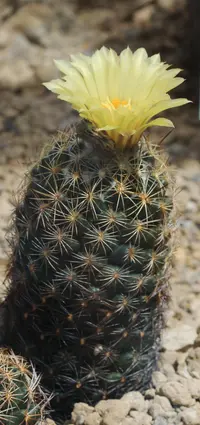
Rhinoceros Cactus
Coryphantha cornifera
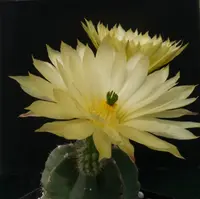
Echinocereus subinermis
Echinocereus subinermis

Armatocereus matucanensis
Armatocereus matucanensis
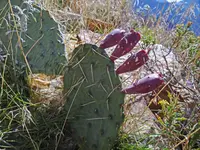
twistspine pricklypear
Opuntia macrorhiza
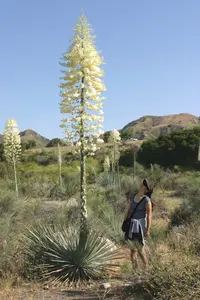
chaparral yucca
Hesperoyucca whipplei
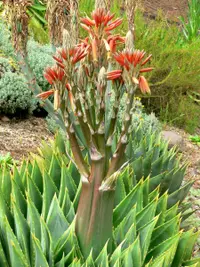
Spiral aloe
Aloe polyphylla
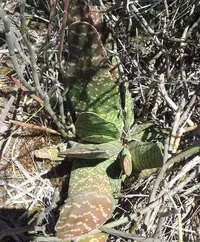
Robertson Oxtongue
Gasteria disticha