


Stabilize Tall Stems
As columns elongate, install a discreet stake or masonry rebar 5–10 cm from the base and loosely secure stems with soft plant ties to prevent wind snap or toppling as the plant gains height and weight.


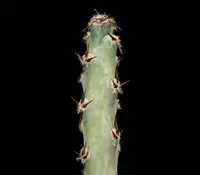
Armatocereus matucanensis is a columnar cactus from the dry valleys of central Peru. It forms tall, ribbed, blue‑green stems that branch as it matures. Spines are usually short and evenly spaced, giving it a tidy, architectural look rather than a very prickly one.
In nature it grows in rocky, well-drained soils with strong sun and low rainfall. It adapts well to container culture and is relatively slow-growing but long-lived.
For most home growers, how to care for Armatocereus matucanensis centers on providing bright light, a gritty cactus mix, and careful watering that avoids prolonged wetness around the roots.

Care Difficulty
Moderate Care

Light Preference
Full Sun

Water Requirements
Low Water

Temperature Preference
Warm Climate

Hardiness Zone
10–11

Soil Texture
Sandy, Loamy, Rocky

Soil pH
Slightly acidic (6.5–7.0), Neutral (7.0)

Soil Drainage
Well-drained

Fertilization
Minimal (feed rarely)
Scan your plant to receive care tips personalized for your specific plant
Available on iOS and Android
This Andean columnar cactus needs strong light to stay compact and healthy.
This species prefers thorough but infrequent watering that allows the root zone to dry between soakings.
This cactus prefers warm, arid conditions with cool but not freezing nights.
This cactus thrives in dry air and normally does not need extra humidity management indoors.
Use a very fast-draining, mineral-heavy mix to prevent root rot in this columnar cactus.
This species is suitable for container growing when the pot supports its tall, top-heavy form.
This desert columnar cactus needs only light feeding to support healthy growth in containers.
Pruning is minimal and mainly hygienic, aimed at keeping this tall cactus safe and structurally sound.
This species grows slowly in containers and prefers infrequent disturbance of its root system.
Propagation is possible but slow, most often done from stem cuttings rather than seed in home settings.
Cold management is important, as this cactus is not reliably hardy below light frost in most regions.

Plant Health Check
Not sure what's wrong with your plant? Check your plant's health inside the app.
This species forms tall, branched columns that can resemble a small tree, with segmented, constricted joints that give the stems a slightly articulated, stacked appearance compared with smoother columnar cacti.
It is native to seasonally dry valleys of the central Peruvian Andes, where it experiences strong sun, large day–night temperature swings, and low but highly seasonal rainfall, shaping its drought- and sun-adapted growth form.
The plant produces large, tubular white flowers that typically open at night or in the evening, a trait associated with pollination by nocturnal visitors such as moths or bats, although its exact primary pollinators are not fully documented.
This species performs best outdoors in a warm, bright, arid or semi-arid climate. Indoors, growth is slower and tall stems may lean. For Armatocereus matucanensis indoor care, provide maximum light, excellent drainage, and avoid cool, damp conditions.
Keep your plants happy and healthy with plant identification, disease detection, and easy care guidance.
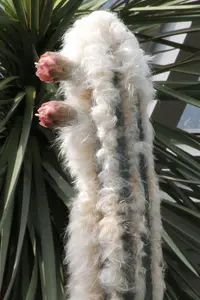
woolly torch
Pilosocereus leucocephalus
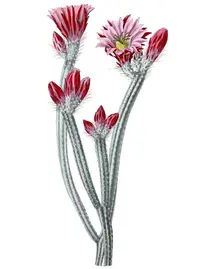
dahlia hedgehog cactus
Echinocereus poselgeri
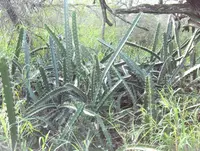
Triangle cactus
Acanthocereus tetragonus
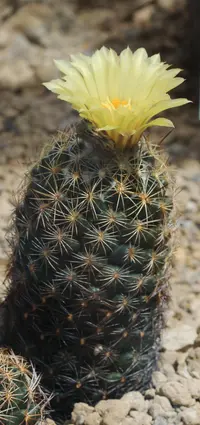
Rhinoceros Cactus
Coryphantha cornifera
twistspine pricklypear
Opuntia macrorhiza
Echinocereus subinermis
Echinocereus subinermis
Gymnocalycium bruchii
Gymnocalycium bruchii
Cereus spegazzinii
Cereus spegazzinii