candleholder cactus Care (Browningia candelaris)

candleholder cactus

About candleholder cactus

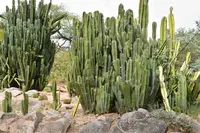
The candleholder cactus, Browningia candelaris, is a slow-growing columnar cactus native to high, arid regions of Peru and northern Chile. It forms tall, tree-like stems that branch sparsely and are covered with strong spines.

Mature plants develop a distinctive candelabra silhouette, which gives the species its common name. In habitat it experiences intense sun, large temperature swings, and very low rainfall.

These traits make it drought-tolerant but sensitive to excess moisture and poorly drained soil in cultivation. Understanding how to care for candleholder cactus starts with providing bright light, minimal watering, and a very fast-draining, mineral-rich substrate.

Main Plant Requirements

Care Difficulty

Hard Care

Light Preference

Full Sun

Water Requirements

Low Water

Temperature Preference

Tropical / Frost Sensitive

Hardiness Zone

10–12

Soil Texture

Sandy, Rocky

Soil pH

Slightly acidic (6.5–7.0), Neutral (7.0)

Soil Drainage

Well-drained

Fertilization

Minimal (feed rarely)

Get Personalized Care Plan

Scan your plant to receive care tips personalized for your specific plant

Available on iOS and Android

How to Care for the candleholder cactus

This highland cactus needs strong sun but benefits from gradual exposure in cultivation.

  • Provide 6–8 hours of direct sun daily, ideally with morning sun and lighter afternoon exposure, to mimic its Andean habitat.
  • In very hot, lowland climates, offer light afternoon shade or filtered light to prevent sunscald and yellowing ribs.
  • If stems stretch, lean, or turn pale, the candleholder cactus is not getting enough light; increase sun exposure seasonally as days shorten.

This species prefers deep, infrequent watering that fully dries between events.

  • Outdoors in arid climates, water only when the top 5–8 cm of soil are completely dry, then soak the root zone and let excess drain away.
  • Use very fast-draining, gravelly soil or a cactus mix on a slope or mound to prevent standing water and root rot in Browningia candelaris.
  • In cool seasons, reduce watering sharply; wrinkling ribs signal mild thirst, while blackened base tissue or a sour smell indicate overwatering.

This Andean cactus prefers warm days, cool nights, and excellent airflow.

  • Aim for 70–90°F (21–32°C) during active growth, with cooler nights around 50–60°F (10–16°C) to reflect high-altitude conditions.
  • Protect from frost; short dips to 28–30°F (-2 to -1°C) may be survived if dry, but tissue damage increases rapidly below freezing.
  • In extreme heat above 100°F (38°C), ensure strong air movement and some afternoon shade, and avoid watering the soil during peak heat.

This species comes from very arid habitats, so humidity is rarely a concern indoors.

  • Aim for 20–40% relative humidity, similar to dry indoor air in heated homes.
  • Candleholder cactus tolerates even drier air; problems usually come from excess moisture, not low humidity.
  • If stems look pale, soft, or show fungal spotting, reduce local humidity and increase air movement rather than adding moisture.

Browningia candelaris needs a very fast-draining, mineral-heavy soil to prevent root rot.

  • Use a gritty cactus mix made from roughly 60–70% inorganic material such as coarse sand, pumice, or perlite plus 30–40% low-organic cactus substrate.
  • Ensure the texture is open and crumbly so water drains within seconds and no fine peat holds moisture around the roots.
  • Target a slightly acidic to neutral pH around 6.0–7.0, avoiding strongly acidic or saline soils that stress this desert species.
  • Avoid dense loam, unamended garden soil, or mixes dominated by peat or compost, which reduce aeration and promote rot.

This cactus is suitable for container growing if the pot supports its tall, columnar form.

  • Choose a deep, heavy pot (often unglazed clay) to counterbalance the tall, top-heavy stem and reduce tipping risk in wind or accidental bumps.
  • Select a container just slightly wider than the root zone so the oversized volume does not trap unused moisture around the roots.
  • Raise the pot on feet or blocks so drainage holes stay clear and water escapes quickly, especially when using saucers on patios or balconies.

This slow-growing desert cactus needs only light, infrequent feeding in containers or cultivated landscapes.

  • Use a low-strength, balanced cactus fertilizer (around 10-10-10) diluted to 25–50% in spring and early summer.
  • Feed container-grown candleholder cactus about every 6–8 weeks during active growth only.
  • Avoid organic compost-rich mixes that stay wet, which can cause root rot in this species.
  • Stop feeding in late summer and provide no fertilizer during fall and winter dormancy.

Pruning Browningia candelaris is minimal and mainly corrective, aimed at safety and plant health rather than shaping.

  • Best timing is late spring to early summer in dry weather, when the plant is actively growing.
  • Remove only dead, diseased, or storm-damaged stems and any rubbing arms that risk breakage.
  • Use long-handled, sharp loppers or a pruning saw plus sturdy gloves, cutting cleanly at the branch base.
  • Avoid heavy structural cuts, which can disfigure the columnar form and increase infection risk.

This species is usually grown in the ground, so focus on careful transplanting rather than frequent repotting.

  • Transplant or shift containers only when roots circle the pot, growth slows, or the plant becomes unstable.
  • Plan moves for late spring to early summer, allowing warm soil and consistent light for recovery.
  • Expect to transplant infrequently, often only every several years for container plants or young specimens.
  • Minimize root stress by pre-drying soil slightly, lifting with intact root ball, replanting at same depth, and watering lightly afterward.

Propagation of Browningia candelaris is usually done from seed and is considered slow and specialized.

  • Sow fresh seeds in late spring in a sterile, gritty cactus mix with very good drainage.
  • Maintain 70–80°F bottom warmth, bright indirect light, and consistently just-moist substrate for germination.
  • Provide gentle air movement and very light fertilization once seedlings develop several true ribs.
  • Vegetative cuttings are possible but slow to root, requiring months in a shaded, dry, warm environment.

Winter care is important where temperatures drop below the natural desert range of this cactus.

  • This species is not tolerant of hard frost and is best kept above 32°F, ideally 40–45°F in winter.
  • In-ground plants benefit from a deep, dry mineral mulch to insulate the root zone from brief cold snaps.
  • For containers, move plants under a roof, cold greenhouse, or bright indoor spot with very fast-draining soil.
  • Keep the plant almost completely dry in winter to reduce cold-related root and stem damage.

Care Tips

Gradual light hardening

When moving a plant from greenhouse, shade house, or indoors to full desert sun, increase exposure over 2–3 weeks using shade cloth layers to reduce burn on the waxy blue epidermis.

Rock mulch base

Place a ring of coarse gravel or small rocks around the base to stabilize the column, keep the stem dry at soil contact, and slightly buffer rapid temperature swings at the root zone.

Wind and stake support

In windy sites, anchor the root zone with deep, heavy pots and add one or two unobtrusive stakes with soft ties to prevent rocking, which can damage fine feeder roots and slow establishment.

Cool‑season restraint

In late fall and winter, keep the plant on the dry side even if days are warm, since roots are much less active in cool nights and excess moisture at this time is the main trigger for rot when growing candleholder cactus.

Salt‑aware watering

If using tap water in arid regions, periodically flush the pot thoroughly and allow full drainage, then skip the next irrigation, to limit salt buildup that can etch and scar the bluish stem surface.

Common Pests and Diseases

Cochineal scale

This pest forms white, cottony pads on the ribs and spines and extracts sap, causing yellowing and reduced vigor. Symptoms include sticky honeydew and sooty mold growth on affected areas.

Solution

Physically remove colonies with a strong jet of water or a soft brush dipped in diluted alcohol (about 70% isopropyl alcohol mixed 1:1 with water), taking care not to damage the skin. For persistent infestations on outdoor plants, use a horticultural soap or light horticultural oil spray in the early morning and repeat every 7–10 days until new growth is clean.

Red spider mites

These insects are tiny arachnids that thrive in hot, very dry conditions and cause fine speckling, dull patches, and a dusty appearance on the cactus skin. Symptoms include very fine webbing in crevices and slowed growth.

Solution

Increase air movement and briefly raise local humidity by misting the air around (not directly saturating) the stems, as mites dislike sudden humidity changes. Rinse the plant thoroughly with lukewarm water to dislodge mites, then apply a miticidal soap or neem oil spray, repeating every 7–10 days until no new damage appears, which is a key step in candleholder cactus indoor care.

Soft scale

This pest appears as smooth, rounded brown or tan bumps attached to the cactus surface, where it feeds on sap and weakens the plant. Symptoms include sticky honeydew, attracting ants and promoting sooty mold.

Solution

Manually scrape off individual scales with a cotton swab or soft toothbrush dipped in diluted alcohol, then wipe the surface with a damp cloth. For larger plants outdoors, apply a light horticultural oil spray that thoroughly coats the stems, targeting the crawler stage, and repeat according to product directions while monitoring for ant activity.

Fungal stem spots

This disease manifests as sunken, brown to black lesions on the stem, often starting at small wounds or scarred areas. Symptoms include slow expansion of spots that may dry and cork over or, in humid conditions, develop a darker, slightly soft margin.

Solution

Improve airflow around the plant, keep the stem surface dry, and avoid overhead watering, especially in cool weather. Cut out small, advancing lesions with a sterile knife back to healthy tissue, dust the wound lightly with a dry sulfur or copper-based fungicidal powder, and monitor for any further spread.

Bacterial stem rot

This disease causes soft, water-soaked, often foul-smelling areas on the stem, usually starting from mechanical damage or prolonged moisture. Symptoms include rapid collapse of affected tissue and discoloration from green to brown or black.

Solution

At the very first sign, isolate the plant, cut away all affected tissue well into firm, healthy tissue with a sterile blade, and let the wound dry and callus in warm, dry air. Discard severely affected plants or large rotting sections, improve drainage and watering practices, and avoid wetting the stem to prevent renewed infection.

Interesting Facts

High‑altitude specialist

This cactus naturally occurs on extremely dry Andean slopes in southern Peru and northern Chile, often between 2,000–3,000 m where temperature swings and intense UV radiation are typical.

Distinct candle shape

Mature plants develop a thick, columnar, almost branchless trunk with a rounded crown of blue‑green stem tissue and dense spines, giving the silhouette that inspired the common name candleholder cactus.

Color‑changing spines

The dense spines tend to be yellowish to light brown when young and weather to darker brown or gray with age, helping shield the stem from strong sun and reducing water loss through shading.

Botan icon

Did you know?

Wild individuals of this species can reach more than 6 m in height and are considered among the most massive arborescent cacti of the high, hyper‑arid Atacama region, forming striking landmark silhouettes in otherwise nearly plant‑bare landscapes.

FAQs about candleholder cactus

Growth is very slow. Young plants may add only 1–3 cm in height per year, sometimes less in containers. In cultivation it often remains small for many years and rarely approaches its wild tree-like size.

Grow Healthy Plants with Botan Care

Keep your plants happy and healthy with plant identification, disease detection, and easy care guidance.

Botan plant care app — identify plants on mobile

Explore More Plants