red swampfire Care (Salicornia rubra)

Also known as: red samphire, red glasswort, Rocky Mountain glasswort, Red Saltwort, Western Glasswort
red swampfire

About red swampfire

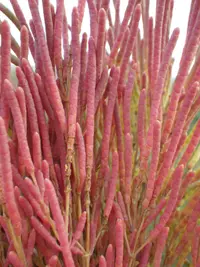
Red swampfire (Salicornia rubra) is a small, succulent halophyte, meaning it naturally thrives in salty environments. It forms low, jointed, leafless stems that can turn vivid red as they mature.

This species is native to saline flats, salt marshes, and coastal or inland salt lakes in North America. Its compact, upright growth and seasonal color make it interesting for specialty landscapes and collections.

Salicornia rubra is generally tough where conditions match its natural habitat, but it is not a typical houseplant. It prefers very bright light, high salinity, and consistently moist but well-drained, sandy soils, which shapes how to care for red swampfire.

Main Plant Requirements

Care Difficulty

Moderate Care

Light Preference

Full Sun

Water Requirements

Aquatic

Temperature Preference

Cold Hardy

Hardiness Zone

4–9

Soil Texture

Sandy, Silty

Soil pH

Neutral (7.0), Alkaline (7.5–8.5)

Soil Drainage

Waterlogged tolerant

Fertilization

Minimal (feed rarely)

Get Personalized Care Plan

Scan your plant to receive care tips personalized for your specific plant

Available on iOS and Android

How to Care for the red swampfire

This saltmarsh annual prefers strong, direct sun to develop compact growth and strong red coloration.

  • Provide 6–10 hours of full sun daily; coastal or open, unshaded sites are ideal for red swampfire.
  • Plant where it receives early to mid-afternoon sun; light, brief afternoon shade is tolerated but may reduce red pigmentation.
  • In cooler seasons or cloudy climates, choose the brightest, south-facing exposure; in very hot inland areas, protect from reflected heat that can scorch tender new shoots.

This halophytic plant thrives in wet, often saline soils and tolerates conditions that would drown most species.

  • Aim for consistently saturated soil or shallow standing water; do not allow the surface to dry and crack between soakings.
  • Use poorly drained, clayey, or marshy sites where water lingers; true drought stress shows as limp, dull, shrinking stems.
  • Overwatering is rarely an issue for Salicornia rubra outdoors, but sudden fresh-water flushing without salts can cause yellowing and weak growth.

This species tolerates a wide temperature range but grows fastest in mild to warm coastal-like conditions.

  • Active growth is strongest around 60–80°F (16–27°C), with good performance in many temperate coastal regions.
  • Mature plants often survive brief dips near 20°F (−6°C), but repeated hard frosts below this can kill stems back to the base.
  • Heat tolerance is high up to about 95°F (35°C) if soil stays wet; in hotter spells, low humidity plus drying mud increases stress and can stunt new growth.

This coastal halophyte tolerates a wide range of humidity and usually does not need special humidity management indoors.

  • Target 40–60% air humidity; avoid extremely dry conditions below 30% for prolonged periods.
  • Dry indoor air may cause slight tip browning and slower growth but rarely kills red swampfire.
  • If air is very dry, group plants together or place the pot above, not in, a shallow pebble tray with water.

This salt-marsh species needs sandy, highly drained, saline substrate rather than typical houseplant potting soil.

  • Use a mix of 60–70% coarse sand or fine grit with 30–40% inert material such as perlite or fine gravel for strong structure and aeration.
  • Ensure very rapid drainage; water should run through in seconds and not leave the mix soggy or compacted.
  • Maintain alkaline to neutral pH (about 7.0–8.5) and add marine salt solution or saline sand to mimic natural conditions for Salicornia rubra.
  • Avoid peat-heavy, organic-rich, or clay soils that retain water, break down quickly, or limit root oxygen.

This species can be grown in containers if the pot and setup mimic shallow, fast-draining coastal conditions.

  • Choose a wide, shallow container to encourage lateral rooting and stable, low growth rather than deep, soft stems.
  • Select a heavy ceramic or clay pot to counterbalance the dense, spreading stems and prevent tipping in wind.
  • Elevate the pot on feet or mesh strips so saline runoff drains completely and does not reabsorb into the root zone.

Salicornia rubra typically needs little to no fertilizer, especially in nutrient-poor, salty soils where it naturally thrives.

Pruning Salicornia rubra is mainly done to keep plants tidy and healthy rather than to control size.

  • Carry out light trimming at the end of the growing season, once stems begin to dry and discolor.
  • Remove dead, damaged, or weak stems at the base using clean, sharp scissors or small pruning shears.
  • Thin crowded stems lightly to improve airflow and reduce fungal issues in damp climates.
  • Avoid cutting into fresh, green growth too hard, as this can reduce vigor and overall stand density.

Container-grown plants or nursery starts of Salicornia rubra sometimes need transplanting to maintain strong growth.

  • Plan transplanting in spring when temperatures are mild and the plant is starting active growth.
  • Look for roots circling the container, slow growth, or plants drying out quickly as signs a move is needed.
  • Shift into a slightly larger, well-drained, sandy and saline mix, disturbing roots as little as possible.
  • Water in gently to settle soil, then keep evenly moist and sheltered from intense sun for 3–5 days to limit shock.

Salicornia rubra is most often propagated from seed for habitat restoration or edible use.

  • Sow fresh seeds in late winter to early spring in shallow trays filled with sandy, saline substrate.
  • Press seeds lightly onto the surface and keep them barely covered, as light helps even germination.
  • Maintain 60–70°F, bright light, and consistently moist but not waterlogged conditions until seedlings establish.
  • Harden off young plants gradually before planting into final saline sites to reduce transplant stress.

This coastal halophyte is generally cold hardy and needs minimal winter care in most temperate regions.

  • Mature in-ground plants usually tolerate light to moderate frosts without additional protection.
  • In colder zones, a thin layer of coarse sand or gravel around the base helps stabilize soil and drainage.
  • Move containers to a frost-free but very bright spot if temperatures routinely drop below the plant’s hardiness range.
  • Water sparingly in winter, keeping the substrate just slightly moist to avoid root rot in cold, wet soil.

Care Tips

Salinity Management

Rotate irrigation between slightly saline and fresher water (for example, alternating a seawater blend with low-mineral tap or rainwater) to mimic natural tide cycles and reduce salt crusting on the soil surface when growing red swampfire.

Prevent Salt Crusting

If salt builds up as a white crust on the substrate, gently scrape off the top 0.5–1 cm and replace it with fresh growing medium instead of flushing heavily, which can stress this halophyte.

Dense Stand Planting

Sow seeds or plant cuttings in tight groups rather than as isolated specimens to encourage upright, uniform growth that is easier to harvest and less prone to lodging in wind.

Timed Harvesting

Harvest young, tender shoots in the cool part of the day and cut only the upper 3–5 cm so the lower portions can re-sprout, extending the productive season.

Container Salt Control

For container culture, use pots with ample drainage holes and a shallow saucer so excess brine can drain freely and be discarded, preventing salt from reabsorbing into the root zone.

Common Pests and Diseases

Fusarium wilt

This disease causes gradual yellowing, stunting, and collapse of shoots, often starting in localized patches in the bed. Symptoms include poor growth even in otherwise suitable saline conditions.

Solution

Remove and discard affected plants and nearby substrate to reduce inoculum, and avoid reusing contaminated media or containers. Improve drainage, avoid overwatering in non-tidal systems, and if growing Salicornia rubra plant care is done in a recirculating setup, disinfect equipment and consider rotating to a non-host crop for at least 1–2 seasons.

Alternaria leaf spot

This disease produces small, dark, sunken spots on stems and fleshy segments that may enlarge and coalesce under humid, warm conditions. Symptoms include premature drying and dieback of older segments.

Solution

Remove and discard affected plant material promptly, reduce overhead irrigation, and increase spacing and airflow to keep foliage drier. In greenhouse or indoor setups, use clean tools, avoid splashing water from old to young plants, and sanitize benches and trays between cycles.

Botrytis blight

This disease appears as soft, water-soaked tissue that develops gray, fuzzy mold on stems and segments, especially in cool, humid environments. Symptoms include collapse of succulent tips and a general rotting of dense clumps.

Solution

Improve ventilation, reduce humidity, and avoid prolonged surface moisture by watering at the soil level rather than over the foliage. Remove and dispose of all infected tissue and dead plant debris, and in propagation trays, thin crowded seedlings and use a well-drained, coarse substrate.

Aphids

These insects feed on tender shoot tips and segment joints, causing slight distortion, sticky honeydew, and sometimes sooty mold growth on surfaces. This pest can also transmit viral pathogens under intensive production.

Solution

Rinse colonies off with a firm stream of water on outdoor or greenhouse plants and remove heavily infested tips. Encourage or introduce natural enemies such as lady beetles in protected culture, and if needed use a mild horticultural soap or oil spray, applied during cooler parts of the day and followed by a light rinse to avoid residue buildup on succulent tissue.

Spider mites

These insects are tiny sap-feeding arachnids that cause fine stippling, dulling, and eventual bronzing of the fleshy segments, especially in hot, dry, low-humidity conditions. Symptoms include fine webbing between segments when populations are high.

Solution

Increase humidity around the plants, regularly hose down foliage to dislodge mites, and remove severely affected branches. In greenhouse or indoor systems, monitor with a hand lens, use predatory mites where possible, and if needed apply a targeted miticidal soap or oil, ensuring thorough coverage of all plant surfaces.

Interesting Facts

Extreme salt accumulator

This species can concentrate salt in its succulent jointed stems to levels that would kill most plants, allowing it to dominate hypersaline flats and evaporating pond margins in western North America.

Distinctive red autumn color

As salinity and seasonal stress increase toward late summer and fall, the stems turn from green to intense red, a color change driven by protective pigments such as betalains that help shield tissues from salt and light stress.

Engineered habitat specialist

Salicornia rubra is especially common on man‑made salt ponds, dikes, and evaporation basins, where it rapidly colonizes exposed saline sediments and stabilizes crusts that would otherwise be bare.

Botan icon

Did you know?

In some hypersaline sites this plant can become the visually dominant species, creating striking red monocultures across salt flats that are so distinctive they can be mapped and monitored from satellite imagery.

FAQs about red swampfire

The fleshy stems are edible when young and tender, often eaten raw, lightly steamed, or pickled. They are naturally salty, so added salt is rarely needed. Avoid harvesting from polluted or contaminated shorelines.

Grow Healthy Plants with Botan Care

Keep your plants happy and healthy with plant identification, disease detection, and easy care guidance.

Botan plant care app — identify plants on mobile

Explore More Plants