Stabilize Salinity
Maintain a stable low to moderate salinity by topping up with dechlorinated freshwater slowly and in small amounts, instead of large sudden changes, to avoid osmotic shock to the plants.

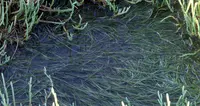
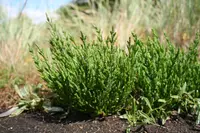
Widgeongrass (Ruppia maritima) is a fine-leaved, submerged aquatic plant commonly found in shallow coastal waters, brackish lagoons, and estuaries. It forms underwater meadows with slender, thread-like stems and narrow leaves. Small, inconspicuous flowers and seed heads develop along the stems, providing food and habitat for waterfowl, fish, and invertebrates. This species tolerates a wide range of salinity and water conditions, which makes it adaptable but sensitive to poor water quality and disturbance. It prefers clear, calm, shallow water with soft, silty or sandy substrates and good light penetration. Understanding how to care for widgeongrass in tanks or restoration projects starts with stable water conditions and minimal physical disruption.

Care Difficulty
Hard Care

Light Preference
Full Sun

Water Requirements
Aquatic

Temperature Preference
Cool Climate

Hardiness Zone
3–11

Soil Texture
Sandy, Silty, Organic-rich

Soil pH
Neutral (7.0), Slightly alkaline (7.0–7.5)

Soil Drainage
Waterlogged tolerant

Fertilization
Minimal (feed rarely)
Scan your plant to receive care tips personalized for your specific plant
Available on iOS and Android
Ruppia maritima grows best in shallow, sunlit water with stable light exposure.
This submerged aquatic species must stay fully underwater in stable, brackish to saline conditions.
This aquatic plant tolerates a wide temperature range but grows best in mild to warm water.
This submerged aquatic species relies entirely on water conditions, so ambient air humidity is not relevant for widgeongrass.
Ruppia maritima anchors best in soft, unconsolidated aquatic substrates rather than typical potting soil.
This species can be grown in containers as an aquatic anchoring plant rather than a typical potted specimen.
Ruppia maritima usually needs minimal fertilization when grown in nutrient-balanced aquatic systems.
Pruning Ruppia maritima focuses on keeping growth manageable and removing declining material in managed water systems.
Transplanting is more relevant than repotting for this aquatic species, which is often established directly in shallow coastal or brackish systems.
Propagation of this species is commonly done vegetatively in managed aquatic habitats.
This aquatic plant is relatively cold tolerant in its natural range and usually needs little targeted winter care in outdoor water bodies.

Plant Health Check
Not sure what's wrong with your plant? Check your plant's health inside the app.
This species can live in brackish to hypersaline waters, tolerating salinity levels that would kill most freshwater and many marine plants, which allows it to dominate in coastal lagoons and salt ponds.
Its small seeds are an important food source for many migratory ducks and other waterfowl, which often time their stopovers to coincide with peak seed availability in shallow coastal wetlands.
The plant mainly uses water pollination, with pollen drifting through the water column, but in very shallow areas its flowers can also interact with the air–water surface, giving it an unusual dual-mode pollination system among aquatic plants.

Ruppia maritima often acts as an ecological pioneer, being one of the first submerged plants to colonize newly flooded or disturbed saline and brackish habitats, where its dense stands help stabilize sediments and create conditions that later allow other seagrasses and aquatic species to establish.
This species often flowers poorly when water is too deep, very turbid, or strongly disturbed. Sudden salinity shifts, low light penetration, or heavy grazing by waterfowl also reduce flowering. Stable, moderately shallow, clear water encourages normal bloom formation.
Keep your plants happy and healthy with plant identification, disease detection, and easy care guidance.