Edge Containment
Install a shallow plastic or metal edging 8–10 cm deep around beds to keep rhizomes from creeping into lawns or paths while still allowing the clump to expand naturally within its zone.

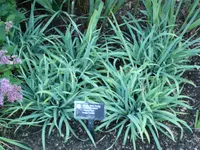
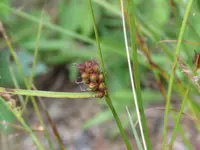
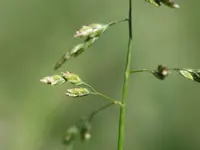
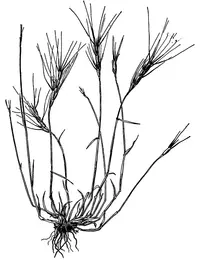
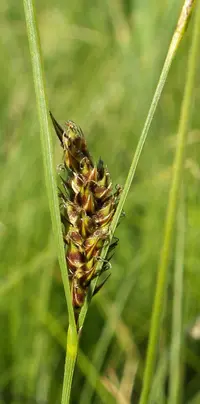
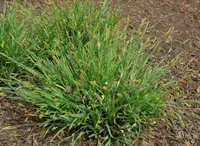
Spreading sedge (Carex laxiculmis) is a clumping, woodland sedge valued as a low, fine-textured groundcover. It forms loose, arching tufts of narrow, often bluish-green leaves that slowly expand into soft, natural-looking patches.
This species is native to shaded forests and stream edges in eastern North America, so it is adapted to dappled light and consistently moist, organic-rich soils. Its ability to tolerate shade, cool temperatures, and moderate neglect makes it relatively easy to care for spreading sedge in many gardens.
Gardeners often use it under trees, along paths, or in naturalized plantings where turf grass struggles, especially in cooler, temperate climates.

Care Difficulty
Easy Care

Light Preference
Partial Shade

Water Requirements
Regular Water

Temperature Preference
Cold Hardy

Hardiness Zone
4–9

Soil Texture
Loamy, Silty, Organic-rich

Soil pH
Acidic (5.5–6.5), Slightly acidic (6.5–7.0)

Soil Drainage
Moist but well-drained

Fertilization
Minimal (feed rarely)
Scan your plant to receive care tips personalized for your specific plant
Available on iOS and Android
This shade-tolerant sedge prefers bright, indirect light and dappled conditions.
This sedge prefers consistently moist soil but not standing water.
This hardy sedge handles a wide temperature range when established in the landscape.
Carex laxiculmis handles a wide humidity range and rarely needs special humidity management.
Carex laxiculmis grows best in loose, moist, organic-rich soil that still drains steadily.
This species is well suited to container growing in shaded patios or balconies.
Carex laxiculmis grows well in average soil and benefits from light feeding rather than heavy fertilization.
Pruning Carex laxiculmis is mainly about tidying the clump and renewing foliage.
This sedge is more often transplanted in beds than repotted, but container plants still need occasional attention.
Propagation of Carex laxiculmis is most reliable by division, with seed as a slower option.
Carex laxiculmis is generally cold hardy in much of the US and needs minimal winter care in the ground.

Plant Health Check
Not sure what's wrong with your plant? Check your plant's health inside the app.
This sedge is native to rich, deciduous woodlands of eastern North America, where it typically grows in partial shade on moist, humus-rich soils under oaks, maples, and other broadleaf trees.
Many forms of this species, especially the commonly cultivated 'Blue Slope', develop a notable blue-green to glaucous leaf color caused by a waxy coating on the leaf surface that scatters light.
Carex laxiculmis forms loose, arching clumps and spreads slowly by short rhizomes, creating low, flowing colonies that help stabilize soil and suppress competing low vegetation in its native habitats.

The species name laxiculmis refers to its characteristically loose, relaxed leaf and stem posture, which distinguishes it from many more upright Carex species and contributes to its use as a soft, ground-hugging accent in shade plantings.
This species spreads gradually by short rhizomes, forming loose clumps that widen over time rather than running rapidly. In typical garden conditions it is easy to contain with edging, division, or simply lifting stray shoots.
Keep your plants happy and healthy with plant identification, disease detection, and easy care guidance.