Frequent Re-Sowing
Stagger sowing every 4–6 weeks during the warm season so young plants continuously replace older clumps that naturally thin out after 1–2 years.

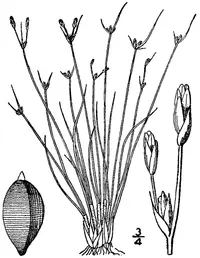
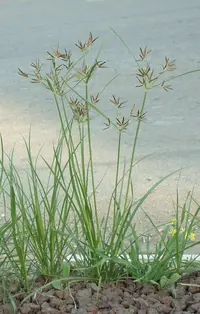
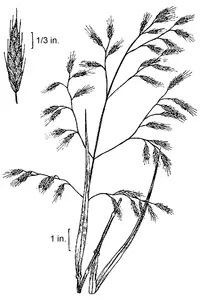
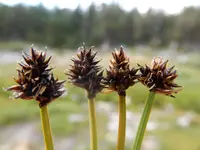
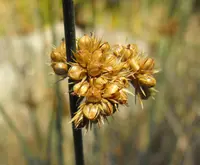
Densetuft hairsedge (Bulbostylis capillaris) is a fine-textured, tuft-forming sedge-like plant often mistaken for a delicate grass. It forms soft, airy clumps with many thin, hair-like stems and tiny, inconspicuous flower clusters.
This species is native to dry, open habitats across much of North America, including sandy fields, rocky outcrops, and disturbed sites. It is generally short-lived but can reseed where conditions suit it.
The plant favors full sun, sharply drained, often sandy soil, and low to moderate moisture, which makes it relatively undemanding if drainage is good. Understanding these natural preferences is key to how to care for densetuft hairsedge in gardens or naturalistic plantings.

Care Difficulty
Moderate Care

Light Preference
Full Sun

Water Requirements
Moderate Water

Temperature Preference
Warm Climate

Hardiness Zone
5–9

Soil Texture
Sandy, Loamy, Rocky

Soil pH
Acidic (5.5–6.5), Slightly acidic (6.5–7.0)

Soil Drainage
Well-drained

Fertilization
Minimal (feed rarely)
Scan your plant to receive care tips personalized for your specific plant
Available on iOS and Android
Bulbostylis capillaris grows best with full sun exposure but tolerates light shade in hot regions.
This fine-textured sedge prefers consistently moist yet fast-draining soil, especially during active growth.
This warm-season species thrives in mild to hot conditions and declines with prolonged cold or hard frost.
This fine-textured sedge prefers relatively dry air and is rarely sensitive to indoor humidity levels.
This species prefers lean, sandy, sharply draining soil that never stays wet for long.
This grass-like species adapts well to container growing when drainage is carefully managed.
Bulbostylis capillaris is a low-nutrient grass-like species that needs only light feeding, especially when container-grown densetuft hairsedge.
Bulbostylis capillaris requires only light, occasional pruning to keep its fine texture neat.
This species is more often grown in the ground, but container plants or nursery stock may need transplanting as clumps thicken.
Bulbostylis capillaris is most commonly propagated by seed, with division used occasionally for established clumps.
In much of its native range, Bulbostylis capillaris behaves as an annual or short-lived perennial and generally needs little winter care outdoors.

Plant Health Check
Not sure what's wrong with your plant? Check your plant's health inside the app.
This species forms very slender, threadlike leaves and stems that give a hairlike tufted appearance, which is why it is commonly called densetuft hairsedge or sand sedge.
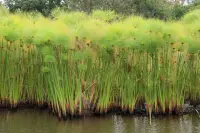
It often colonizes dry, nutrient-poor, sandy or rocky substrates where many other plants struggle, helping stabilize disturbed soils in open habitats such as roadsides, rock outcrops, and sandhills.
The plant is well adapted to high light, heat, and periodic drought in its native range across much of eastern and central North America, persisting in exposed sites with minimal organic matter.
This species is typically an annual sedge. It sprouts from seed, grows, flowers, and sets seed in a single growing season, then dies back completely, relying on its seed bank to return each year.
Keep your plants happy and healthy with plant identification, disease detection, and easy care guidance.