Timed succession sowing
Stagger sowing every 2–3 weeks in late spring and early summer so that flowering and seed production do not peak all at once, which makes it easier to monitor and remove seed heads before they mature.

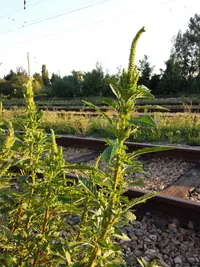
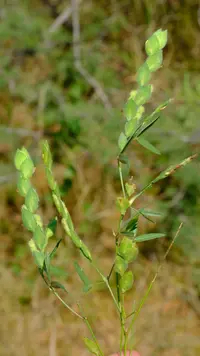
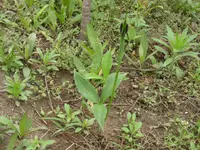
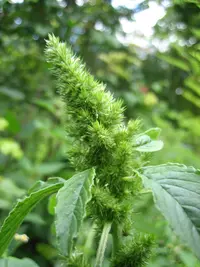
Powell's amaranth (Amaranthus powellii) is an annual herbaceous plant often seen as a vigorous summer weed in fields, gardens, and disturbed soils. It forms upright, branching stems with simple, lance-shaped green leaves and dense, greenish flower spikes that produce many small seeds.
This species is native to parts of North America and has spread widely in temperate regions, especially in agricultural areas. It grows fast, competes strongly for light and nutrients, and can tolerate heat and poor soils, which makes it resilient but sometimes hard to control.
Those traits also mean it is generally easy to germinate and grow where conditions are warm and sunny. Understanding how to care for Powell's amaranth starts with providing full sun, well-drained soil, and moderate moisture without waterlogging.

Care Difficulty
Easy Care

Light Preference
Full Sun

Water Requirements
Moderate Water

Temperature Preference
Tropical / Frost Sensitive

Hardiness Zone
3–10

Soil Texture
Sandy, Loamy, Silty

Soil pH
Slightly acidic (6.5–7.0), Neutral (7.0)

Soil Drainage
Well-drained

Fertilization
Minimal (feed rarely)
Scan your plant to receive care tips personalized for your specific plant
Available on iOS and Android
This sun-loving annual thrives in bright outdoor conditions with long summer days.
This plant prefers steadily moist but not saturated soil during active growth.
This warm-season annual grows best in consistently mild to hot conditions without frost.
This species handles a wide humidity range and rarely needs special humidity management outdoors.
Amaranthus powellii thrives in light, well-drained mineral soils that do not stay waterlogged.
This annual can be grown in containers if the pot is stable and drains quickly.
This annual thrives in average garden soil and usually needs only minimal feeding for healthy growth.
Pruning focuses on managing size, encouraging branching, and removing damaged growth on Amaranthus powellii.
This species is usually grown as a direct-sown annual, but young container seedlings transplant well when handled carefully.
Most Amaranthus powellii plants are propagated from seed, which germinates reliably under warm conditions.
This is a frost-sensitive annual that completes its life cycle in one season and generally needs no winter care.

Plant Health Check
Not sure what's wrong with your plant? Check your plant's health inside the app.
This species is a C4 plant, meaning it uses a specialized photosynthetic pathway that allows very efficient carbon fixation and rapid growth in hot, sunny summer conditions.
A single mature plant can produce many thousands of small, long-lived seeds that remain viable in soil for years, which explains its persistence once it establishes in disturbed sites and crop fields.
Although often treated as a generalist weed, it supports certain specialist herbivorous insects, including some moth larvae that preferentially feed on Amaranthus species and use it as a key host plant.

This species has evolved multiple, independently arising populations resistant to several herbicide groups, making it a documented example in weed science of rapid evolution under intensive agricultural management.
Young leaves and tender stems are edible cooked, similar to spinach, and seeds can be eaten as a grain. Nitrates and oxalates may accumulate in stressed plants, so avoid heavily fertilized or roadside sites and do not rely on it as a staple food.
Keep your plants happy and healthy with plant identification, disease detection, and easy care guidance.