Wind-hardening young trees
Stake only very young or top-heavy plants and gradually loosen ties over 1–2 seasons so the trunk can flex in the wind and develop the strong taper needed for long-term stability.

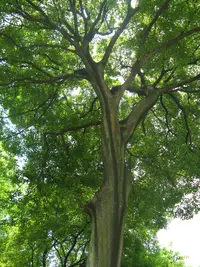
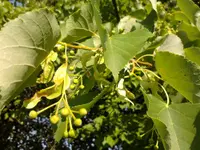
Chinese hackberry, Celtis sinensis, is a medium-sized deciduous tree often used in streetscapes, parks, and larger gardens. It forms a rounded to spreading crown with fine twigs and small, serrated leaves that turn yellow in autumn.
This species is native to East Asia, particularly China, Korea, and Japan, and adapts well to urban conditions, including air pollution and compacted soils. It tends to grow quickly and tolerates pruning, which makes it useful for shaping and size control.
Its overall toughness and broad environmental tolerance make it relatively easy to establish for most gardeners. Those learning how to care for Chinese hackberry should note that it prefers full sun, moderately moist but well-drained soil, and benefits from some protection from extreme drought during establishment.

Care Difficulty
Easy Care

Light Preference
Full Sun

Water Requirements
Moderate Water

Temperature Preference
Cold Hardy

Hardiness Zone
5–9

Soil Texture
Sandy, Loamy, Clay

Soil pH
Slightly acidic (6.5–7.0), Slightly alkaline (7.0–7.5)

Soil Drainage
Well-drained

Fertilization
Minimal (feed rarely)
Scan your plant to receive care tips personalized for your specific plant
Available on iOS and Android
This species prefers full sun conditions to develop a dense crown and strong branching.
This tree prefers evenly moist but not saturated soil, especially during establishment.
This hardy deciduous tree tolerates a wide climate range once established.
This species tolerates a wide humidity range and usually does not need special humidity management outdoors or in large, airy spaces.
Celtis sinensis prefers moderately fertile, well-structured mineral soil that drains freely yet does not dry out instantly.
This tree can be grown in containers when young, but long-term container culture is challenging due to its eventual size and root vigor.
This species grows well in average soil and needs only light feeding to support steady growth.
Thoughtful pruning helps Celtis sinensis develop a strong structure and safe, stable canopy.
This tree is most often grown in the ground, so transplanting young plants correctly is more important than frequent repotting.
Propagation is usually done from seed, which is straightforward but not fast.
Mature Celtis sinensis trees are cold hardy in much of the US and usually need little winter attention.

Plant Health Check
Not sure what's wrong with your plant? Check your plant's health inside the app.
Chinese hackberry is commonly planted along streets in East Asia because its dense canopy and rough leaves trap airborne dust and particulate pollutants, helping to improve local air quality in traffic-heavy areas.
The leaves are an important larval food source for several East Asian butterflies, including some swallowtail and admiral species, making the tree ecologically significant in supporting urban and rural insect biodiversity.
This species develops a strong, wide-spreading root system that tolerates compacted, alkaline, and nutrient-poor soils, which is one reason it performs reliably as a city and roadside tree.

In traditional East Asian woodcraft, the hard yet workable timber of Celtis sinensis has been used for tool handles, agricultural implements, and small decorative items, valued for its fine, even texture and good shock resistance.
Yellowing leaves usually result from water stress, nutrient deficiency, or root problems. Check that the soil drains well, avoid waterlogging, and consider a balanced fertilizer. Also inspect roots and foliage for pests or fungal disease.
Keep your plants happy and healthy with plant identification, disease detection, and easy care guidance.