× Gasteraloe Care

× Gasteraloe

About × Gasteraloe

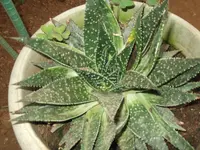
× Gasteraloe is a compact hybrid succulent, usually between Gasteria and Aloe, grown mainly as a houseplant. It forms tight rosettes of thick, pointed leaves. The foliage is often marked with bands, spots, or ridges, giving the plant a textured, architectural look that suits modern interiors. Growth is generally slow and stays low, so it fits well on windowsills and desks. Since it comes from arid, rocky habitats in southern Africa through its parent species, it is adapted to dry conditions and erratic rainfall. This background makes it relatively forgiving of missed waterings but sensitive to overwatering. Those who want to care for × Gasteraloe should provide bright light, free-draining soil, and modest watering routines.

Main Plant Requirements

Care Difficulty

Easy Care

Light Preference

Bright Indirect Light

Water Requirements

Low Water

Temperature Preference

Tropical / Frost Sensitive

Hardiness Zone

10–11

Soil Texture

Sandy, Loamy, Rocky

Soil pH

Slightly acidic (6.5–7.0), Neutral (7.0)

Soil Drainage

Well-drained

Fertilization

Minimal (feed rarely)

Get Personalized Care Plan

Scan your plant to receive care tips personalized for your specific plant

Available on iOS and Android

How to Care for the × Gasteraloe

This hybrid succulent prefers bright, indirect light with some gentle sun exposure for compact growth.

  • Provide 4–6 hours of bright, filtered light daily, such as an east window or light morning sun with shade by midday.
  • Protect × Gasteraloe from strong midday or afternoon sun, which can cause leaf scorch, bleaching, or dry brown patches on the leaf tips.
  • In winter, move it to the brightest spot available or supplement with a grow light to prevent stretching and loss of color.

This succulent stores water in its leaves and needs infrequent but thorough watering in fast-draining soil.

  • Water only when the top 3–5 cm of soil are dry, soaking the root zone once, then draining completely so no water sits around the roots.
  • Reduce watering in cooler months, sometimes to every 3–5 weeks, while in warm, bright conditions it may need water roughly every 10–14 days.
  • Watch for mushy, translucent leaves as a sign of overwatering and very thin, wrinkled leaves as a sign that × Gasteraloe is too dry.

This plant prefers warm, stable conditions and does not tolerate frost.

  • Aim for everyday temperatures of 65–80°F (18–27°C) for steady growth, with slightly cooler nights improving overall vigor.
  • Protect it from cold; growth slows below 55°F (13°C) and tissue damage can occur if exposed to 32°F (0°C) or frost.
  • In hot weather above 90°F (32°C), give light shade, good airflow, and avoid placing it against heat-reflective surfaces like bare glass or metal.

This succulent tolerates typical indoor humidity, so moisture in the air is rarely a limiting factor.

  • Target 30–50% humidity, similar to most heated or air-conditioned homes.
  • Dry air is usually tolerated; humidity stress appears more from overwatering than low humidity, seen as mushy, translucent leaves.
  • Where air is extremely dry and hot, increase local humidity slightly by grouping plants, without wetting the rosette center.

This plant needs a very fast-draining, mineral-rich mix that keeps roots aerated and dry between waterings.

  • Use a cactus/succulent mix amended with extra mineral grit such as pumice, perlite, and coarse sand for × Gasteraloe.
  • Aim for a loose, crumbly structure that does not clump when squeezed, so water can pass through in seconds, not minutes.
  • Keep soil slightly acidic to neutral, around pH 6.0–7.0, avoiding strongly acidic peat-heavy mixes that stay wet too long.
  • Improve aeration by adding 30–50% inorganic material and avoiding fine composts or garden loam that compact in containers.

This compact succulent is very suitable for container growing.

  • Choose a shallow but wide pot that matches the spread of the rosette, leaving modest extra space to prevent prolonged soil moisture.
  • Select unglazed terracotta if moisture tends to linger, since its porous walls speed evaporation and reduce rot risk.
  • Use a stable, heavier pot or add top dressing gravel to keep the container from tipping as offsets develop around the main rosette.

This hybrid succulent has modest feeding needs but responds well to light, balanced nutrition during active growth.

  • Use a balanced liquid fertilizer (around 10-10-10 or 20-20-20) diluted to 25–50% strength for × Gasteraloe.
  • Feed every 4–6 weeks in spring and summer when growth is active.
  • Skip compost-heavy mixes and choose formulations for succulents or cacti to avoid excess salts and moisture retention.
  • Stop feeding in fall and winter, when the plant is semi-dormant, to prevent weak, etiolated growth.

Pruning needs are minimal and mostly cosmetic for this compact succulent hybrid.

  • Best time for any pruning is late spring or early summer, during active growth.
  • Remove dead, shriveled, or damaged leaves cleanly at the base to maintain appearance and reduce rot risk.
  • Use small, sharp, disinfected scissors or pruners to avoid tearing the thick leaves.
  • Cut away overcrowded offsets only when needed to manage clump size and improve air flow around rosettes of × Gasteraloe.

This slow-growing succulent prefers slightly tight pots and infrequent repotting.

  • Repot every 2–3 years, or when roots circle the pot, emerge from drainage holes, or growth becomes noticeably slower.
  • Plan repotting for spring so × Gasteraloe can recover and root into fresh, gritty, fast-draining mix.
  • Use a container just 2–3 cm wider with ample drainage, and avoid deep pots that hold excess moisture.
  • Water lightly 3–5 days after repotting to let any root wounds callus, then resume normal watering once growth resumes.

Propagation is most successful by division of offsets rather than by seed.

  • Detach offsets in spring or early summer, when the parent plant is actively growing.
  • Gently unpot, brush off soil, and separate pups with some roots attached using a clean, sharp knife if needed.
  • Let cut surfaces dry and callus for 1–2 days, then plant in a dry, gritty succulent mix.
  • Keep in bright, indirect light and water sparingly until new growth shows successful × Gasteraloe care instructions.

This succulent hybrid is not frost-hardy and needs protection in cold climates.

  • Keep above 40°F; ideal indoor winter temperatures are 55–65°F with good light.
  • Move container plants indoors before the first frost, placing them near a bright window.
  • Reduce watering significantly, allowing soil to dry almost completely between light waterings.
  • Avoid cold drafts and wet soil, which increase the risk of root and crown rot during winter.

Care Tips

Rotate For Symmetry

Turn the pot 90° every 2–3 weeks so rosettes receive even light exposure and develop balanced, compact growth instead of leaning toward a single light source.

Offset Management

Once offsets have 3–4 leaves and visible roots, separate them with a clean knife and let the cuts dry 2–3 days before potting, which reduces rot risk and allows controlled plant spacing.

Controlled Crowding

Allow several rosettes to share one pot but remove the weakest or most shaded ones annually so the remaining plants have enough light and airflow to stay firm and not etiolated (stretched).

Targeted Pest Checks

Inspect the tight leaf bases and undersides monthly with a hand lens or phone zoom, since mealybugs and scale often hide in these crevices long before they are visible on outer leaves.

Seasonal Rest Adjustment

In winter, give the plant a slightly cooler, very bright spot and avoid disturbing the roots, which supports a mild rest period that improves resilience and helps when caring for × Gasteraloe long term.

Common Pests and Diseases

Aloe mite

This pest causes distorted, swollen, or warty growths on leaves and around the crown, often with corky or tumor-like tissue. Symptoms include localized deformities that slowly spread but usually do not move between plants without physical contact.

Solution

Remove and discard all affected leaf tissue and any severely deformed rosettes, cutting back into healthy, firm tissue and sterilizing tools between each cut. Isolate the plant, avoid overhead splashing between plants, and if distortion continues, discard the most affected plants to prevent spread, then keep new offsets under observation as part of ongoing × Gasteraloe care instructions.

Mealybugs

These insects appear as white, cottony clusters in leaf axils, on roots, or along the lower leaf surfaces and cause yellowing and slow decline. This pest produces sticky honeydew that can attract sooty mold on nearby surfaces.

Solution

Isolate the plant, then dab visible mealybugs with cotton swabs dipped in 70% isopropyl alcohol and repeat weekly until no new insects appear. For heavier infestations, thoroughly rinse the plant with a firm but gentle stream of water, allow it to dry, and follow up with a systemic insecticide labeled for succulent use if needed, while reducing crowding to limit reinfestation.

Aloe rust

This disease produces round to oval orange, brown, or black pustules on leaf surfaces that may merge into larger necrotic patches. Symptoms include cosmetic damage at first, but severe infections can reduce vigor and lead to premature leaf death.

Solution

Remove and discard heavily spotted leaves and ensure the plant dries quickly after watering by providing strong air circulation and avoiding overhead watering. Space plants to improve airflow, keep foliage clean and dry, and if new pustules continue forming, apply a sulfur- or copper-based fungicide labeled for succulents according to directions, allowing the soil to dry well between waterings.

Aphids

These insects cluster on tender new growth and flowering stalks, sucking sap and causing curling, distortion, and sticky honeydew. This pest can also transmit viruses between nearby succulent plants.

Solution

Physically wash aphids off with a gentle but steady stream of water, repeating every few days until populations drop. If insects persist, treat new growth with insecticidal soap or a light horticultural oil in the early morning, ensuring good coverage on all soft tissue and improving airflow to reduce humidity around crowded plant groupings.

Leaf spot

This disease causes small water-soaked or tan lesions on leaves that may develop dark margins or concentric rings and slowly enlarge. Symptoms include scattered spots that can coalesce, giving leaves a patchy or scorched appearance, especially under high humidity or poor airflow.

Solution

Remove affected leaves that show extensive spotting and dispose of them away from other succulents, then allow more light and airflow around the plant. Keep water off the foliage, water only at the soil line, let the mix dry well between waterings, and if spotting continues, use a broad-spectrum fungicide suitable for succulents, applied according to the label while monitoring new growth for clean, unspotted leaves.

Interesting Facts

Hybrid desert ancestry

× Gasteraloe plants are intergeneric hybrids created by crossing Aloe species with Gasteria species, combining the tougher, compact form of Gasteria with the fleshy, often patterned leaves of Aloe. This mixed ancestry gives them higher tolerance to bright light and drought than many other small succulents.

Night-focused water use

Like their parent genera, these hybrids use crassulacean acid metabolism (CAM) photosynthesis, opening stomata mainly at night to reduce water loss in dry habitats. This adaptation lets them store water in their leaves and survive in shallow, fast-drying soils.

Variable leaf patterns

Different × Gasteraloe cultivars can show striking variations in leaf patterning, from faint speckling to bold banding and mottling. This visual diversity comes from how each hybrid inherits and expresses leaf markings from its Aloe and Gasteria parents.

FAQs about × Gasteraloe

Brown tips usually come from low humidity, salt buildup, or minor underwatering, while browning at the base suggests rot from consistently wet roots. Check roots, adjust watering, and flush the potting mix if salts accumulate.

Grow Healthy Plants with Botan Care

Keep your plants happy and healthy with plant identification, disease detection, and easy care guidance.

Botan plant care app — identify plants on mobile

Explore More Plants