Brazos River yucca Care (Yucca necopina)

Also known as: Glen Rose Yucca
Brazos River yucca

About Brazos River yucca

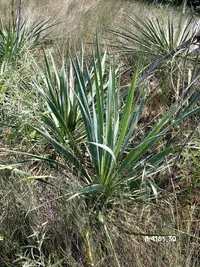
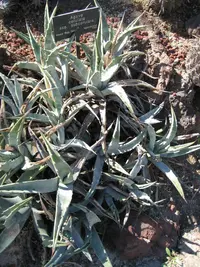
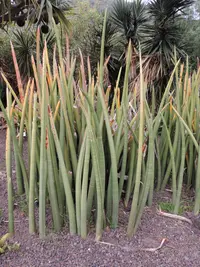
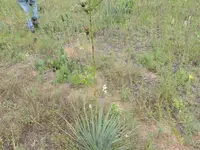
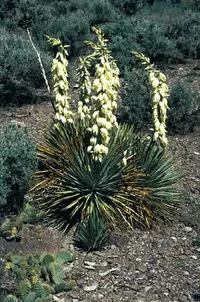
Brazos River yucca (Yucca necopina) is a compact, trunkless yucca native to sandy areas and prairies along the Brazos River in Texas. It typically forms dense clumps of narrow, blue-green leaves with sharp tips. Flower stalks rise above the foliage with clusters of creamy white blooms, giving the plant a striking, architectural look in dry gardens. Its strong drought tolerance and low nutrient needs make it relatively simple for patient growers. This species prefers full sun, very well-drained, sandy or rocky soil, and benefits from protection from prolonged winter wet, which is central to how to care for Brazos River yucca.

Main Plant Requirements

Care Difficulty

Easy Care

Light Preference

Full Sun

Water Requirements

Low Water

Temperature Preference

Warm Climate

Hardiness Zone

7–10

Soil Texture

Sandy, Loamy, Rocky

Soil pH

Slightly acidic (6.5–7.0), Slightly alkaline (7.0–7.5)

Soil Drainage

Well-drained

Fertilization

Minimal (feed rarely)

Get Personalized Care Plan

Scan your plant to receive care tips personalized for your specific plant

Available on iOS and Android

How to Care for the Brazos River yucca

This species prefers strong, direct light typical of open, arid habitats.

  • Provide 6–10 hours of full sun daily; morning and midday sun are ideal, with some light afternoon shade in hotter regions.
  • It tolerates light partial shade, but prolonged shade leads to weak, elongated leaves and reduced flowering in Brazos River yucca.
  • In summer, avoid sudden moves from shade to intense sun to prevent leaf scorch; in winter, ensure the site stays as open and unshaded as possible.

This yucca is highly drought-tolerant and needs infrequent, careful watering.

  • Allow soil to dry completely or at least the top 5–8 cm before watering; in most dry climates this means deep watering only after extended dry spells.
  • Use very fast-draining, gritty soil on a slope or raised area to prevent standing water, since Yucca necopina is prone to root rot in saturated conditions.
  • Signs of overwatering include yellowing, soft leaves and a collapsing crown, while severe leaf curling and crisp tips indicate prolonged drought stress.

This desert-adapted yucca tolerates a wide temperature range but is sensitive to prolonged deep freezes in wet soil.

  • Optimal active growth occurs around 70–90°F (21–32°C), common in late spring and summer in arid or semi-arid climates.
  • Mature plants usually handle short drops to about 10–15°F (-12–-9°C) if soil is dry; extended cold with wet ground greatly increases rot risk.
  • In extreme heat above 100°F (38°C), growth may pause, but plants typically cope if soil drains well and hot afternoon winds are not excessively drying.

This species handles low humidity well, so humidity control is rarely critical for Brazos River yucca.

Yucca necopina prefers very fast-draining, sandy or gravelly soil that mimics its native riverbank habitats.

  • Use a mix of roughly 50–60% coarse sand or grit with 40–50% sandy loam or cactus mix to keep roots dry between waterings.
  • Aim for slightly acidic to neutral pH around 6.0–7.0, avoiding strongly acidic or alkaline extremes that can limit nutrient uptake.
  • In heavy or clay soils, raise the planting area into a mound or berm and blend in gravel to improve drainage and root aeration.
  • Avoid mixes rich in peat or water-holding compost, which stay wet too long and increase the risk of root and crown rot.

This yucca can be grown in containers if the pot strongly favors rapid drainage and root dryness.

  • Choose a deep, narrow, and heavy container to support the developing taproot while preventing the tall rosette from tipping in wind.
  • Drill additional side holes near the pot base if using plastic, so excess water escapes quickly instead of pooling around the roots.
  • Fill the bottom few centimeters with coarse gravel to prevent the drainage holes from clogging and to keep the root crown above the wettest zone.

Yucca necopina needs only light feeding in poor or very sandy soils; many well-sited plants grow acceptably with no fertilizer.

  • Use a low-dose balanced NPK fertilizer or slow-release granules once in early to mid-spring if growth seems weak.
  • Apply at 1/2 strength of the label rate to avoid salt buildup around the roots.
  • Water lightly after feeding to move nutrients into the root zone without waterlogging.
  • Stop fertilizing by late summer and do not feed in winter dormancy.

Yucca necopina benefits from occasional cleanup pruning to keep rosettes tidy and maintain safe, manageable structure.

  • Carry out pruning in late winter or early spring before strong new growth starts.
  • Remove dead, damaged, or crossing leaves with clean, sharp pruners, cutting close to the stem base.
  • Trim spent flower stalks down to the crown to direct energy back into foliage and future flowering.
  • Limit green leaf removal so the plant retains enough surface area for photosynthesis and drought resilience.

This species is usually grown in the ground; focus on careful transplanting rather than frequent repotting.

  • Transplant Brazos River yucca in late spring when soil is warming and frost risk has passed.
  • Move plants only when necessary, such as poor drainage, crowding, or stunted growth despite good light.
  • Dig a wide hole, keeping as many roots intact as possible, and replant at the same depth in sharply drained soil.
  • Water once to settle soil, then allow the root zone to dry between light irrigations to limit transplant shock.

Yucca necopina is most commonly propagated by offsets, with seed used mainly in specialist or conservation settings.

  • Detach well-formed offsets in late spring or early summer when actively growing.
  • Let cut surfaces dry and callus for 1–3 days, then plant in a gritty, fast-draining mix.
  • Provide bright light, warm temperatures around 70–80°F, and very light watering until strong new roots form.
  • For seed, use fresh seed, a well-drained mix, and bright warmth, keeping the medium barely moist, not wet.

This yucca is quite cold hardy and usually needs minimal winter attention in the ground if drainage is excellent.

  • Tolerates typical light to moderate frosts once established, provided soils do not stay waterlogged.
  • In colder areas, add a 5–8 cm layer of dry mulch around, not touching, the crown to buffer root temperatures.
  • Container plants are more exposed; move them to an unheated, bright, frost-free area for winter.
  • Avoid heavy winter watering to limit root rot and freeze damage in saturated soil.

Care Tips

Improve drainage mounds

In heavy or compacted soils, plant on a slightly raised mound or berm 10–20 cm high to keep the crown above standing water and reduce root rot risk.

Gravel collar barrier

Apply a 5–8 cm wide collar of coarse gravel or crushed stone around the base instead of organic mulch to keep the crown dry and discourage rot and slug damage.

Root zone protection

Install a discreet low barrier or flagging around young plants in high-traffic areas to prevent damage from mowers, trimmers, or foot traffic while the root system establishes.

Winter moisture control

In regions with cold, wet winters, slightly tilt the planting site or create a gentle slope away from the plant so winter rainfall drains off quickly and does not pool around the roots.

Pest scouting routine

During warm months, inspect leaf bases and the crown every 2–3 weeks for scale insects or mealybugs and spot-treat early with horticultural oil, which makes caring for Brazos River yucca more predictable and avoids severe infestations.

Common Pests and Diseases

Yucca weevils

This pest bores into leaf bases and crowns, causing wilting, yellowing, and collapse of individual heads, especially on stressed plants in hot, dry sites. Symptoms include frass and tunneling in the crown when inspected closely.

Solution

Remove and destroy heavily infested rosettes to prevent larvae from completing their life cycle, and cut back to firm, clean tissue in partially affected crowns. Keep plants vigorous with good drainage and avoid long-term drought stress; for high-value specimens, use a systemic insecticide labeled for ornamental yucca borers according to local regulations and monitor crowns regularly during warm months.

Scale insects

These insects attach to leaves and stems, appearing as small, hard bumps that cause yellow stippling, loss of vigor, and sticky honeydew on nearby surfaces. This problem is more common on plants grown in sheltered patios or indoor spaces with limited airflow.

Solution

Wipe leaves with a cloth dampened in mild soapy water or 70% isopropyl alcohol to dislodge visible scale, repeating weekly until new growth is clean. For larger colonies, prune the most infested leaves and apply a horticultural oil spray labeled for scale on ornamental plants, ensuring thorough coverage of leaf undersides and leaf bases.

Leaf spot

This disease causes small brown or gray lesions on the blades, sometimes with a darker margin, that may merge into larger blotches under prolonged wet or humid conditions. Symptoms include premature browning and drying of the oldest leaves.

Solution

Improve air circulation around clumps, water at the soil level rather than overhead, and remove and dispose of heavily spotted lower leaves. In persistently wet climates or for valuable specimens, a fungicide labeled for leaf spot on ornamentals can be used preventively during extended wet periods, following label directions closely while focusing on keeping foliage dry.

Crown blight

This disease starts in the central rosette, where new leaves soften, yellow, and collapse while outer leaves may remain green for some time. Symptoms include a mushy or discolored crown often following mechanical injury, frost damage, or prolonged wetness at the leaf bases.

Solution

Cut away all soft, discolored tissue back to firm white or pale green material and discard all infected debris, keeping tools disinfected between cuts. Improve drainage and avoid trapping water in the crown by planting slightly elevated, using coarse mineral mulch, and protecting the plant from prolonged cold, wet conditions; severely affected heads should be removed entirely to prevent spread to adjacent rosettes.

Mealybugs

These insects form white, cottony clusters in leaf axils and at the base of leaves, sucking sap and causing distortion, slow growth, and sooty mold on honeydew. Problems are more frequent where plants are sheltered, crowded, or part of mixed succulent collections, including Brazos River yucca indoor care situations.

Solution

Physically remove colonies by targeting the cottony masses with a cotton swab dipped in 70% isopropyl alcohol and rinse leaf axils with a firm stream of water. For persistent infestations, use repeated applications of insecticidal soap or horticultural oil labeled for mealybugs, ensuring coverage into tight leaf bases and temporarily isolating the plant from nearby hosts.

Interesting Facts

Brazos River endemic

This species is naturally restricted to a very small area along the Brazos River in north‑central Texas, where it grows on deep, fine sandy soils rather than the rocky or gravelly sites preferred by many other yuccas.

Unusual sand specialist

Its short trunk and clustering rosettes are adapted to shifting sandy substrates, allowing the plant to stabilize loose soils and persist where wind and occasional flooding regularly disturb the surface.

Cold‑tolerant for a dwarf

Despite its compact size, this yucca tolerates notable winter cold for a species from Texas, which has made it of interest in trials for growing Yucca necopina in cooler, drier regions with well‑drained soil.

FAQs about Brazos River yucca

This species usually forms a clumping rosette and spreads slowly by short offsets rather than running roots. It stays fairly contained, so it suits small xeric beds and rock gardens without becoming difficult to manage.

Grow Healthy Plants with Botan Care

Keep your plants happy and healthy with plant identification, disease detection, and easy care guidance.

Botan plant care app — identify plants on mobile

Explore More Plants